
Lieferung heute & morgen

Qualitätsgarantie

Willkommens-Angebote freischalten: KOSTENLOSE Lieferung | Bis zu 80 % RABATT | Kostenlose 30-Tage-JoyPlus-Testphase
App herunterladen
A motion-sensor night light can provide orientation at night without leaving a lamp on continuously. However, not every sensor light is suitable for every household application. A model that plugs into a wall socket, for example, is a good fit for hallways, while a rechargeable night light can be installed more flexibly in wardrobes, on stairs or beneath kitchen cabinets.
Before buying, it is worth checking the actual technical specifications. Terms such as “bright,” “smart” or “energy-efficient” reveal little on their own about range, battery life or ease of use.
An LED night light with 400 lumens can illuminate a hallway considerably more brightly than a model with 18 or 30 lumens. Low brightness may be sufficient for finding your way to the bathroom. As an under-cabinet LED light in a kitchen or for illuminating a longer flight of stairs, however, a weak sensor light may prove impractical.
The lumen rating describes the total luminous flux; it does not automatically indicate the brightness at every point. Light distribution, beam angle and mounting height also affect the result.
Many models switch on only when movement is detected in darkness. Specifications such as “≤20 lux” mean that a twilight sensor prevents activation when the ambient light is sufficiently bright. In a well-lit hallway, the light may therefore remain off even when movement is detected.
The range of the products considered here is often 3 to 5 metres. Furniture, doors and the orientation of the sensor can restrict the detection area. On stairs, the motion-sensor light should be positioned so that people enter the sensor’s detection zone at an early stage.
A battery-powered sensor light requires regular battery replacement. A USB night light, on the other hand, needs to be charged but does not require a socket at the installation location. Adhesive strips allow drill-free installation, but do not provide a lasting hold on every surface. Magnetic mounts make it easier to remove the light for charging, but require a suitable metal surface or the supplied metal plate.
For bedrooms and children’s rooms, warm white light in the range of approximately 2700 to 3200 Kelvin is often preferred because it feels less technical. Neutral or cool white light between roughly 4000 and 7000 Kelvin may be more suitable for kitchens, wardrobes, basements or work areas.
A dimmable night light allows the brightness to be adapted to different situations. It is important to check whether the brightness can be adjusted in steps or continuously, and whether the device saves the last selected setting. High brightness is not automatically beneficial when the light is only needed briefly for orientation during the night.
PIR sensors respond to movement or changes in thermal radiation. Check whether the product also has a twilight sensor and how long it remains on after movement stops. The Grifema model, for example, specifies automatic shut-off after 60 seconds.
A short shut-off time reduces energy consumption, but can be inconvenient on stairs if movement is slow. For wardrobe and drawer lighting, however, a brief activation period is usually sufficient.
For a rechargeable night light, battery capacity, charging connection and stated runtime are important specifications. According to the product information, the 20 cm wardrobe light in this selection has an 800 mAh battery and USB charging. Another model specifies 1100 mAh. Capacity figures allow products to be compared, but do not replace runtime information at the selected brightness level.
With USB devices, check the specified charging voltage, such as 5 V. In humid areas, use only a product explicitly designed for that environment. The models presented here are intended primarily for indoor use and should be protected from water and high humidity.

Why This Fits Their Persona: This plug-in model is ideal for buyers who do not want to charge batteries or carry out installation work. It is suitable for hallways, children’s rooms, kitchens and stairways.
According to the product information, the integrated twilight sensor prevents the light from switching on when the surroundings are bright. The detection range is up to 3 metres at an angle of 120 degrees.
Five brightness levels, warm white light at 2700 K and power consumption of 0.5 W, according to the manufacturer.
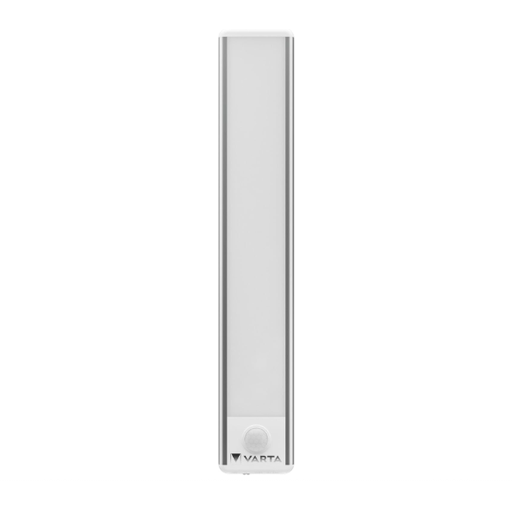
Why This Fits Their Persona: Buyers who value an established brand and a slim design may find this battery-powered model appealing for wardrobes, hallways and stairways.
Automatic shut-off after a period of inactivity reduces unnecessary operating time. Installation is possible using either the adhesive surface or screws.
Compact dimensions of 24 × 4 × 1.66 cm and two installation options according to the product description. Batteries are not included.

Why This Fits Their Persona: This set is designed for longer surfaces such as kitchen wall units, wardrobes, shelving or work areas, and provides two lights for multiple installation locations.
The specifications state a PIR detection range of 3 to 5 metres, three colour temperatures and a 1100 mAh battery. This makes it possible to adapt the lighting to different rooms.
30 cm length, 41 LEDs, USB charging at 5 V and three colour-temperature ranges from warm white to cool white, according to the product data.
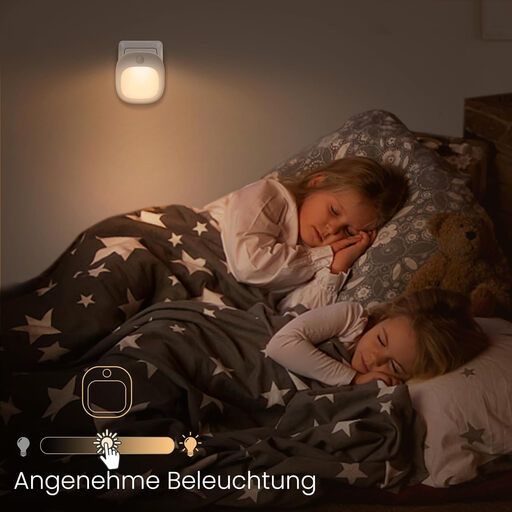
Why This Fits Their Persona: This slim model can be placed without a permanent power connection and is intended for bedrooms, nurseries, hallways and shelving areas.
Five brightness levels and three colour temperatures allow finer adjustment than a simple on/off light. According to the specifications, the sensor operates in darkness and detects movement at a distance of 3 to 5 metres.
500 mAh battery, USB charging at 5 V/1 A, 30 lumens and a stated runtime of up to 10 hours in sensor mode.
Clean the mounting surface before applying adhesive strips and check the hold after installation. With magnetic systems, the light should not be positioned where it could fall onto a walking path. A hallway and stairway night light should not have its sensor hidden behind a door or piece of furniture.
For bathrooms, basements and other damp areas, the specified IP rating is essential. If no IP rating is provided, the model should not be used in the immediate vicinity of water. Electrical devices must not be opened or modified independently. For children, installation out of their reach and supervised use are recommended.
Our complete selection includes cordless indoor motion-sensor lights for different rooms, brightness levels, colour temperatures and installation types.
Position it so that the motion sensor covers the typical walking route. For wardrobes and shelving, a position near the front edge is sensible. When using adhesive strips, the surface should be dry, clean and as smooth as possible. Plug-in models do not require any additional fastening.
Runtime depends on the battery, brightness level, colour temperature and number of activations. Manufacturer claims such as “up to 10 hours” refer to defined operating conditions and should not be interpreted as guaranteed everyday runtime. If the brightness drops significantly, the battery should be charged.
For battery-powered or rechargeable models, consumption occurs mainly while the light is activated and during charging. A plug-in model with power consumption of 0.5 or 1 W uses comparatively little energy when switched on for short periods. Running costs nevertheless depend on usage time, electricity tariff and actual power consumption.