
Lieferung heute & morgen

Qualitätsgarantie

Willkommens-Angebote freischalten: KOSTENLOSE Lieferung | Bis zu 80 % RABATT | Kostenlose 30-Tage-JoyPlus-Testphase
App herunterladen
A motion sensor outdoor light can automatically illuminate paths, front entrances, garages and patios. However, choosing the right one depends on more than just the stated brightness or a low price. What really matters is the installation location, ingress protection rating, detection range, power supply and your existing electrical setup.
An outdoor light with a motion sensor may boast a high light output, but still fail to illuminate the desired area evenly. For a narrow path, a wide-diffusing light isn't always appropriate. For driveways or courtyards, on the other hand, adjustable light heads can be a smart choice.
So, alongside the lumens, pay attention to the design and the beam angle. Two separately adjustable light heads, for example, can cover different areas at the same time.
The IP rating describes what external influences a product is protected against. IP44 means protection against solid objects larger than 1 millimetre and against splashing water from any direction. An IP44 light is therefore often suitable for sheltered outdoor areas, such as under an awning or on a covered patio. However, it is not designed for immersion, standing water or direct high-pressure water jets.
For truly weather-resistant outdoor lighting, you should consider the mounting position, the manufacturer's specifications and the actual weather conditions at the installation site together.
A PIR motion sensor detects changes in infrared heat radiation. Its range depends on the mounting height, viewing direction, ambient temperature and the direction of movement. Movements across the sensor are often detected more easily than those moving directly towards it.
Also practically important are the adjustable settings for detection area, twilight threshold and hold time. A switch-on time that is too long increases energy consumption; a time that is too short can be impractical on paths or stairs.
For a front entrance or short path, moderate light outputs are often sufficient, depending on the building layout. Larger courtyards and driveways need broader illumination. Warm white light around 3,000 Kelvin feels subtle and is ideal for patios or garden areas. Neutral white light around 4,000 Kelvin can be a good choice for functional security lights for outdoors.
The wattage describes energy consumption, not directly the brightness. So, compare the lumen rating and the light distribution above all.
For permanently installed outdoor lights, a corrosion-resistant housing and a suitable IP rating are important. For covered areas, IP44 may be sufficient. For unprotected installation sites, you should check the product details very carefully and never use a light outside its intended environment.
Hardwired models, such as an outdoor wall light with a motion sensor, require a suitable electrical connection. Work on 230-volt installations must only be carried out by a suitably qualified person in accordance with current electrical regulations.
A solar and battery-powered outdoor light offers more flexibility, but needs regular charging or sufficient sunlight. With battery-operated models, you should also check the charging port, run time and mounting surface.
A separate sensor can automate an existing light. When doing this, pay attention to the maximum load, voltage, IP rating and connection type. A hardwired PIR sensor with an adjustable delay can, for example, be suitable for a garage, carport or covered entrance area.
For smart home users, motion sensors or presence sensors are an option. Here, the radio standard, the required bridge or hub, and the intended indoor or outdoor area must all be compatible. Not every smart home motion sensor is approved for outdoor use.
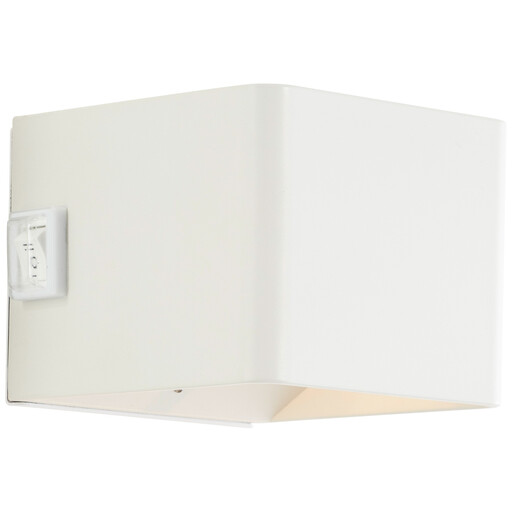
Why this product fits the profile: This compact LED light with 300 lumens, integrated battery, USB port and magnetic mount is ideal for smaller entrance, patio or garden areas without a fixed power supply.
The product data clearly states the light output, colour temperature, battery, USB charging and IP44 rating. This makes it easier to realistically assess where it can be used.
300 lumens, 3,000 Kelvin, integrated battery, USB port, magnetic mount and motion sensor.
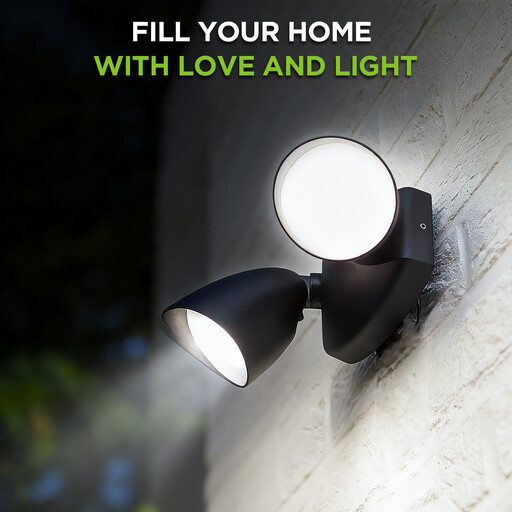
Why this product fits the profile: This outdoor light with two heads is designed for illuminating larger areas such as a courtyard, garden or patio.
The dual-head design distributes the light more precisely than a single fixed light source. The stated IP rating and mounting suitability should be checked on the product page before purchase.
20 watts, 1,800 lumens, 4,000 Kelvin, metal construction and two adjustable light heads according to the product description.
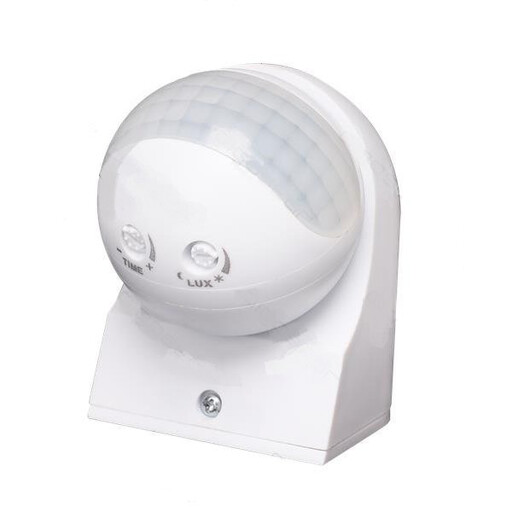
Why this product fits the profile: This separate PIR sensor is aimed at users who want to automate an existing light and adjust the detection angle, range, hold time and twilight threshold.
The specifications state up to 12 metres range, 180° detection, 10 seconds to 7 minutes delay and 10 to 2,000 lux. IP44 limits its use to suitable, sheltered areas.
Adjustable sensor, 230-volt connection, up to 12 metres range and stated switching capacity of up to 400 watts for LED lights.
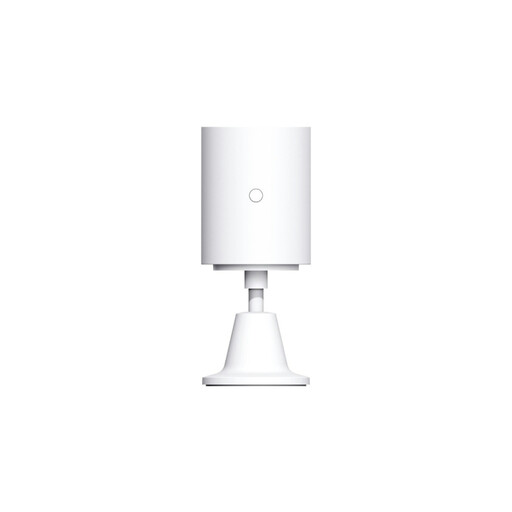
Why this product fits the profile: This sensor is designed for indoor use and can trigger lighting or smart home automations there. It suits users looking for a separate sensor rather than an outdoor light.
The product details mention Matter over Thread, a 170° detection angle and the required compatible border router or hub infrastructure. The sensor is explicitly not intended for outdoor use.
Matter-over-Thread communication, integrated light sensor, 170° detection angle and battery operation with two CR2450 batteries according to the product data.
We have put together a complete, regularly updated list of products that fully meet these strict selection criteria and the safety regulations in force in the EU.
The right height depends on the model, detection angle and installation location. A sensor is often positioned so that the desired path or entrance area is fully covered, without pointing directly at heat sources, ventilation outlets or moving branches. The manufacturer's mounting and height instructions for the specific product are decisive.
That depends on the set hold time and the product. With separate sensors, the delay can be set, for example, between a few seconds and several minutes. A shorter setting reduces unnecessary switch-on times, while longer intervals can be more practical on stairs, paths or driveways.
The consumption depends mainly on the power, daily switch-on time and power supply. An LED light typically requires less electrical power than older light sources for the same light output. A motion sensor can limit the operating time, but it does not replace checking the wattage, battery capacity and actual usage.