
Lieferung heute & morgen

Qualitätsgarantie

Willkommens-Angebote freischalten: KOSTENLOSE Lieferung | Bis zu 80 % RABATT | Kostenlose 30-Tage-JoyPlus-Testphase
App herunterladen
A motion-sensor night light should switch on automatically when someone enters the room. In practice, however, models vary considerably in terms of installation, power supply, brightness and sensor control. If you focus only on a high lumen rating or modern design, you could end up buying a light that does not work reliably where you intend to use it.
For households, families, older people and users with poorly lit indoor areas, three common purchasing misconceptions are particularly relevant:
For an LED motion-sensor night light, the product description should clearly explain how the sensor works. PIR sensors generally detect changes in thermal radiation caused by movement. Actual detection performance depends on the installation height, viewing angle and any obstacles.
For a hallway light with a sensor or a light installed on a staircase, the following points are also important:
A gesture-controlled model can be practical for cupboards or kitchen areas, but technically it is not automatically the same as a conventional motion sensor. Fixed sensor lights often specify features such as detection range of up to 12 metres, adjustable delay from 10 seconds to 7 minutes or a lux setting. These values should be suitable for the room.
The unit lumen describes luminous flux. A light with 40 lumens is more suitable as an orientation light, while 300 to 400 lumens can illuminate a small hallway, cloakroom or cupboard much more brightly.
Colour temperature is measured in Kelvin:
A dimmable night light is particularly useful if the same light is to be used during the day and at night. Also check whether the brightness can be adjusted continuously, using a button, gesture control or an app.
A rechargeable night light with a USB-C connection can be used in different locations without drilling. Magnetic mounts or mounting hooks make it easier to install on metal surfaces, cupboard sides and walls. Even so, check that the holding strength and position are suitable for access to the charging port.
For a cupboard light with a motion sensor, compact dimensions and even light distribution are more important than an especially high maximum brightness. A 20 or 40-centimetre light bar may be sufficient for a single cupboard; wider shelves or long hallways are better served by several lights.
Hard-wired 230-volt sensors provide a permanent power supply. Installation must be carried out with the power switched off and in accordance with the applicable electrical regulations. A qualified electrician should be engaged for work on the domestic electrical installation.
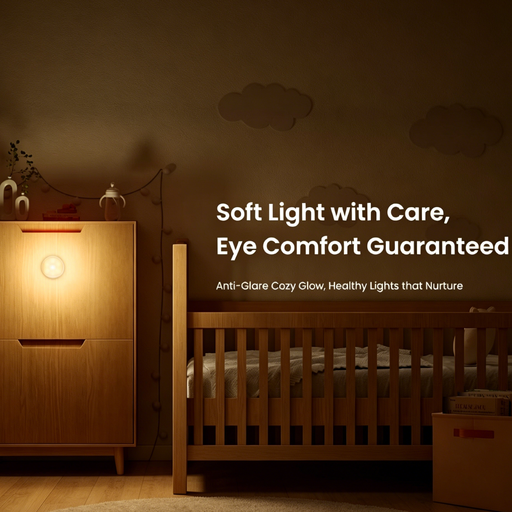
Why this product suits this profile: Its compact design is intended for simple orientation lighting in bedrooms, hallways or children’s rooms, without the need for fixed wiring.
The product name explicitly refers to a motion sensor. This makes the control method clearer than with lights that respond only to darkness.
Wireless use and automatic activation via a motion sensor; suitable for typical indoor areas.
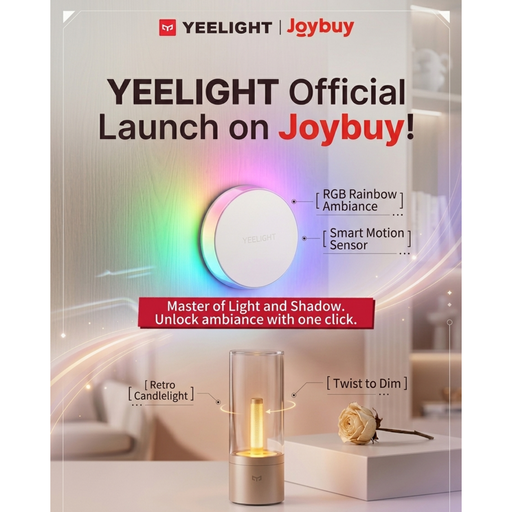
Why this product suits this profile: This light combines motion sensing with 11 preset lighting effects, magnetic mounting and USB-C charging for flexible use in living rooms or bedrooms.
The magnetic mount reduces installation effort. The USB-C connection clearly indicates how it is powered, but you should still check the charge level and operating time.
USB-C rechargeable and magnetically mountable; 11 preset RGB lighting effects.
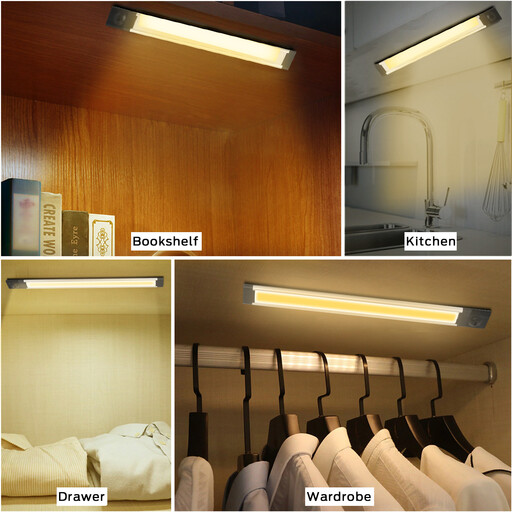
Why this product suits this profile: With 400 lumens, 2800 to 6500 Kelvin, gesture control and a length of 26 centimetres, this light is suitable for cupboards, hallways, stairs, garages and work areas.
The luminous flux and colour temperature specifications show that this light is not intended merely as a dim orientation light. Dimming allows it to be adapted to different areas.
36 Epistar LEDs, 400 lumens and adjustable colour temperature; magnetic mounting plus hooks with no drilling required.
We have put together a complete, regularly updated list of products that fully meet these strict selection criteria and the safety regulations applicable in the EU.
Many models can be attached using a magnet, adhesive pad or hook. Before installation, the surface should be clean, dry and able to support the light. Position the sensor so that furniture, doors or curtains do not obstruct the detection area. For rechargeable lights, the charging port should remain accessible.
Operating time depends on battery capacity, brightness, how often the sensor is triggered and the afterglow duration. A specific operating time is meaningful only if the supplier states it under defined conditions. For hallways and bedrooms, a short afterglow setting is recommended to reduce charging intervals.
Power consumption depends on the wattage and duration of use. A 1-watt light uses around 1 watt-hour when operated for one hour. With a battery-powered model, the energy required for charging must also be taken into account. A sensor can reduce consumption by activating the light only when movement is detected. Even so, brightness, afterglow duration and actual usage should be considered together.