
Lieferung heute & morgen

Qualitätsgarantie

Willkommens-Angebote freischalten: KOSTENLOSE Lieferung | Bis zu 80 % RABATT | Kostenlose 30-Tage-JoyPlus-Testphase
App herunterladen
Choosing the right cordless vacuum can be a challenge, given the vast array of models and technical specifications. The freedom from a cord is a clear advantage, but terms like suction power, battery life, and filter classes often raise questions. As your Joybuy Product Recommendation Officer, my mission is to provide you with clear and objective guidance. This guide is designed to help you understand the key technical features and find a model that meets your standards for a clean home.
To make an informed decision, a few technical aspects are crucial. Here are three key criteria to guide your selection.
A vacuum's cleaning performance is primarily determined by its suction power, which is often measured in Pascals (Pa) or Air Watts (AW).
For homes with carpets or pets, powerful suction is especially important for effectively removing deep-seated dirt and hair.
For allergy sufferers and pet owners, filtration technology is a crucial criterion. A high-quality vacuum with a HEPA filter (High-Efficiency Particulate Air) can significantly improve a room's air quality. These filters are capable of removing the smallest particles, such as pollen, fine dust, and pet dander, from the vacuum's exhaust air. Pay attention to the HEPA class (e.g., H13 or H14), which indicates how efficiently particles are captured. A sealed filtration system ensures that filtered air doesn't escape back into the room through leaks in the housing.
A cordless stick vacuum offers maximum freedom of movement. Battery life is a key factor here. Manufacturer specifications usually refer to the Eco mode on the lowest suction setting. Check how long the battery lasts in Standard or Turbo mode, as these are more relevant for everyday cleaning. Models with a swappable battery offer the ability to double the runtime with a second unit. Many devices also convert quickly into a cordless handheld vacuum, making it easier to clean furniture, car interiors, or stairs.
Based on objective product features, we have curated a selection of models that cater to different needs.
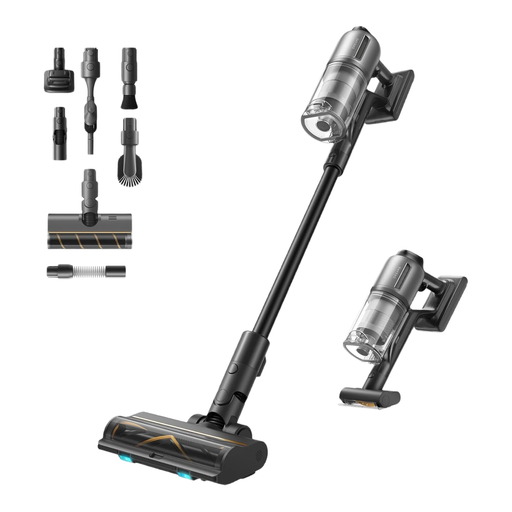
Why this model stands out: The Dreame Z30 combines exceptionally high suction power with advanced technological features. According to the manufacturer, the motor reaches up to 150,000 RPM and generates 310 AW of suction. A standout feature is the sealed HEPA H14 filtration system, which captures 99.99% of particles as small as 0.1 microns. Additionally, the CelesTect blue light dust detection reveals invisible dirt on hard floors.
Pros:
Who is this model for? This model is aimed at tech-savvy users and households with high standards for cleaning performance and air quality, especially those with allergies or pets.

Why this model stands out: The Uninell UV5 is equipped with anti-tangle brush technology that, according to the manufacturer, reduces hair wrapping by up to 95%. With suction power of up to 48,000 Pa and a 7-stage filtration system that captures 99.99% of particles down to 0.3 microns, it is well-suited for homes with pets. The LED touchscreen provides real-time information on runtime and maintenance alerts.
Pros:
Who is this model for? The Uninell UV5 is a great choice for pet owners and families looking for reliable cleaning performance with practical features like the anti-tangle brush and an informative display.

Why this model stands out: This model from Ochama is a cost-effective 4-in-1 solution that stands out for its lightweight design and easy handling. With 18 kPa of suction power and a runtime of up to 40 minutes, it is well-suited for quick clean-ups, smaller apartments, or as a secondary device. The integrated LED light helps to spot dust in dark corners or under furniture.
Pros:
Who is this model for? This device is ideal for budget-conscious buyers, students, or as a practical secondary vacuum for quick cleaning of the kitchen, car, or upholstery.
If the models featured here don't exactly match your requirements, or if you'd like to compare more devices, you can find a wider selection in our category. Discover more models that fit your budget and needs.
1. What is more important: Pascals (Pa) or Air Watts (AW)? Both values are indicators of suction power. Pascals (Pa) measure pure vacuum pressure, while Air Watts (AW) represent a combined measurement of pressure and airflow, often considered a more practical figure for actual cleaning performance at the nozzle. A high AW value is typically a reliable indicator of strong overall performance.
2. How often should you clean or replace a cordless vacuum's HEPA filter? This depends on the model and frequency of use. Many modern HEPA filters are washable. It is recommended to clean them under running water every 4 to 6 weeks, depending on usage. It is crucial to let the filter dry completely (for at least 24 hours) before reinserting it. Non-washable filters should be replaced according to the manufacturer's instructions, typically every 6 to 12 months, to maintain filtration performance and air hygiene.