
Lieferung heute & morgen

Qualitätsgarantie

Willkommens-Angebote freischalten: KOSTENLOSE Lieferung | Bis zu 80 % RABATT | Kostenlose 30-Tage-JoyPlus-Testphase
App herunterladen
Motor skills toys for babies from 1 year are designed to encourage little hands to grasp, twist, post or stack. At the same time, parents and relatives are faced with a confusing array of choices: colourful packaging often promises a wide range of learning benefits, while important details about small parts, materials or actual everyday practicality are less prominently displayed.
These three common buying mistakes frequently lead to the wrong purchases:
For children from one year old, larger, easy-to-grip elements are generally suitable. However, a toy can still consist of several small parts. Therefore, pay attention to:
With the Haba Lighthouse Stacking Game, for example, the toy is described for children from 12 months. At the same time, the product information points out small parts and a potential risk for children under three years. These details should be considered before purchase and during every use.
A peg puzzle for babies or a wooden puzzle from 1 year should have pieces that the child can safely pick up. Practical features include rounded edges, chunky knobs or sufficiently large shapes. For a puzzle with several animal shapes, it is also important that the cut-outs are clearly defined and that the pieces can be inserted without force.
For stacking toys, the connection should be stable but not unnecessarily stiff. The Haba Lighthouse Stacking Game consists of six elements. According to the product description, the blocks have a peg on the top and a matching recess on the bottom. This allows them to be stacked on top of each other with precision.
Wooden motor skills toys are easy to care for in everyday life if the surface can be cleaned with a damp cloth. However, wooden toys should not be soaked in water or treated with harsh cleaning agents. This can damage the material and the finish.
With FSC-certified wood, the certification provides specific information about the material or origin. However, it does not replace the need to check the individual product for damage. For a pedagogically valuable toy, it is not just the material and appearance that count, but also whether the child can understand and repeat the task independently.
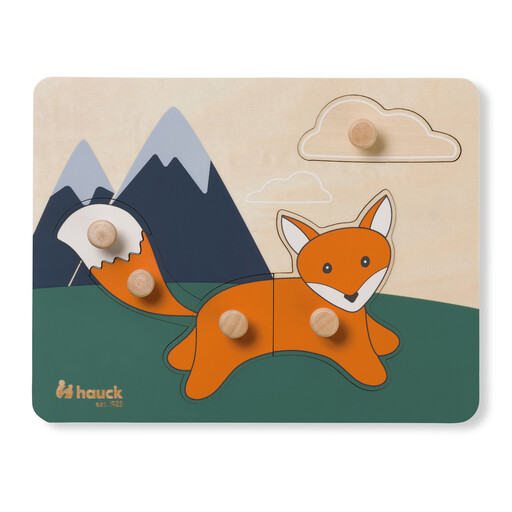
Why this product fits the profile: This compact inset puzzle offers a manageable introduction to sorting and matching shapes, without batteries or additional features.
The wooden knobs make it easier to lift out and insert the pieces. The product details mention rounded edges and an age recommendation from 12 months.
FSC-certified wood, a compact size of 22 × 17 × 2 cm and easy-to-grip wooden knobs.
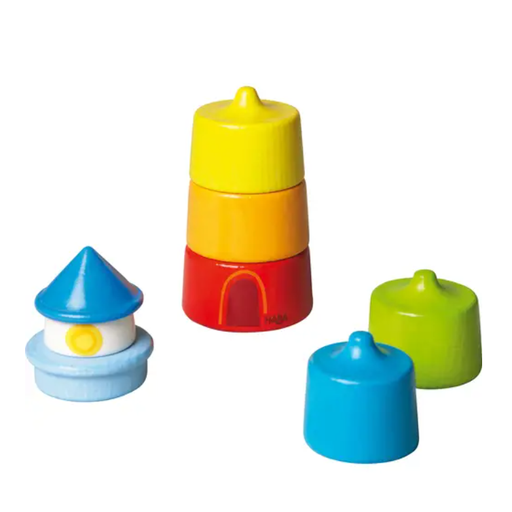
Why this product fits the profile: This stacking game focuses on a clearly defined task and offers six pieces for repeatable play while sitting.
The matching pegs and recesses support stable stacking. The warning about small parts remains important nonetheless.
Six pieces, product dimensions of 15 × 15 × 20 cm and no batteries required.
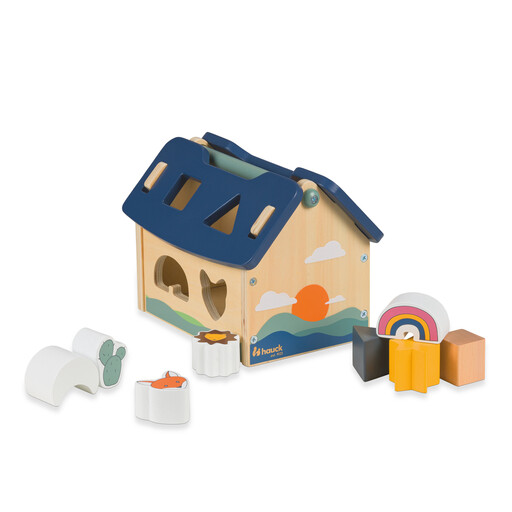
Why this product fits the profile: This sorting toy combines shape recognition, inserting, removing and storing in one product, making it ideal for regular play routines.
The eight building blocks have a specific sorting task. The removable roof allows the pieces to be taken out and stored away.
FSC-certified wood, carrying handle and storage space inside the playhouse; according to the product details, suitable for children from 12 months.
We have compiled a complete, regularly updated list of products that fully meet these strict selection criteria and the safety regulations in force in the EU.
Before placing an order, parents, grandparents and relatives can check these points:
Even a first birthday gift does not need to offer as many features as possible. A simple puzzle, a stacking game or a clearly designed sorting toy can be more suitable for everyday use than a complex product.
Suitable options can include large peg puzzles, simple wooden puzzles, stacking games and sorting toys, provided the specific age rating and warnings are appropriate. Use should initially be under direct supervision.
The lifespan depends on the craftsmanship, storage and use. Check the toy regularly for cracks, splinters, loose parts and damaged paintwork. Wooden toys should be stored in a dry place and cleaned according to the care instructions.
No. Many forms of toys for promoting fine motor skills work without batteries, including wooden puzzles, stacking games and sorting toys. Electronic versions can offer additional sounds or lights, but they are not necessary for the basic grasping and matching tasks.