
Lieferung heute & morgen

Qualitätsgarantie

Willkommens-Angebote freischalten: KOSTENLOSE Lieferung | Bis zu 80 % RABATT | Kostenlose 30-Tage-JoyPlus-Testphase
App herunterladen
Motor skills toys for babies should encourage little hands to grasp, press, sort and move. At the same time, parents, grandparents and other family members face a huge choice: learning cubes, sound toys, shape sorters, wooden puzzles and activity tables differ considerably in their recommended age, materials, volume and supervision requirements.
The product name alone is therefore not enough. What matters is whether the toy suits the child’s stage of development, your home environment and how you intend to use it.
A toy with lights, music, buttons and moving parts may seem versatile. However, for a six-month-old baby, large fixed surfaces may be more suitable than a complex activity cube. Conversely, a simple grasping toy can quickly become uninteresting for a two-year-old.
You should therefore check:
“Suitable for babies” is not sufficient safety information. Some products are intended for children from 12 months, but contain small parts and may only be used under direct supervision. Toys with moving mechanisms, detachable feet or small shapes should be checked regularly.
Look out for:
Music toys for young children can quickly become disruptive in a home. A volume control or quiet mode is therefore a practical selection criterion. The volume should generally be set low, and the toy should not be held directly against the ear. Volume control does not replace supervision.
Motor play develops gradually. For babies aged around six to twelve months, rolling objects, large buttons and easily accessible play areas are appealing. From 12 months, shape sorters, wooden puzzles from 12 months and simple sorting tasks can be introduced. From the age of three, role-play toys, more complex instruments and sets with multiple components become increasingly suitable.
The term Montessori toy from 1 year does not automatically describe a uniform product standard. The specific functions, dimensions and safety instructions are what matter.
Plastic toys may include details such as ABS and BPA-free in the product description. However, this alone does not say anything about the product’s overall suitability for use. You should also check:
The CE marking is a manufacturer’s declaration that the product complies with relevant EU requirements. It is not a quality seal and does not replace checks by adults.
A baby activity table must stand securely and should not tip over easily. For products with detachable legs, check whether the floor-level configuration is intended for the relevant age group. For battery-powered baby learning toys, the battery compartment, closure and contents of the package should all be checked before buying. Batteries are not included with several of the following products.
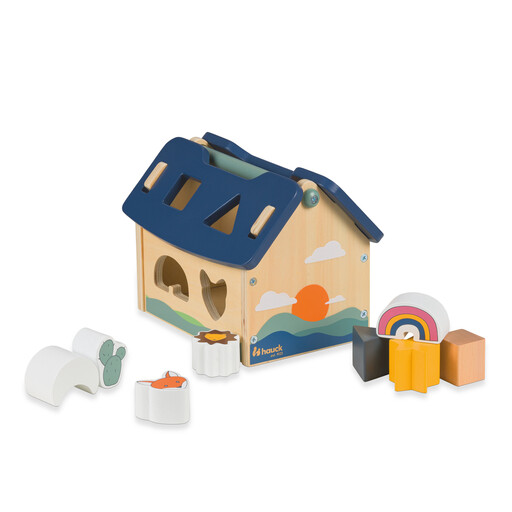
Why this product suits this profile: This wooden toy is designed for children from 12 months and combines sorting, stacking and storage in one compact house.
The age recommendation, information about the eight building blocks and the warning about small parts are clearly stated. The pieces can be stored inside the house.
FSC-certified wood, detachable roof and carry handle; a manageable shape sorter.
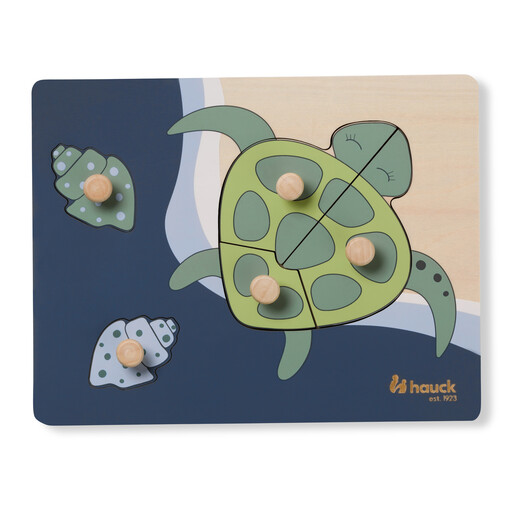
Why this product suits this profile: This puzzle has a wooden board with cut-outs and easy-to-grip wooden knobs for children from 12 months.
The age recommendation and requirement for direct supervision are clearly stated. Rounded edges reduce sharp transitions, but do not replace supervision.
FSC-certified wood, 22 × 17 cm and easy-to-grip knobs; ideal for focused sorting.
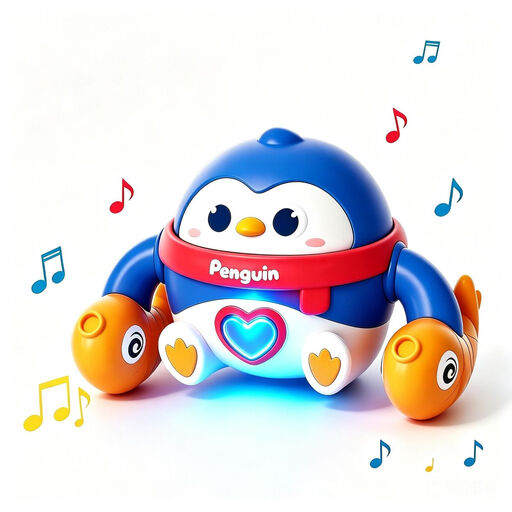
Why this product suits this profile: According to the product information, the rolling penguin is suitable for children aged 6 to 36 months and is designed for crawling and floor play.
The 360-degree movement, motion sensor and age recommendation are clearly stated. The toy requires a clear, level play surface.
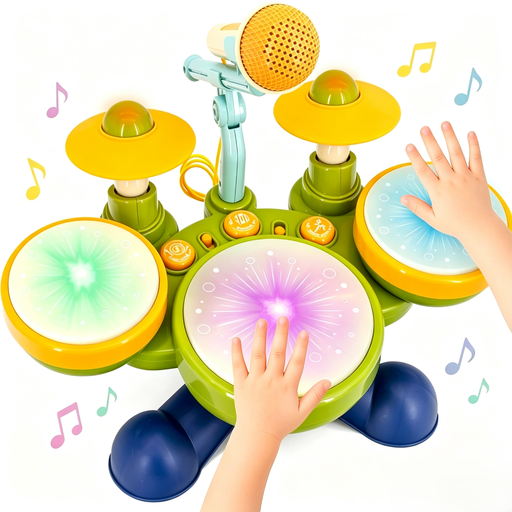
Why this product suits this profile: This children’s drum kit with microphone is designed for ages 1 to 3 and is suitable for families planning to make music together with adjustable volume.
A volume control lets you adjust the sound to suit your home and the time of day. The product information states that it is made from BPA-free ABS and has a non-slip four-point base.
Three illuminated drum surfaces, two raised cymbals, microphone and integrated melodies; batteries not included.
We have put together a complete, regularly updated list of products that fully meet these strict selection criteria and the safety regulations applicable in the EU.
This quick check is useful before placing your order:
This makes it easier to choose a motor skills toy for babies as both an everyday activity and a gift for babies and toddlers.
From six months, large, easy-to-reach controls and moving objects are useful. A rolling sensory baby toy can encourage babies to track objects with their eyes and reach for them. Whenever the toy is used, parents should ensure there is a clear play area and sufficient distance from stairs, furniture edges and small parts.
How long a toy remains useful depends less on its marketing claims than on the child’s age, interests and the range of functions. A shape sorter or wooden puzzle can be used over an extended period if the tasks are first completed together and later independently. Damaged parts should be removed immediately, regardless of the child’s age.
Battery-powered toys incur the cost of replacement batteries if these are not included. Before buying, check the battery type, battery compartment and on/off switch. Mechanical products such as a wind-up toy do not require batteries, but they may only be suitable from the age of three because of their small parts.