
Lieferung heute & morgen

Qualitätsgarantie

Willkommens-Angebote freischalten: KOSTENLOSE Lieferung | Bis zu 80 % RABATT | Kostenlose 30-Tage-JoyPlus-Testphase
App herunterladen
Motor skills toys should suit your child’s age, physical development and family’s daily routine. In practice, unclear age guidance, small parts that are difficult to keep track of and too many features can often lead to the wrong purchase. Parents, grandparents and other family members should look beyond colours and product claims, and focus on clear, verifiable features.
A toy with lights, music, buttons and moving parts may seem versatile. What matters, though, is whether a child can use its features independently and whether they’re right for their stage of development. For a baby aged 6 months and over, large, easy-to-reach features may be more useful than a complex activity cube designed for toddlers.
An age guide such as ‘from 6 months’ or ‘for ages 1 to 3’ is a useful starting point, but it doesn’t confirm that a product is right for your individual child. Check the following too:
Products with projectiles, such as an electronic bow set, require extra care. According to the product information, this product is intended for children aged 3 and over. It must not be aimed at people or faces, and an adult must supervise its use.
Foam blocks and soft motor skills modules are suitable for play areas, but you’ll need to check them regularly for tears, loose covers and dirt. For plastic toys, look for rounded edges and a sturdy design, and check that the cleaning instructions are clear.
For motor skills toys from 6 months, low-to-the-ground products for grasping, pressing, turning and sorting are usually suitable. An activity table with detachable legs can offer different ways to play. Children who can already stand and walk confidently may benefit more from a sturdy table, an activity cube or simple movement equipment.
For pre-school children, a balance board for children or a soft motor skills course can be a good choice. For a balance board, check the stated weight limit, standing surface and recommendation to use it on a flat, dry surface.
The supplied product information lists ABS and BPA-free materials for plastic products. These details come from the individual product descriptions, so check them against the labelling on the packaging and product. Also look for:
The CE mark is a manufacturer’s declaration that a product meets certain EU requirements. It is not an independent quality mark. For toys, you should also look for information about EN 71. Check that the relevant markings and warnings are present, along with details of the responsible person in the EU.
Children’s musical instruments, such as drums, sound tables and electronic activity cubes, often need batteries. Before buying, check whether batteries are included, how the battery compartment is secured and whether the volume can be adjusted. Volume control makes a toy easier to use at home, but it doesn’t replace appropriate supervision and breaks.
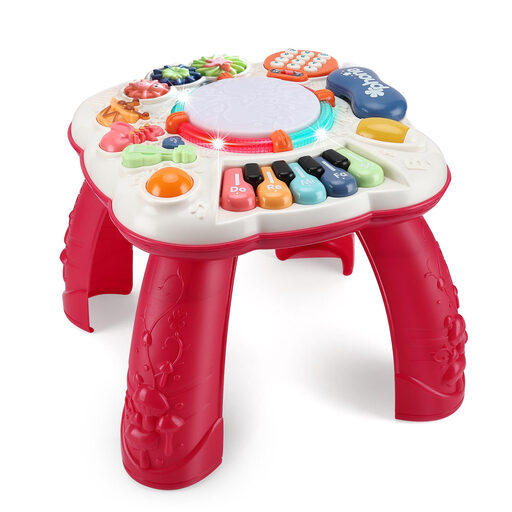
Why this product suits this profile: The combination of floor play and a table function offers a clear way to use this developmental toy for babies: first while lying down, then later while standing.
The product information gives an age range of 6 to 36 months, detachable legs, rounded edges and volume control. Check these features on the product you receive before use.
Six play areas, detachable legs and a compact design for playing together in the living room.
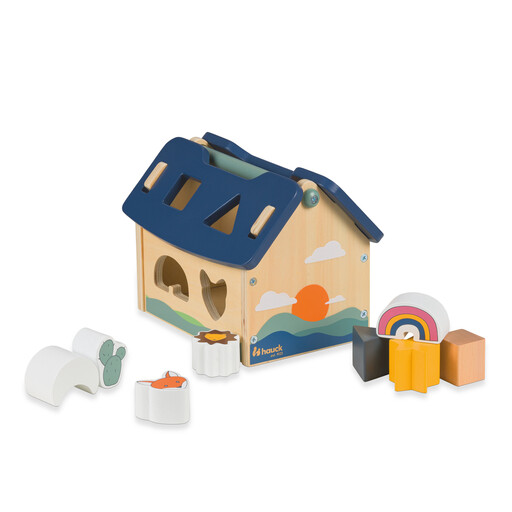
Why this product suits this profile: If you’re looking for a simple wooden developmental toy, this shape sorter offers a clear task without a host of electronic distractions.
The product description lists FSC-certified wood, 8 blocks and a recommended age of 12 months and over. Follow the warning about small parts.
Sort, stack and learn to recognise shapes with this wooden house, which can be stored away and has a carry handle.
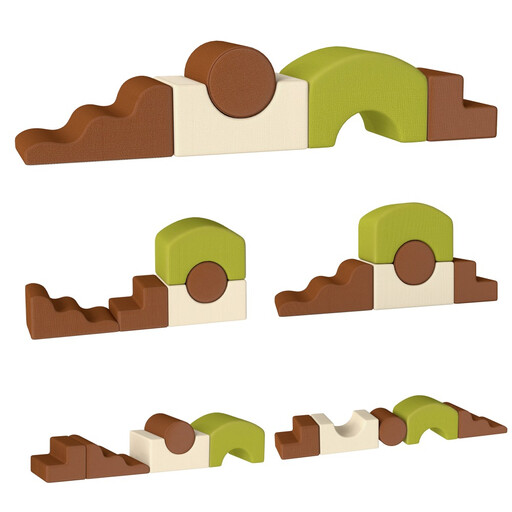
Why this product suits this profile: This five-piece set could be a good choice for families, nurseries or play areas where children’s movement equipment needs to be rearranged regularly.
Soft modules reduce hard surfaces in the play area. Even so, check the covers, seams and foam for damage before each use.
Five soft foam modules with colourful corduroy covers for balance and gross motor skills play.
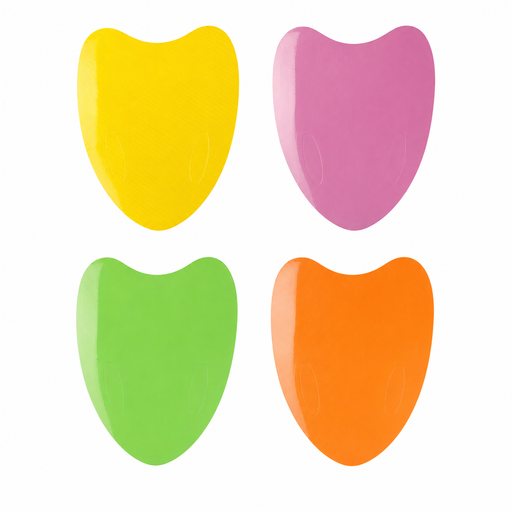
Why this product suits this profile: For children aged 3 to 8 who want to use a compact balance board indoors, its defined size makes it easy to plan for.
The instructions specify a slip-resistant surface, use on a dry, level floor and checks for cracks. An adult should supervise play.
Measures 40 × 32,2 × 2,8 cm, with a textured surface and a recommended age range of 3 to 8 years.
We’ve put together a complete, regularly updated list of products that meet these strict selection criteria and fully comply with the safety regulations in force in the EU.
Low-to-the-ground products with large, easy-to-grasp features are suitable, such as a simple sensory toy, an activity panel or a musical toy with easy-to-reach buttons. Avoid small parts, long cords and battery compartments that are difficult to secure. Choose toys that suit your child’s stage of development, and supervise their use.
How long a toy remains useful depends on its complexity, construction and your child’s stage of development. Products with adjustable play positions, several modules or different difficulty levels may be used for longer. Even so, check regularly that the toy is still suitable for your child’s age and is undamaged.
Musical motor skills toys for babies usually have ongoing battery costs. Before buying, check the battery type, what’s included and whether the toy has an off switch. Volume control or a quiet mode can make it easier to use as part of family life, but won’t fundamentally change battery consumption.