
Lieferung heute & morgen

Qualitätsgarantie

Willkommens-Angebote freischalten: KOSTENLOSE Lieferung | Bis zu 80 % RABATT | Kostenlose 30-Tage-JoyPlus-Testphase
App herunterladen
Motor skills toys for babies and toddlers should keep them engaged, stimulate their senses and encourage age-appropriate movement. But choosing the right one can be confusing: lights, lots of play modes and terms such as Montessori toys or ‘early learning’ don’t necessarily tell you how practical a toy will be day to day.
Three common misconceptions often lead to the wrong choice:
Check the specific age recommendation and consider how your child will interact with the toy. For babies, a flat play mat, easy-to-grasp hanging toys or a baby activity centre with removable elements can be useful. From around 1 year, activity cubes, sorting games, push-along toys or a learning toy for ages 1 and up are often suitable.
With walkers and push-along toys, stability, handle height and rolling behaviour are especially important. Use the product only on a level surface. Ride-on toys, such as bouncy or ride-on vehicles, need plenty of space and constant supervision.
Small parts that can be swallowed pose a major risk to children under three. So check:
Manufacturer claims such as BPA-free, phthalate-free or rounded edges are useful pointers, but they don’t replace a visual check. The CE marking indicates that the manufacturer has issued a declaration of conformity; it isn’t an independent quality mark. EN71 refers to European safety requirements for toys. Where possible, buy from retailers that provide clear information about the manufacturer and product safety.
Musical toys for toddlers can be practical for frequent use, but should have adjustable volume or a quiet mode. This is particularly useful in flats, when travelling and during quiet times. For electronic toys, also check whether batteries are included and how securely the battery compartment closes.
Care is another consideration with sensory toys. Wipe-clean plastic surfaces are easy to manage day to day. Where possible, textiles should be washable according to the care instructions. Water and bath toys need to dry completely after use to prevent moisture from collecting inside.
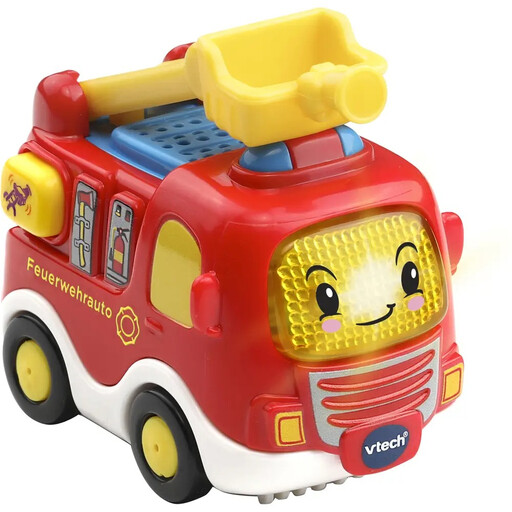
Why it suits these needs: This compact vehicle is designed for children aged 1 and up and takes up little space. Moving parts, buttons, lights and sounds offer an easy introduction to interactive learning toys.
The age limit of 1 year and up is clearly stated. Battery requirements, dimensions and warnings are also specified.
AAA batteries included, six melodies, three songs and compatibility with other Tut Tut Baby Flitzer playsets.
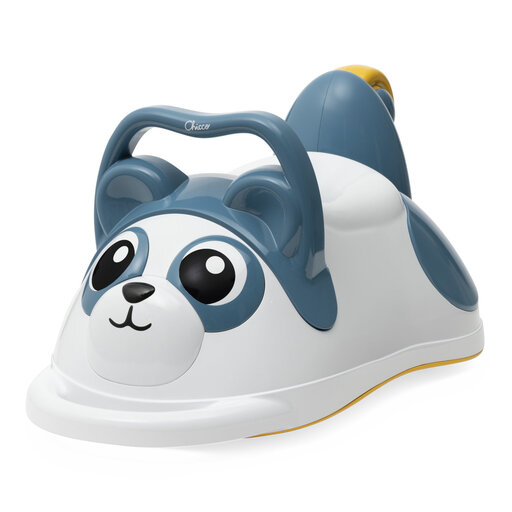
Why it suits these needs: The 3-in-1 design combines a ride-on toy, sorting station and wheelbarrow. It’s designed for children aged 12 to 36 months and can be adapted to different stages of play.
The different uses and age ranges are listed separately. The warnings also clearly state that there is no brake mechanism.
Maximum load of 20 kg, storage space under the seat, and materials stated to be BPA- and phthalate-free.

Why it suits these needs: This compact activity cube brings together eight play areas, including a piano, guitar, telephone, gears and music. It’s suitable for use at home or on the go.
The features are all brought together in one compact unit, which also has a carry handle. That means it takes up less floor space than several separate toys.
Measures approximately 23 × 23 × 24 cm, has rounded edges and is designed for children aged 1 to 3.
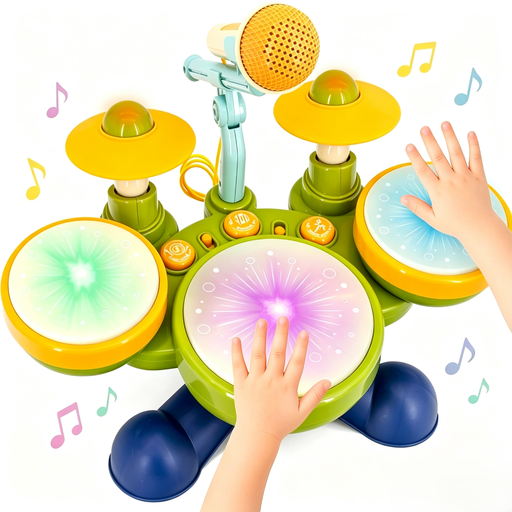
Why it suits these needs: Designed for children aged 1 to 3, this set combines drum pads, cymbals, a microphone and various music modes. Adjustable volume is useful when playing indoors.
The volume can be adjusted. The stand can also be removed, allowing the toy to be used as a flat floor play panel.
Three light-up drum pads, two liftable cymbals, a microphone and ABS stated to be BPA-free.
We’ve put together a comprehensive, regularly updated list of products that meet these strict selection criteria and fully comply with the safety regulations in force in the EU.
From 12 months, simple sorting boxes, activity cubes, push-along toys, stacking games and baby activity centres may be suitable. Look for large, easy-to-grasp parts, a stable construction and no small parts that could be swallowed. Your child’s individual development may not match the age recommendation exactly.
How long a toy holds your child’s interest depends on the range of play options, its construction and your child’s stage of development. Products with several difficulty levels or adjustable features can be used for longer. A 3-in-1 toy or an activity centre with removable parts often offers more variety than a single-function toy.
There’s no general answer. Melodies, lights and microphones all affect battery consumption. Check the power requirements and look for an off switch and volume control. If the toy is used regularly, rechargeable batteries can be a practical option, provided they’re suitable for the battery compartment.