
Lieferung heute & morgen

Qualitätsgarantie

Willkommens-Angebote freischalten: KOSTENLOSE Lieferung | Bis zu 80 % RABATT | Kostenlose 30-Tage-JoyPlus-Testphase
App herunterladen
As a Joybuy Product Recommendation Officer, I see countless products every day. My job is to separate the wheat from the chaff and give you objective, practical advice so you can make an informed decision. The market for motor skills toys, in particular, is crowded and full of marketing promises.
Many parents and grandparents want to find a meaningful gift for toddlers that not only entertains but also supports their development. However, the search often leads to frustration. Here are the most common pitfalls you should be aware of:
This guide will help you navigate these issues and choose a motor skills toy that is safe and provides long-lasting enjoyment.
Instead of being swayed by marketing terms, you should focus on three objective core parameters. These will help you assess the quality and actual benefit of a toy.
Motor development occurs in phases. A distinction is made between gross motor skills (movement of the whole body, e.g., crawling, walking) and fine motor skills (precise movements of hands and fingers, e.g., grasping, stacking). A good educational toy is precisely tailored to the child's abilities in their current phase.
A toy that overwhelms a child leads to frustration. One that underwhelms them quickly becomes boring. The manufacturer's age recommendation is therefore a crucial first indicator.
Your child's safety is the top priority. Since babies and toddlers often put toys in their mouths, the materials are of critical importance.
A well-designed motor skills toy offers more than just one function and can accompany a child over a longer period.
A versatile toy is a more sustainable and often more economical choice.
Based on the criteria above, we have identified some products that are well-suited for specific needs and age groups.
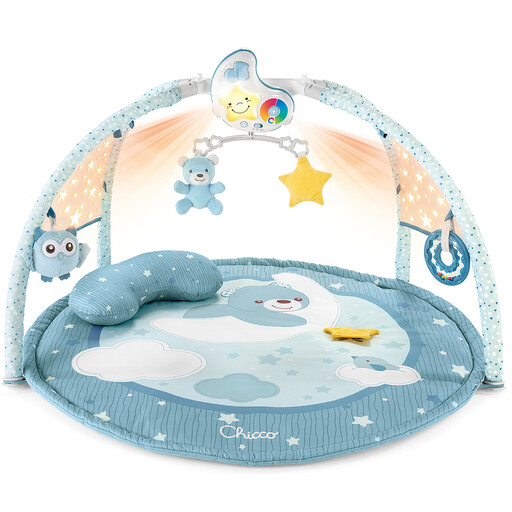
Why this product is a great fit: This play gym is designed for the earliest developmental stage. It promotes hand-eye coordination as the baby reaches for the hanging rattles and supports neck muscles during "Tummy Time."
Thanks to its 3-in-1 function (play gym, play mat, detachable projector as a night light), it grows with the child and avoids the short-lifespan trap.
The play mat and pillow are machine washable, which simplifies hygiene. The projector offers various light and music modes.
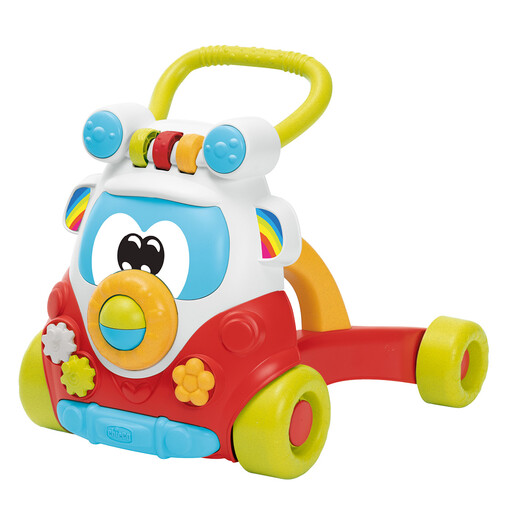
Why this product is a great fit: This baby walker provides stable support for children who are pulling themselves up to stand. It promotes gross motor skills and gives them confidence during their first attempts at walking.
As a 2-in-1 toy, it combines the walking function with an activity centre on the front. This keeps it relevant as a play station for fine motor skills even after the child has learned to walk.
The four wide wheels ensure high stability. The manual play activities require no batteries and specifically promote fine motor skills.
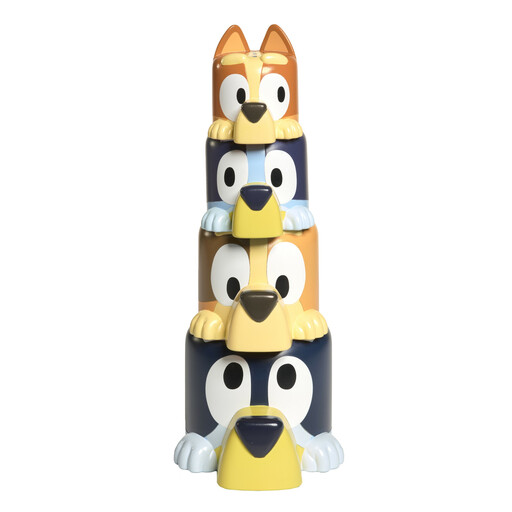
Why this product is a great fit: This bath toy set is ideal for toddlers who love to experiment with water. Pouring, stacking, and nesting the figures specifically promotes fine motor skills and an understanding of size relationships.
It's more than just a simple bath figure. The different pouring holes and stacking function provide a long-lasting, educationally meaningful play incentive that goes beyond mere splashing.
The figures can be stacked inside each other (nesting design), which allows for space-saving and tidy storage after bath time.
We have compiled a complete, up-to-date list of products that fully meet these strict selection criteria and German safety regulations.
Motor skills toys are useful from birth, as long as they are age-appropriate. For newborns, mobiles or a play gym are suitable for stimulating visual perception and initial grasping reflexes. From around 6 months, targeted baby toys from 6 months like grasping toys or soft fabric balls become interesting for training hand-eye coordination.
Wooden toys: Clean them with a slightly damp cloth. Do not use aggressive cleaning agents or immerse the wood in water, as it can swell and crack. Let it air dry. Fabric toys: Check the care label. Many fabric toys and play mats are machine washable on a gentle cycle. For toys with integrated electronics, only surface cleaning with a damp cloth is possible.
Look for the CE marking on the product or packaging. Additional, voluntary test seals like the GS mark ("Geprüfte Sicherheit" or "Tested Safety") can be another indicator. For plastics, the BPA-free label is an important feature. Robust, clean workmanship with no sharp edges or easily detachable parts is a visual quality feature that you can check yourself.