
Lieferung heute & morgen

Qualitätsgarantie

Willkommens-Angebote freischalten: KOSTENLOSE Lieferung | Bis zu 80 % RABATT | Kostenlose 30-Tage-JoyPlus-Testphase
App herunterladen
Motor skills toys for children can support movement, coordination and independent play. In practice, though, people often buy products that aren’t suited to their child’s age, their home or the way their child actually plays. If you have children aged between 2 and 8, it’s worth taking a closer look at the construction, space requirements and safety information.
Phrases such as ‘supports development’ or ‘for motor skills’ don’t tell you much on their own. What matters are details you can check: what age range is specified? What movements does the toy actually involve? Does it need a flat surface, wall mounting or plenty of space?
A balance board for children, for example, has different requirements from a tabletop game with falling pieces. In a small home, a compact coordination toy may be more practical than a large active play toy.
A toy may look compact in product photos but take up much more room once assembled. This can apply to an electric train set for children, a flexible racing track or a 2-in-1 balance bike and tricycle.
Before buying, parents should check:
Electric toys need time to charge, suitable storage and regular checks. If a toy has a rechargeable battery, parents should follow the charging instructions and only charge it as directed by the manufacturer. If it contains small parts, it’s especially important to check the age rating.
CE marking is a legally required declaration of conformity made by the manufacturer; it isn’t an independent quality mark. You should also be able to check the warnings, material information and details of the responsible person in the EU.
The age rating is a minimum requirement, but it doesn’t replace an assessment of your child’s individual abilities. A learning toy for children aged 3+ may not be suitable for a younger child, even when used under supervision. For children aged 2 to 5, simple activities and easy-to-reach controls are generally more accessible.
Different types of play suit different goals:
A balance board should have a textured surface and be used on a dry surface that isn’t slippery. Check the board for cracks or other damage before every use. Smooth floors, dampness and loose rugs can affect its stability.
Soft materials are worth considering for catching and reaction games. They don’t automatically remove every risk of injury, but for lightweight falling pieces they can make a difference compared with hard plastic parts. Always follow the manufacturer’s specific warnings.
Dimensions such as 40 × 32,2 × 2,8 cm can help you assess the size of a balance board, but they don’t tell you on their own how much room you’ll need. With a train set, the track area is also important. The train set described, for example, needs a layout of around 70 × 41 inches, or approximately 178 × 104 cm.
For many products, a dry or slightly damp cloth is all you need for cleaning. Electrical components and charging ports must not come into contact with water. A flexible racing track without batteries doesn’t need charging, but you should still check the suction cups, track pieces and small parts regularly.
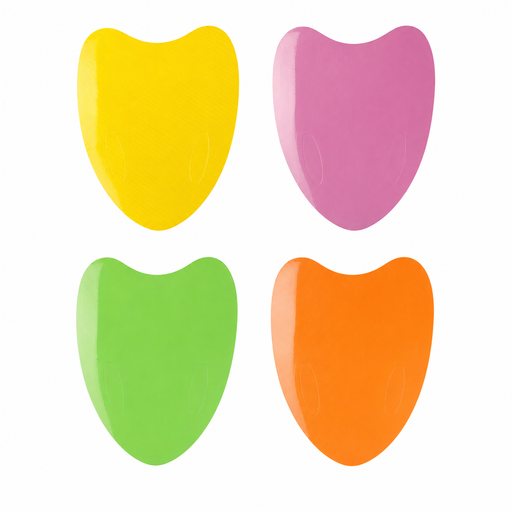
Why this product suits this shopper: This compact board is listed for children aged 3 to 8 and doesn’t need batteries or a charger. It’s suitable for short bursts of activity on a flat, dry surface.
The product details include its dimensions, age range, non-slip surface and specific usage guidance. This makes it easier to work out how much space you’ll need before buying.
40 × 32,2 × 2,8 cm; textured surface; no battery needed; use under supervision on a non-slip surface.
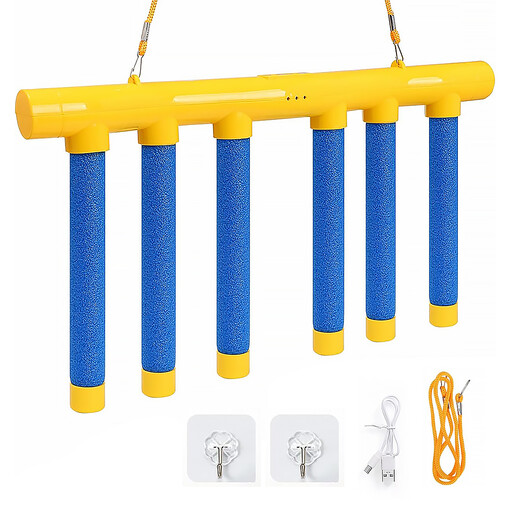
Why this product suits this shopper: This reaction game has three adjustable falling speeds and can be enjoyed indoors as a family. According to the product details, the falling pieces are made from soft EVA foam.
Adjustable speeds mean you’re not limited to a single difficulty level. Be sure to follow the age rating of 3+ and take note of the warning about small parts.
Three falling speeds; USB-rechargeable battery; dimensions of 38,5 × 21,5 cm; designed for wall mounting with hooks.
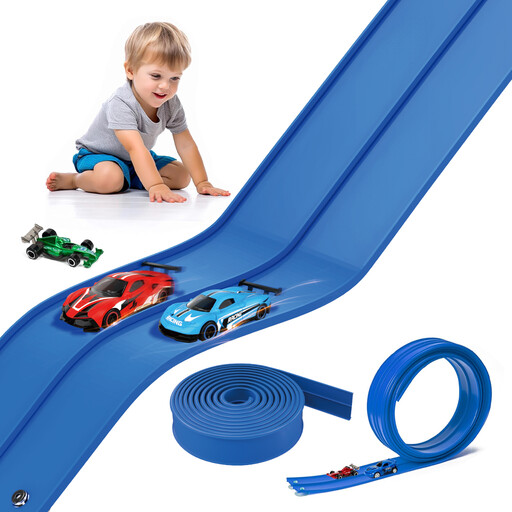
Why this product suits this shopper: The 4,5 m flexible two-lane track can be set up indoors or outside, then rolled away for storage. It’s a good fit for families who want to create different layouts and save space when playtime is over.
The track doesn’t need batteries. Its length and roll-away design are clearly stated before you buy. As it contains small parts, it isn’t suitable for children under 3.
4,5 m flexible two-lane track; four friction-powered cars included; two suction cups; no power supply needed.

Why this product suits this shopper: This set combines building, imaginative play and an electric train ride. The modular track can be assembled in different shapes and needs a suitably large play area.
The number of track pieces and approximate layout size are provided, so you can check whether your table or floor has enough space. Charge the battery according to the instructions.
Steam locomotive, several carriages, 8 curved and 4 straight track pieces; rechargeable battery; light and sound effects, plus optional steam, according to the product description.
For children who love being on the move, a 2-in-1 balance bike and tricycle with an adjustable seat and removable pedals could be a good option. Check the seat height and surface, and supervise your child during use. An electric train set is a good choice for calmer play, while a skill-based or catching game is ideal for a quick round in the living room.
If you’d like to compare several types of products, browse more toy train sets for children and other gift ideas for children.
We’ve put together a complete, regularly updated list of products that meet these strict selection criteria and fully comply with the safety regulations in force in the EU.
Choose products with an age rating that explicitly says 3+ and controls that suit your child’s stage of development. Adult supervision is needed for toys with small parts, balance boards and electric toys.
It depends on the track layout. The stated footprint for the train set mentioned above is approximately 178 × 104 cm. Before buying, allow extra room for setting it up, playing and putting it away.
There’s no single answer, as lifespan depends on the materials, how often the toy is used, how it’s stored and how well it’s cared for. Check moving parts, suction cups, track connections and surfaces regularly. Don’t continue using a damaged toy.