
Lieferung heute & morgen

Qualitätsgarantie

Willkommens-Angebote freischalten: KOSTENLOSE Lieferung | Bis zu 80 % RABATT | Kostenlose 30-Tage-JoyPlus-Testphase
App herunterladen
The selection of motor skills toys can be overwhelming. From baby walkers that support first steps to ride-on toys for little adventurers, every product promises to foster your child's development. But not every toy delivers on its promise. As a Joybuy Product Recommendation Officer, I filter market information for you and show you what really matters to make an informed decision.
Many well-intentioned purchases quickly turn out to be impractical or even a hindrance to development. Before you invest, you should know the most common pitfalls:
To avoid a bad buy, you should focus on objective criteria instead of marketing promises. These three parameters are crucial for the safety, utility, and longevity of motor skills toys.
A good motor skills toy adapts to the child, not the other way around. For children's vehicles like a balance bike or a toddler tricycle, look for adjustable components.
Safety is non-negotiable. Carefully examine the materials used and the construction.
Consider which developmental goal the toy is primarily intended to support. A focused educational toy is often more effective than an overloaded activity centre.
Based on these objective criteria, we have identified some products that are suitable for different needs and developmental stages.
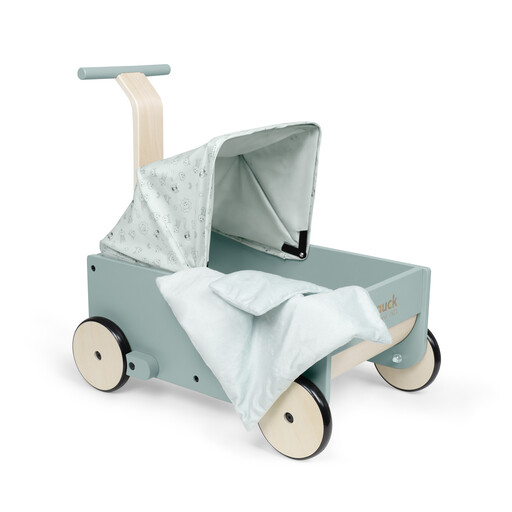
Why it's a good fit: Ideal for children who are beginning to pull themselves up and take their first steps. The walker provides stable support and combines the walking function with a role-playing element, which increases motivation.
The product focuses on its core function as a stable walker. Instead of electronic stimuli, it offers a meaningful dual function as a doll's pram without compromising stability or ergonomics.
Individually adjustable brake to adapt the rolling speed. The height-adjustable handle (45-49 cm) and its construction from FSC-certified wood are further plus points.
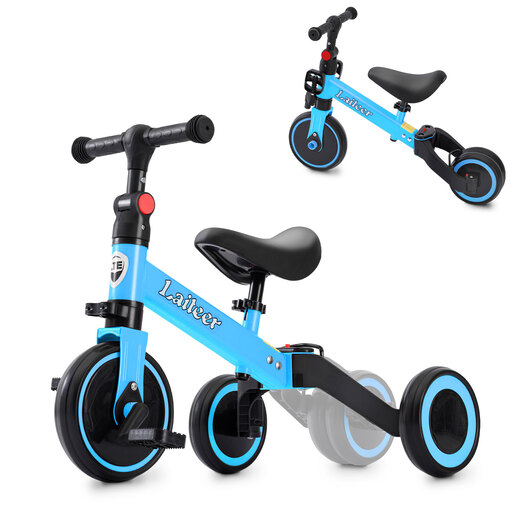
Why it's a good fit: For parents looking for a long-term solution that adapts to their child's growing abilities. It starts as a stable tricycle and later converts to a balance bike for balance training.
Unlike poorly designed combination models, the conversion here is well-thought-out. The detachable pedals and adjustable wheel position allow for a true transformation without compromising the core function of each configuration.
Tool-free conversion between tricycle and balance bike. The adjustable seat and foldable design make it a practical companion for long-term use from 2 to 5 years.
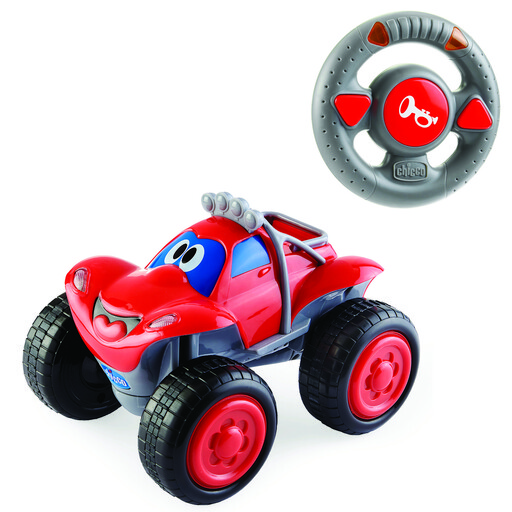
Why it's a good fit: For toddlers from 2 years old who have already mastered their basic motor skills and are ready for a new challenge. It playfully promotes spatial awareness and coordination.
This toy avoids sensory overload through a targeted functional focus. The sounds and lights are directly linked to the child's actions (accelerating, steering), supporting the understanding of cause and effect.
The intuitive steering wheel remote control reacts to tilting, which makes steering very understandable for young children. The large wheels allow it to drive over small obstacles.
We have compiled a complete, up-to-date list of products that fully meet these strict selection criteria and UK safety regulations.
A baby walker is useful when a child can already sit independently and pull themselves up on furniture. This is usually the case between the 9th and 12th month. It should serve as a support to train balance during the first steps, not to force walking. Models like the Chicco Happy Hippy Walker are designed for an age range of 9 to 24 months and offer manual play activities in addition to the support function.
That depends on the developmental goal. A toddler tricycle, like the Besrey Toddler Tricycle, offers high stability and introduces children to pedalling. It is often suitable for children from around 2 years of age. A balance bike, such as the Baby Balance Bike, primarily trains the sense of balance. Many educators see it as the ideal preparation for cycling, as the transition is easier later on if balancing has already been learned.
Look for the CE mark, which confirms compliance with EU safety standards. Also important are a tip-proof design (wide wheelbase), rounded edges to prevent injuries, and non-toxic materials. Regularly check that all screws are tight and no parts are damaged. Use should always be under the supervision of an adult.