
Lieferung heute & morgen

Qualitätsgarantie

Willkommens-Angebote freischalten: KOSTENLOSE Lieferung | Bis zu 80 % RABATT | Kostenlose 30-Tage-JoyPlus-Testphase
App herunterladen
Motor skills toys for babies and children can support grasping, coordination, balance and independent exploration in everyday life. But what matters isn’t the longest list of features: it’s finding the right combination of age suitability, design, materials, space requirements and supervision. A baby play gym is suited to a different stage of development from a Pikler triangle or an indoor climbing frame for children.
‘From birth’ doesn’t mean that every accessory can be used without supervision. Small rattle parts, cords and detachable elements may require extra care. For climbing products, the stated minimum age is only a starting point. A child’s height, mobility and ability to understand instructions also matter.
A stated maximum weight doesn’t automatically cover every play situation. Swinging, climbing and jumping can put the product under dynamic forces. A climbing triangle for children aged 2 and over should also be placed on a flat, stable surface. Some products additionally recommend a soft mat and, for taller structures, wall anchoring.
A product may look compact in photos, but still need a clear safety zone around it. Before buying, check the assembled dimensions, footprint and distance from windows, radiators, stairs and furniture. Wipe-clean or washable surfaces are practical for baby products, while wooden structures need regular checks for loose screws and damage.
For babies, choose low-level play options that let your child lie on a stable surface or play on their tummy. A baby gym with hanging toys can encourage reaching, visual tracking and hand-eye coordination. Climbing equipment is different: adults must supervise directly; only one child should use it at a time, and it must be used in accordance with the manufacturer’s instructions.
Look for clear guidance such as ‘from birth’, ‘from 24 months’ or ‘not suitable for children under 36 months’. Recommendations can vary from one product to another, even when two models look similar.
When choosing a Montessori climbing triangle or Pikler triangle, consider the following:
A reference to a standard shouldn’t be replaced by marketing claims. So check the information supplied with the product and the specific age guidance for the model you’re considering.
Washable mats and cushions are handy for everyday life with a baby. Electronic components, however, must be kept out of water. Wood can usually be cleaned with a dry or slightly damp cloth; harsh cleaning products may damage the finish. For foam play blocks, important things to look for include a removable cover, strong stitching and an easy-clean surface.
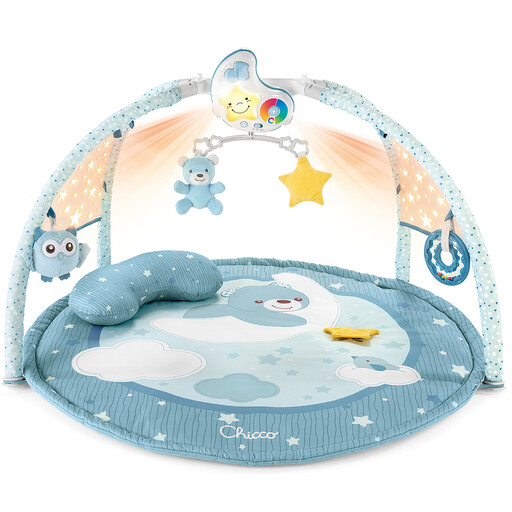
Why it suits this profile: This 3-in-1 baby gym combines a round play mat with a cushion, hanging toys and a detachable projector. According to the product information, it’s suitable from birth.
The 83-cm mat and detachable elements make the intended use clear. However, because it includes small parts, the stated supervision requirements still apply.
Washable mat and cushion, two timer settings, and a detachable projector with a night-light function.
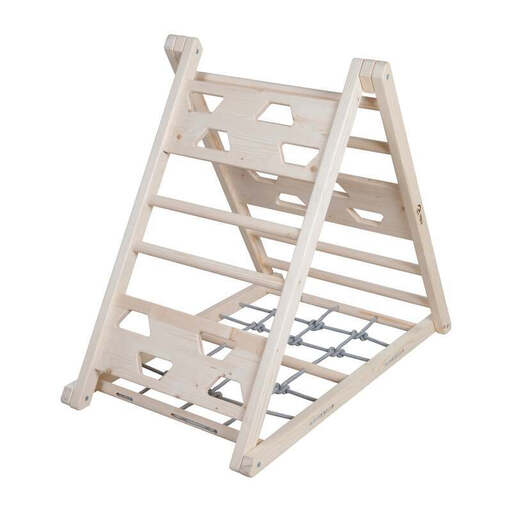
Why it suits this profile: This three-sided model is made from untreated solid wood and is suitable for children aged 24 months and over. It features rungs, a climbing rope and handholds.
The age guidance, dimensions of 85 × 63,5 × 97,5 cm and maximum load of 50 kg are all clearly stated. Use only under direct supervision.
Three different sides offer a variety of movement challenges. Compatible with a roba slide board and gym mat, available separately.
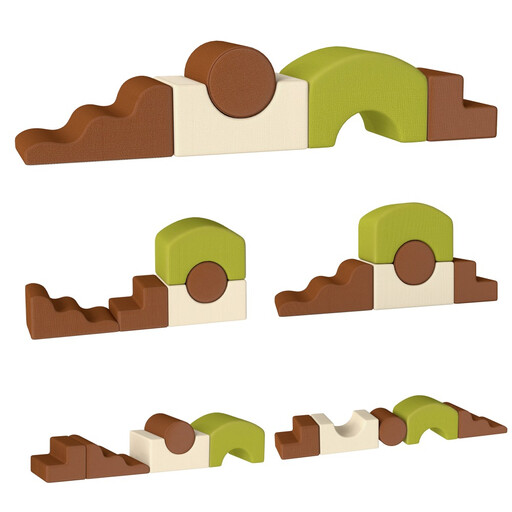
Why it suits this profile: These soft foam modules are designed for different layouts in living rooms, playgroups or childcare settings.
The modular design makes it easy to adapt the layout to the space available. Before use, check the cover, stitching and stability of each component.
Five-piece set with a soft construction for creating different indoor motor skills courses.
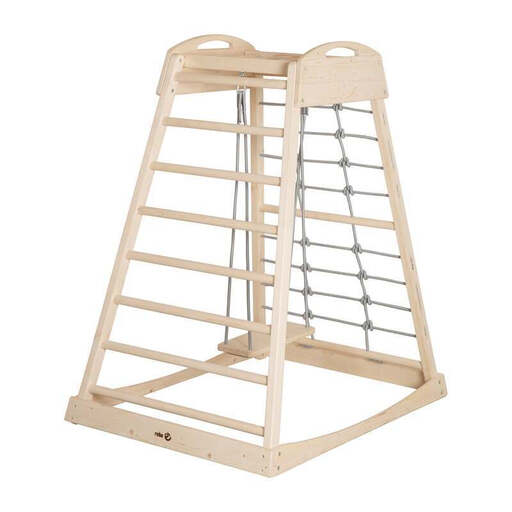
Why it suits this profile: This indoor climbing frame for children aged 24 months and over combines climbing ropes, gymnastic rings and a detachable solid wood swing.
The assembled height of 127,5 cm, maximum load of 70 kg and requirement for a stable surface are all specified. Wall anchoring is recommended for indoor use.
Several movement activities, a replaceable swing, and the option to combine it with a slide board or gym mat.
We’ve put together a complete, regularly updated list of products that meet these strict selection criteria and fully comply with the safety regulations in force in the EU.
How long a toy can be used depends on its design, weight limit and your child’s physical development. A baby play gym often appeals to children at an earlier stage than a climbing triangle. For wooden products, check the screws, ropes, handholds and edges regularly. Always follow the manufacturer’s age and safety guidance.
A baby gym is mainly used while lying down and has hanging toys to look at, reach for and touch. A Pikler triangle is a climbing frame for mobile children and needs clear space, a stable surface and direct supervision. The two types of product are therefore designed for different kinds of play and movement.
Many wooden toys, climbing triangles and foam modules don’t need electricity. Electronic models, such as a projector baby gym, need batteries or an appropriate power supply. Before buying, check the battery compartment, timer, cleaning instructions and availability of spare parts.