
Lieferung heute & morgen

Qualitätsgarantie

Willkommens-Angebote freischalten: KOSTENLOSE Lieferung | Bis zu 80 % RABATT | Kostenlose 30-Tage-JoyPlus-Testphase
App herunterladen
Motor skills toys for babies and toddlers are designed to do more than just provide a short distraction. Parents, grandparents and relatives often look for products that are age-appropriate, safely made and actually used in everyday life. However, there are clear differences between stacking toys, sorting toys, learning toys from 1 year and creative role-play toys.
A product may be described as suitable for babies from 6 months, while individual components are only intended for older children. What really matters is the specific age indication, warning notices and the size of the individual parts. With stacking and sorting games in particular, small elements pose a choking hazard.
Lights, music and sounds can stimulate a child's attention. However, they do not necessarily replace a simple grasping, inserting or sorting principle. For very young children, easily reachable, stable elements are often more practical than a toy with many hard-to-understand functions.
Wooden motor skills toys can be durable, provided the material, varnish and workmanship are clearly stated. Look for smooth surfaces, rounded edges, sturdy connections and regular checks for cracks or loose parts. With plastic toys, material information such as BPA-free plastic is helpful, but does not replace checking the safety instructions.
For babies from 6 months, larger, easy-to-grasp elements without loose small parts are generally suitable. One example is a ring pyramid with flexible rings. For children from 1 year, simple inserting, stacking and sorting tasks are often added. Products with small shapes, magnetic pens or extensive accessories should only be used according to the manufacturer's instructions and under supervision.
The label "Not suitable for children under 3 years" is particularly important. It can also be relevant for products that are advertised in the description for younger children. The information on the product and packaging is decisive.
For wooden toys for toddlers, a splinter-free surface, a robust construction and low-pollutant, saliva-resistant colours are relevant checkpoints. For plastic products, parents should look for rounded edges, secure closures and clear material information.
Clean motor skills toys according to the manufacturer's instructions. Electronic products must not come into contact with water. For games with several parts, a storage bag or an integrated compartment makes it easier to check for missing components.
Ask yourself before buying:
A motor skills toy should not only be versatile on paper, but also suit your family situation. For on the go, compact products with an attachment or carrying handle can be useful. For older children, fine motor skills toys, a dexterity game for children or a creative role-play toy are also good options.
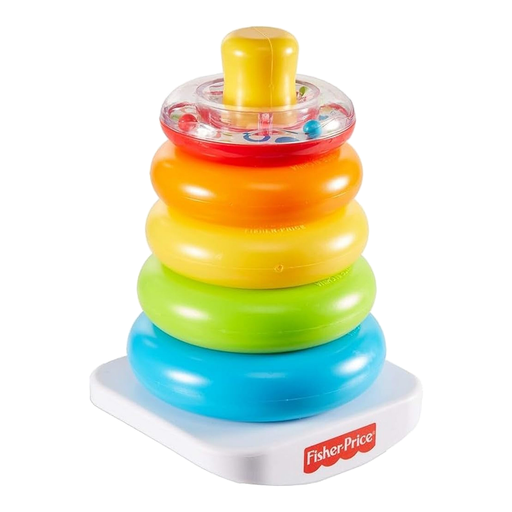
Why this product fits the profile: The ring pyramid offers a straightforward play principle for grasping, shaking and stacking. It requires no batteries and is therefore suitable for simple use at home.
The manual play principle comes without electronic extra features and without ongoing battery costs. The age indication and material information should still be checked before purchase.
Flexibly designed rings, manual use and compact dimensions of approximately 13 × 12 × 19.71 cm.
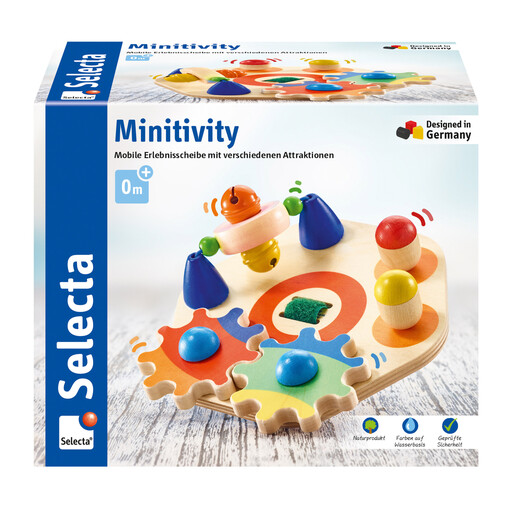
Why this product fits the profile: This compact motor skills toy made from natural wood features three play stations and can be attached to a cot, playpen or pushchair.
The function description clearly names the individual elements: gears, movable plug-in pieces and bells. This makes the actual scope of play transparent.
Natural wood, made in Germany, approximately 14 cm in size and three different play stations.
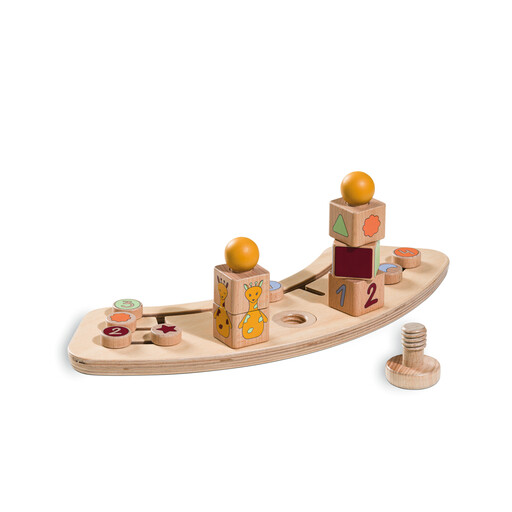
Why this product fits the profile: This sorting toy is designed for the Hauck Alpha+, Beta+ or Arketa high chair and can also be used without the play tray. It therefore suits families who prefer a fixed play area at the dining table.
The attachment is made using wooden screw clamps. Before each use, the seat, stability and any cracks must be checked; the manufacturer's instructions require direct supervision.
FSC-certified wood, combinable with up to two Hauck play accessories and dimensions of approximately 38 × 15.5 × 7.5 cm.
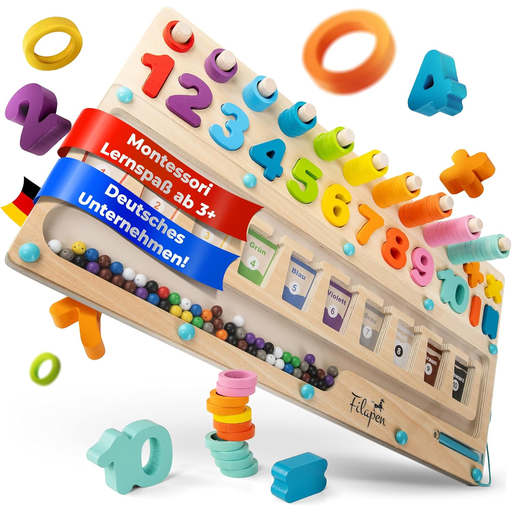
Why this product fits the profile: This wooden toy combines a magnetic maze with colour matching and numbers from 1 to 10. It is therefore suitable for children who can already concentrate on several tasks at once.
The age limit from 3 years is explicitly stated. Due to small parts, use under direct supervision is required.
Solid wood, magnetic maze, colour and number matching, and use without batteries.
We have put together a complete, regularly updated list of products that fully meet these strict selection criteria and the safety regulations in force in the EU.
Suitable options are larger, easy-to-grasp elements without loose small parts, for example flexible rings or simple sensory and movement toys. Pay attention to the specific manufacturer's information, as not every product labelled "Baby toy from 6 months" is intended for unsupervised play.
The duration of use depends on the play principle, workmanship and stage of development. Simple stacking toys can remain interesting across several developmental phases, because grasping is practised first and later targeted stacking. Check wooden and plastic parts regularly for breakages, splinters, loose connections and missing components.
Many products such as wooden sorters, ring pyramids and activity boards work without batteries. Electronic learning toys with lights, music or animal sounds, on the other hand, usually require batteries, which are not always included. Therefore, check the information on power supply and the expected replacement needs before buying.