
Lieferung heute & morgen

Qualitätsgarantie

Willkommens-Angebote freischalten: KOSTENLOSE Lieferung | Bis zu 80 % RABATT | Kostenlose 30-Tage-JoyPlus-Testphase
App herunterladen
Motor skills toys for children should offer more than a short-lived distraction. Parents and educational settings often look for ways to support fine motor skills, concentration and creativity, as well as child-friendly construction. At the same time, the choice can be overwhelming: many products promote themselves as “educational”, “Montessori” or “STEM” without clearly explaining the product details that really matter.
Three common buying misconceptions can lead to the wrong purchase:
For learning toys from 3 years, the age recommendation should match the child’s stage of development. Warnings about swallowing hazards, batteries, magnets or cords must be read before purchase.
With magnetic construction toys, it is particularly important that the magnets are securely enclosed within the components. According to the product information, the XINQIYUAN set features permanently enclosed magnets and ultrasonic welding. At the same time, the manufacturer expressly highlights the dangers of swallowing magnets. Parts should therefore be checked regularly for damage and stored out of the reach of younger children.
Wooden toys can be a suitable choice for sorting, inserting and threading activities thanks to their solid feel and straightforward mechanics. For plastic products, smooth edges, sturdy components and easy cleaning are practical criteria.
According to the product description, the Filapen motor skills board is made from solid wood and uses an attached magnetic pen. This reduces the risk of the pen being lost during play. Products with moving parts should be inspected regularly. Depending on the material, dirt can usually be removed with a soft, slightly damp or dry cloth. The manufacturer’s instructions should always take priority.
A good play concept can be adapted to different levels of difficulty. A magnetic maze might initially be used for colour matching and later combined with number-based activities. Puzzles for children help develop the ability to match shapes and pictures, while children’s tool sets primarily support role play, gripping movements and imitating everyday activities.
You should also consider:
The following recommendations are organised around specific use cases. The deciding factors are not advertising claims, but age suitability, materials, play concept and features.
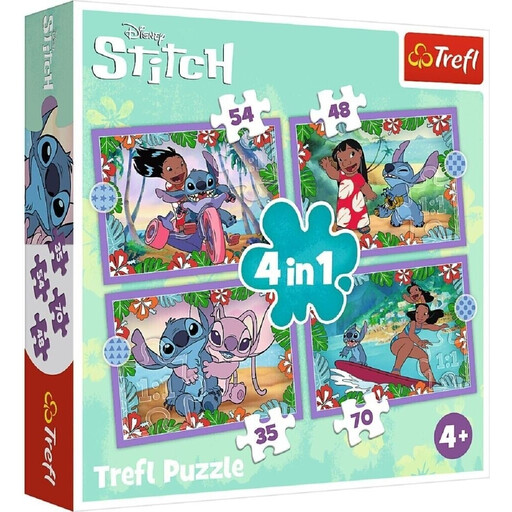
Why this product suits this profile: Four separate puzzles with a total of 207 pieces provide a gradual introduction to puzzling. According to the product information, the set is intended for children from 4 years.
The pieces are divided between four individual pictures, so children do not have to start with one large picture straight away. The cardboard material and age recommendation are clearly stated.
Four pictures, 207 pieces, no batteries required and space-saving storage.
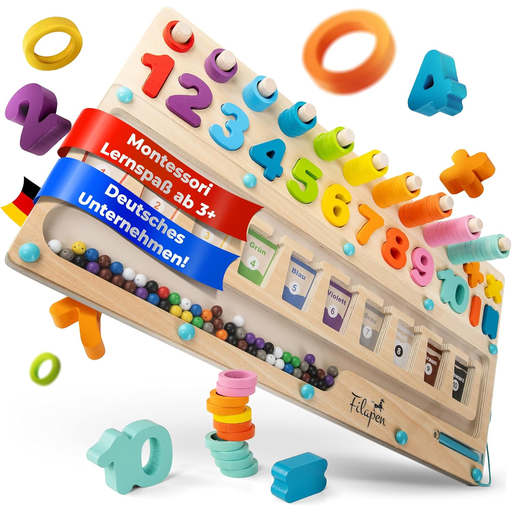
Why this product suits this profile: This wooden board combines a magnetic maze with colour matching and numbers from 1 to 10. It is suitable for structured play activities at home or in educational settings.
The play concept is clearly described and does not rely solely on the general term Montessori. The magnetic pen is attached to the board.
Solid wood according to the product information, numbers from 1 to 10, colour matching and no batteries required.
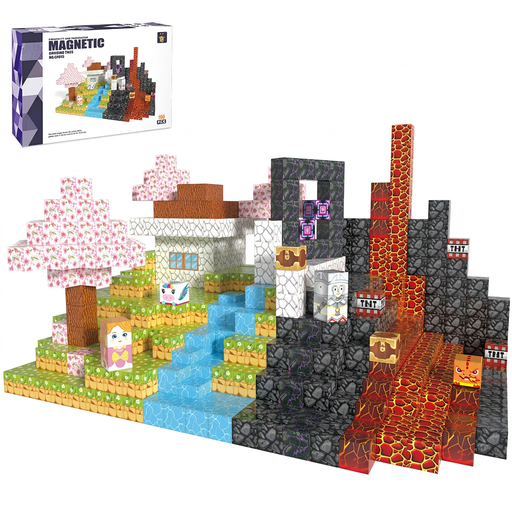
Why this product suits this profile: 100 geometric components, a storage bag and the stated compatibility with 2.5 cm sets provide plenty of scope for repeated creative play.
As well as the piece count, the material, tile size and magnet warning are stated. This makes it easier to check whether the set is compatible with your existing construction toys.
100 pieces, basic geometric shapes, 2.5 cm compatibility and a storage bag.
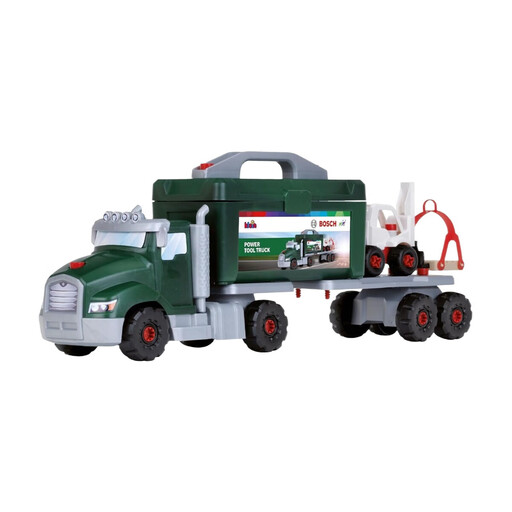
Why this product suits this profile: This set combines a dismantlable lorry with a screwdriver, tools, forklift and crane. According to the product information, it is intended for children from 3 years and is ideal for shared role play.
The features go beyond sound effects. The vehicle can be dismantled and reassembled, while small tools can be stored in the tool box.
Multiple construction options, manual operation without batteries, tool box and EN-71-compliant materials according to the product information.
We have put together a complete, regularly updated list of products that fully meet these strict selection criteria and the safety regulations applicable in the EU.
Additional factors come into play when toys are used in nurseries, pre-schools or across several households:
Straightforward inserting, sorting and construction activities can be suitable, provided the age recommendation and warnings are observed. Direct supervision is particularly important with magnetic building blocks. Children who enjoy quiet, focused activities may also benefit from a wooden maze or an age-appropriate puzzle.
Grasping, turning, inserting, sorting and guiding objects precisely train different hand movements and hand-eye coordination. A motor skills board with a magnetic pen, for example, requires controlled movements. Children’s tool sets, on the other hand, encourage turning and screwing during role play. Suitability depends on the child’s age, the activity and the child’s willingness to engage with it.
How long a toy remains engaging depends primarily on the variety of activities, level of difficulty and the child’s interests. Magnetic building blocks often offer changing challenges through their different construction options. A number and colour game can be used in increasingly challenging ways as the child grows. With puzzles, the level of difficulty can be adjusted through the number of pieces and choice of picture. The key is to ensure that the toy does not consistently underchallenge or overwhelm the child.