
Lieferung heute & morgen

Qualitätsgarantie

Willkommens-Angebote freischalten: KOSTENLOSE Lieferung | Bis zu 80 % RABATT | Kostenlose 30-Tage-JoyPlus-Testphase
App herunterladen
When it comes to motorcycle gear, especially for off-road riding, the motorcycle armor jacket is a core component of your safety equipment. However, the market is flooded with products whose marketing promises often suggest more than they deliver. The wrong choice not only wastes money but can also significantly reduce its protective capability when it matters most.
Many riders invest in a jacket that proves to be impractical or inadequate after only a short time. The most common pitfalls are often the same:
To avoid these pitfalls, it is crucial to objectively evaluate a jacket's technical features rather than relying on marketing claims.
Before making a purchase, you should carefully examine three core aspects. These are the primary determinants of the safety, comfort, and durability of your motorcycle protection jacket.
The heart of any protector jacket is its protective elements. Always look for CE certification. These European standards define minimum requirements for impact absorption.
A good protector jacket with a back protector offers coverage for the entire spine, ideally extending down to the tailbone. At the same time, robust protectors must be present on the shoulders, elbows, and chest area to ensure comprehensive protection.
Protective performance is only one side of the coin. The other is wearing comfort, which depends heavily on the material and construction. A high-quality jacket combines various materials:
This combination is typical for a modern motocross jacket or enduro protective gear, as it unites protection and flexibility for demanding terrain.
The best certification is useless if the protectors are not positioned correctly. A precise fit is therefore essential. Look for the following adjustment features:
A good jacket offers enough adjustment options to guarantee a secure and comfortable fit for both men and women.
Instead of making a one-size-fits-all recommendation, we have identified models tailored to specific use cases.
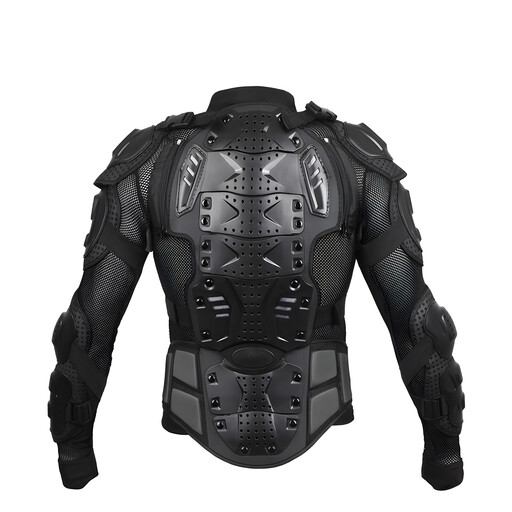
Why This Fits Their Persona: For riders who regularly tackle demanding enduro or motocross tracks, maximum protection and freedom of movement are paramount. This model combines robust PE hard shells with a segmented back armor that allows for high flexibility during twisting and bending movements on the trail.
Counteracts the "Fit Trap": The wide Velcro waist belt and continuously adjustable straps on the shoulders and arms ensure that all protectors remain exactly in position, even during heavy vibrations and intense body movement.
The back armor and chest pads are removable. This simplifies cleaning after a muddy day and allows for customisation of the protection level, for instance, when combining it with a neck brace.
Why This Fits Their Persona: Individuals getting into sports like downhill mountain biking, skateboarding, or even commuting in city traffic need reliable and versatile protective gear. This unisex model offers comprehensive upper body protection suitable for various activities, eliminating the need to buy separate equipment for each sport.
Avoids the "Incomplete Protection" trap. Instead of just offering a back protector, this jacket shields all critical zones: chest, spine, shoulders, and elbows. This provides newcomers with a high level of safety right from the start.
The lightweight and breathable mesh material prevents the "Heat Buildup Effect." Ventilation openings in the chest area and the air-permeable fabric ensure a comfortable climate even during intense exertion.
Why This Fits Their Persona: Those who use their motorcycle daily for commuting or for tours in variable weather need a protective solution that can be discreetly integrated into their existing wardrobe. This jacket's close-to-body fit allows it to be worn comfortably under a weatherproof textile or leather jacket.
Solves the problem of heat buildup under outerwear. The breathable base material wicks moisture away from the body, preventing uncomfortable heat and dampness from accumulating under the jacket worn over it.
The thumb loops on the elastic cuffs are a crucial detail. They ensure that the sleeves do not ride up when putting on another jacket, keeping the elbow protectors correctly positioned at all times.
We have compiled a complete, up-to-date list of products that fully meet these strict selection criteria and European safety regulations.
Yes, that is one of the main advantages of protector jackets based on a mesh fabric. They are designed to fit snugly against the body and can be worn as a separate protective layer under any motorcycle or even a casual jacket. This allows you to combine protection with different jackets for various weather conditions (rain, cold).
Most models allow for the removal of the hard protective shells and foam pads. Once removed, the mesh carrier fabric can typically be hand-washed with a mild detergent in cold water. Afterwards, it should be air-dried away from direct sunlight or heaters to preserve the elastic material. Always follow the manufacturer's care instructions.
The crucial standard is EN 1621-2. It is divided into two protection levels: Level 1 is the standard, while Level 2 provides significantly higher impact absorption and thus offers more protection. For riders who place a special emphasis on safety, especially for sport or off-road use, a Level 2 back protector is a wise choice.