
Lieferung heute & morgen

Qualitätsgarantie

Willkommens-Angebote freischalten: KOSTENLOSE Lieferung | Bis zu 80 % RABATT | Kostenlose 30-Tage-JoyPlus-Testphase
App herunterladen
A motorcycle lift is an essential tool for maintenance, repair, and cleaning tasks. It allows you to raise your motorcycle to an ergonomic working height, which reduces strain on your back and knees while enhancing safety. Selecting the right model depends on specific technical requirements, including maximum load capacity, the lifting mechanism, and the required lift height. This article analyses the crucial criteria and presents a selection of recommended models.
The decision to purchase a motorcycle lift should be based on an objective analysis of its technical specifications. The following aspects are relevant for your selection.
The maximum load capacity is the most critical safety criterion. It must significantly exceed the curb weight of the motorcycle being lifted. For reference:
It is advisable to choose a lift with a higher load capacity than strictly necessary to ensure a safety margin. For example, a 500 kg motorcycle lift covers a wide range of common models.
The mechanism for raising the motorcycle affects its ease of use and the physical effort required.
The lift height defines the maximum working range. A greater lift height offers more flexibility, especially for work on the underbody or chassis. The minimum height is equally important, as the motorcycle lift must fit underneath the vehicle.
The dimensions of the support surface must be compatible with the motorcycle's frame design. Many lifts feature rubberised and adjustable mounts to ensure secure, paint-friendly support.
A robust construction, typically made of powder-coated steel, is the foundation for durability and stability. Additional safety features are crucial:
Based on the technical criteria mentioned, we present two models that stand out for their design and functionality.
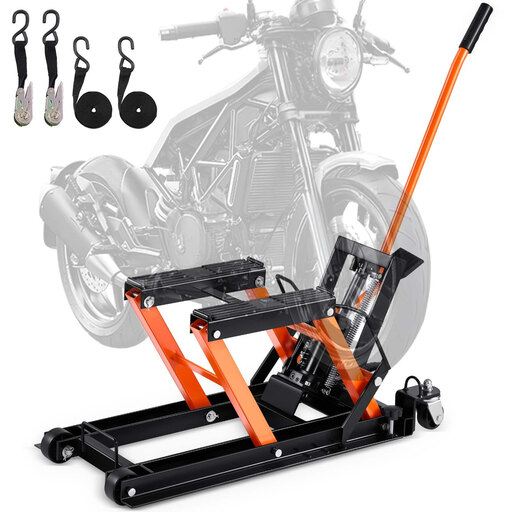
Why we're featuring this product: This model is distinguished by its high load capacity of 700 kg and convenient hydraulic operation. The integrated casters provide excellent mobility, making it ideal for workshops or garages with versatile workspaces.
Advantages:
Who it's for: This model is suitable for owners of very heavy motorcycles, such as large cruisers and touring bikes, as well as for small to medium-sized workshops that require a mobile and powerful motorcycle repair lift.
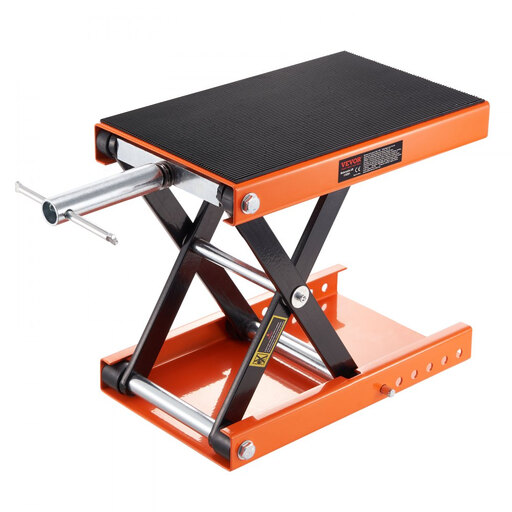
Why we're featuring this product: This motorcycle lift combines a solid 500 kg load capacity with the precise control of a mechanical spindle drive. Its compact design and safety pin make it a practical solution for DIY enthusiasts.
Advantages:
Who it's for: Ideal for riders and DIY mechanics looking for a space-saving, reliable, and precisely adjustable lift for regular maintenance on motorcycles up to 500 kg.
A well-equipped workshop is the foundation of any motorcycle project. But proper preparation doesn't end with the tools. For working outdoors or in a cool garage, the right apparel is also crucial. A functional outdoor jacket protects you from the elements and ensures comfort during any wrenching session.
1. What is the difference between a motorcycle stand and a lift? A motorcycle stand typically lifts only one wheel (front or rear) to facilitate tasks like chain maintenance or tyre changes. The motorcycle remains at an angle or is only slightly raised. A motorcycle lift, on the other hand, raises the entire motorcycle centrally under the frame or engine, holding it level at a comfortable working height with both wheels freely accessible.
2. How do I safely lift my motorcycle with a lift? Ensure the lift is on a level, solid surface. Position the lift centrally under the manufacturer-specified lifting points on the motorcycle's frame. Make sure the motorcycle is balanced before raising it completely. After reaching the desired height, always secure the lift with its mechanical lock (safety pin).
3. Do I need a hydraulic or a mechanical lift? The choice depends on your preferences. A hydraulic motorcycle lift is more convenient and faster, especially for heavy motorcycles. A mechanical scissor lift offers very precise height control, is often more compact, and requires no maintenance of a hydraulic system. For occasional use by DIY enthusiasts, a mechanical model is often sufficient.