
Lieferung heute & morgen

Qualitätsgarantie

Willkommens-Angebote freischalten: KOSTENLOSE Lieferung | Bis zu 80 % RABATT | Kostenlose 30-Tage-JoyPlus-Testphase
App herunterladen
For motorcyclists, a smartphone is an indispensable tool for navigation on long tours. But choosing the right mount is crucial to secure the device, keep it constantly powered, and protect it from the damaging effects of the ride. An improper mount can not only damage your expensive smartphone but also pose a safety hazard. This guide explains the most important criteria for selecting a reliable motorcycle phone mount with charging and anti-vibration and shows you how to avoid common purchasing mistakes.
Many products on the market overpromise and underdeliver. By understanding the following pitfalls, you can make an informed decision and avoid a bad investment.
To ensure your mount can handle the demands of motorcycling, you should carefully examine three core technical parameters.
A high-quality vibration-dampening phone mount for motorcycles must offer more than just rubber bumpers. Look for models with a dedicated, multi-axis dampening module. These systems mechanically decouple the smartphone from the rest of the mount, specifically absorbing the harmful frequencies generated by the engine and chassis. Such modules are specially designed to protect the camera's optical image stabilization (OIS) and autofocus.
Charging power is critical for a reliable power supply during your ride. For a motorcycle smartphone mount with wireless charging, the output should be at least 15W Wireless Charging. This ensures the battery charges even with intensive GPS use and maximum screen brightness. Ideally, the connection to the bike's electrical system should be via an ACC (ignition-switched) source. This powers the mount only when the ignition is on, preventing the motorcycle battery from draining while parked.
The mount must be securely fastened to the motorcycle. A motorcycle handlebar phone mount is the most common type. For this, metal clamps (e.g., aluminum alloy) are preferable to plastic versions, as they offer greater strength and durability. For anti-theft protection, systems with special security screws or lockable mechanisms are a smart choice. These require special tools for removal, making a quick theft significantly more difficult.
Based on the criteria above, we have identified a product that is particularly well-suited for a specific type of rider.
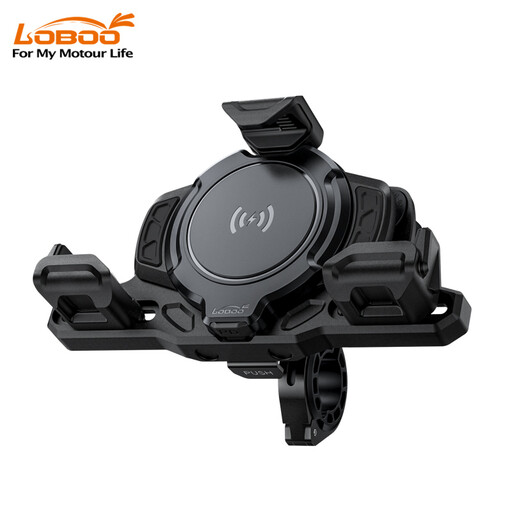
Why This Fits Their Persona: This type of rider values an all-in-one solution that protects their high-end smartphone on long tours while remaining functional. The combination of navigation, connectivity, and device protection is paramount.
The LOBOO PH02S model addresses all three core problems: It features a dedicated anti-vibration module, offers 15W fast charging, and is equipped with an anti-theft mechanism. This specifically bypasses the typical weaknesses of cheaper mounts.
Integrated All-in-One Solution: Offers vibration protection, wireless charging, and anti-theft security in a single system.
Robust Construction: The use of metal components ensures stability and durability.
If you're looking for other mounts or compatible accessories for your smartphone, our curated selection features more products that have been vetted for their technical specs and suitability for motorcycle use.
1. Can a motorcycle phone mount damage my smartphone's camera? Yes, it's possible. The high-frequency vibrations from motorcycles, in particular, can permanently damage the delicate mechanisms of the optical image stabilization (OIS) in modern smartphone cameras. A mount without a specialized anti-vibration module does not offer sufficient protection. It is advisable to invest in a mount with explicit vibration isolation.
2. How do I correctly install a motorcycle phone mount with a charger? Most mounts with a charging function connect directly to the motorcycle's 12V electrical system. The safest method is to connect to a switched power source (ignition-switched or ACC). This cuts power to the mount when the ignition is off, preventing battery drain. Direct connection to the battery terminals is also possible but carries the risk of a parasitic drain.
3. What is the difference between wireless and wired charging on a motorcycle? Wireless charging offers the convenience of simply placing your smartphone in the mount without having to plug in a cable. This is especially practical during short stops. Wired charging via a USB port is often slightly more efficient and less prone to positioning errors, but it requires handling a cable whose connectors must be weatherproof. For tour riders, a reliable wireless charging function with at least 15 watts has proven to be very practical.