
Lieferung heute & morgen

Qualitätsgarantie

Willkommens-Angebote freischalten: KOSTENLOSE Lieferung | Bis zu 80 % RABATT | Kostenlose 30-Tage-JoyPlus-Testphase
App herunterladen
Choosing the right motorcycle protector jacket can be a challenge given the multitude of models and marketing promises. Whether for motocross, enduro, or downhill mountain biking, the right upper body protection is crucial. However, not every product delivers on its promise. Many riders invest in gear that is either uncomfortable or fails to provide the expected protection when it counts.
As your Joybuy Product Recommendation Officer, I'll help you navigate the common pitfalls. In this guide, we will focus on the objective criteria that define a good motorcycle protection jacket, so you can make an informed decision.
Before we dive into the details, let's look at two common issues that often lead to a poor purchase:
To avoid these mistakes, you should check three core aspects. These parameters will help you objectively evaluate the quality of a motorcycle protector vest.
The protective effect of a jacket depends on its integrated protectors. Look for hard shells made from materials like PE (polyethylene) and shock-absorbing padding made from EVA foam. It is crucial that the protectors for the shoulders, elbows, and back are certified according to European standards. The most common standards are:
These labels indicate that the material's impact absorption properties have been tested in standardized procedures. A good back protector jacket offers continuous coverage of the spine.
Effective motorcycle upper body armor must fit like a second skin without restricting freedom of movement. Look for models with a variety of adjustment options:
A jacket that can be adjusted to your body at multiple points offers consistently reliable protection.
To avoid the dreaded "sauna effect," the combination of materials is key. Modern motocross protectors use a base layer made of large-panel mesh fabric. This net-like material is lightweight, elastic, and, most importantly, air-permeable. In combination with ventilation openings in the PE hard shells, it ensures continuous airflow. This keeps you cooler and drier, even during intense physical exertion. This is particularly relevant for an enduro jacket with protectors, which is often worn for hours on end.
Based on the criteria above, we have identified several models that are suitable for different user profiles.
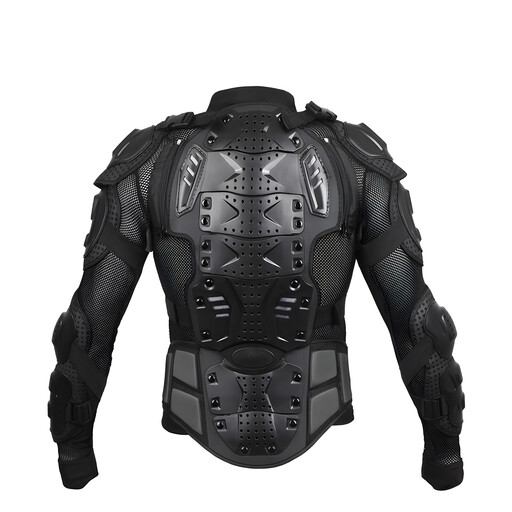
Why This Fits Their Persona: This model is a great choice for hobbyist enduro or motocross riders looking for a balanced combination of comprehensive protection and freedom of movement for regular off-road tours.
The highly adjustable straps and wide, elastic waistband counteract protector slippage (The Fit Trap). The breathable mesh fabric ensures good air circulation and prevents heat buildup (The "Sauna Effect").
Offers complete upper body protection for the chest, back, shoulders, and elbows in one integrated system. The segmented back armor is removable for easy cleaning.
Why This Fits Their Persona: A straightforward and adaptable option for those starting out in motocross, downhill biking, or skateboarding who need reliable, foundational upper body protection.
Numerous Velcro fasteners and the elastic kidney belt allow for a precise, close-to-body fit. This is especially important for beginners to ensure the protectors stay in place and perform their function.
Offers excellent value for money for a multifunctional piece of protective gear suitable for various outdoor sports with a risk of falling.
Why This Fits Their Persona: For riders in challenging terrain or those who prefer a feeling of complete coverage. The more generous size is also suitable for larger body types or for wearing over a base layer.
The segmented back armor and extended spine protector offer gap-free coverage, while the mesh material and ventilation openings prevent overheating even when fully geared up.
The chest and waist protectors are removable, allowing for customized protection levels and simplified cleaning of the jacket.
We've compiled a comprehensive, up-to-date list of products that meet strict selection criteria and safety requirements.
A protector jacket should fit snugly against the body without restricting breathing or movement. The shoulder and elbow protectors must completely cover the joints and should not shift, even during movement. The back protector should cover the spine from the neck to the tailbone. Check the fit by raising your arms and twisting your torso.
Yes, most protector jackets, especially mesh-based models, are designed as a base layer. They are often referred to as motorcycle armor and can be worn under an abrasion-resistant but protector-free outer jacket (e.g., textile or leather). Make sure the outer jacket has enough room to avoid being too tight.
First, read the manufacturer's care instructions. As a rule, all hard-shell and foam protectors can be removed. The textile base layer (the actual jacket) can then be hand-washed in cold water with a mild detergent. Rinse it thoroughly and let it air dry. Avoid direct sunlight and heat sources, as they can damage the material.