
Lieferung heute & morgen

Qualitätsgarantie

Willkommens-Angebote freischalten: KOSTENLOSE Lieferung | Bis zu 80 % RABATT | Kostenlose 30-Tage-JoyPlus-Testphase
App herunterladen
As a Joybuy Product Recommendation Officer, I see daily how riders face a challenge when selecting their protective gear. The market for protector jackets is filled with models that appear similar at first glance. However, the crucial differences that determine safety and comfort often lie in the details. A poor choice not only leads to inadequate protection but also to unnecessary expense.
This guide is designed to help you recognise the essential features and avoid common pitfalls, so you can make an informed decision for your safety.
Many buyers focus on marketing promises instead of functional criteria. This often leads to three problems:
To avoid the problems mentioned above, you should focus on three core parameters. These form the basis for reliable motorcycle protective gear.
The most important feature of a motorcycle jacket with protectors is its proven protective performance. Look for the certification according to the European standard EN 1621. This is divided into different areas:
Within these standards, there are two protection levels:
For comprehensive motorcycle upper body protection, a combination of certified back, chest, shoulder, and elbow protectors is recommended.
A protector can only protect what it covers. A close-to-body fit is therefore crucial. The jacket should fit snugly without cutting off circulation or restricting movement. Pay attention to the following adjustment options:
Modern protector jackets, especially a motocross protector shirt or an enduro jacket, consist of a material mix that combines protection, flexibility, and comfort.
A well-thought-out design with ventilation openings in the chest and back areas is crucial to stay cool even during exertion and high temperatures.
Based on the criteria above, we have identified models suitable for different types of riders.
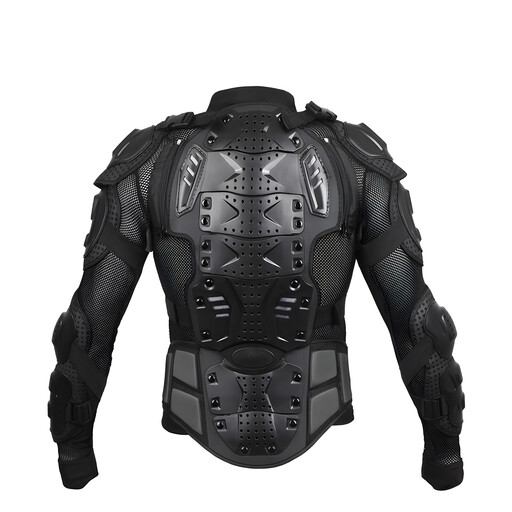
Why This Fits Their Persona: Ideal for users who want a single piece of protective gear for various sports like motorcycling, mountain biking, or skateboarding. Its flexibility and comprehensive protection are suitable for diverse dynamic activities.
Thanks to numerous adjustment straps on the shoulders, arms, and waist, as well as elastic cuffs with thumb loops, the protectors are effectively prevented from slipping.
The base of breathable mesh fabric, combined with ventilation openings in the PE shell, ensures excellent air circulation and prevents heat buildup.
Why This Fits Their Persona: For riders who are regularly off-road, maximum freedom of movement combined with high protection is crucial. This model offers both through its flexible construction and comprehensive protection for the entire upper body.
The segmented, articulated back protector adapts to the rider's movements without compromising its protective function. This avoids the restrictions of rigid, poorly designed jackets.
The combination of abrasion-resistant nylon fabric on the shoulders and elbows and shock-absorbing EVA pads provides robust protection that meets the demands of off-road riding.
We have compiled a complete, real-time list of products that fully satisfy these strict selection criteria and UK safety regulations.
1. How tight should a protector jacket fit? A protector jacket should fit snugly, almost like a second skin, but without restricting breathing or movement. The protectors must not shift during movement. A good rule of thumb is that you should be able to wear a thin base layer underneath. Before buying, check the manufacturer's size chart and measure your chest and waist circumference.
2. Can you wash a protector jacket? Yes, most protector jackets can be cleaned. However, it is crucial to remove all removable protectors (hard shells and foam pads) before washing. Gentle hand washing with a mild detergent in cold water is generally recommended. Afterwards, let the jacket air dry and avoid direct sunlight or heat sources. Always follow the manufacturer's specific care instructions.
3. What do the protection levels for motorcycle protectors mean? The protection levels (Level 1 and Level 2) according to the EN 1621 standard indicate how much residual force a protector transmits to the body after a standardised impact. Level 2 protectors allow less force to pass through, thus offering a higher protective effect than Level 1 protectors. For riders who take higher risks (e.g., in racing or demanding off-road terrain), Level 2 is often the recommended choice, while Level 1 provides a good compromise of protection, comfort, and flexibility for everyday use and touring.