
Lieferung heute & morgen

Qualitätsgarantie

Willkommens-Angebote freischalten: KOSTENLOSE Lieferung | Bis zu 80 % RABATT | Kostenlose 30-Tage-JoyPlus-Testphase
App herunterladen
As a Joybuy Product Recommendation Officer, I see motorcycle owners struggle daily with a daunting selection of tools. The right equipment can be the difference between a successful repair and costly frustration. However, well-intentioned purchases often lead to problems because crucial details were overlooked. This guide will help you identify common pitfalls and find the right motorcycle tools for your garage.
Before you invest, you should be aware of the most common issues that arise from low-quality or unsuitable equipment. Avoiding them not only protects your budget but also your peace of mind and your motorcycle's mechanics.
To avoid these pitfalls, you should focus on objective, technical features rather than marketing promises.
For a motorcycle lift or motorcycle jack, two values are critical:
A torque wrench for motorcycles must, above all, be precise.
The durability of motorcycle repair tools depends directly on the material.
Based on these objective criteria, we have identified some products that are suitable for specific user profiles.
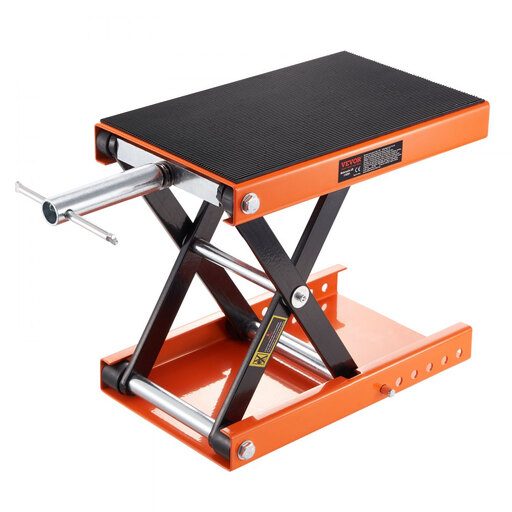
Why this product is a match: Ideal for basic maintenance tasks like chain care, oil changes, or wheel removal in the home garage. The purely mechanical operation via a hand crank is straightforward and requires no complex maintenance.
The solid X-frame steel construction and the included safety pin provide reliable stability. This prevents the uncontrolled sagging under load often criticised in budget models.
Simple, robust spindle mechanism; wide lifting range from 95 mm to 350 mm; allows for compact storage.
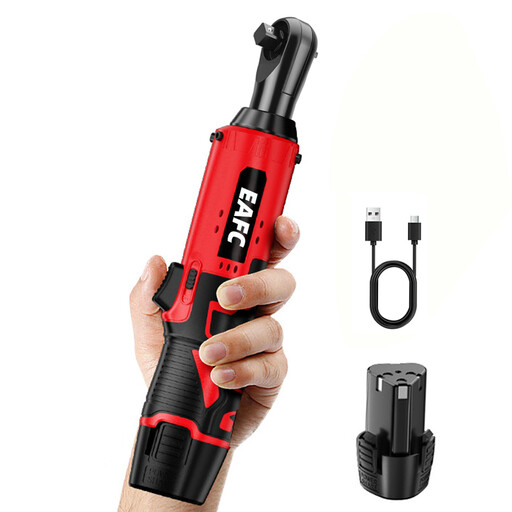
Why this product is a match: This cordless ratchet significantly speeds up loosening and tightening bolts on fairings or engine components. It reduces fatigue during longer projects and saves valuable time.
With a maximum torque of 45 N.m and a slim 3 cm head, this tool is powerful enough for real workshop applications and can reach tight spots where cheap, bulky models fail.
Variable speed control for precise work; integrated LED light for dark areas; quick-release chuck for fast socket changes.
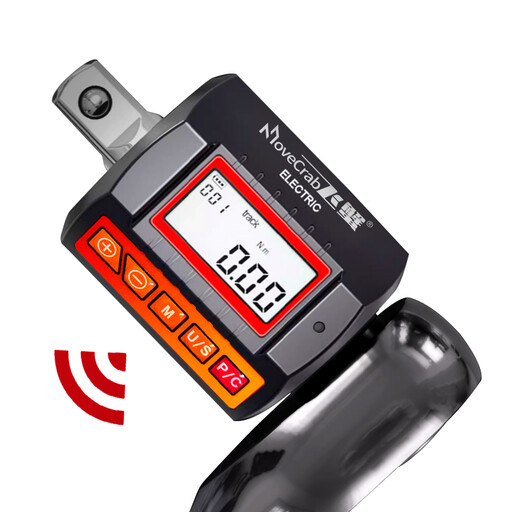
Why this product is a match: Transforms any existing 1/2" ratchet into a precise measuring instrument. Essential for safety-critical fasteners on the engine, chassis, and brakes where exact torque specifications are mandatory.
Offers a documented bidirectional accuracy of ±2% (clockwise) and ±2.5% (counter-clockwise), plus an audible and visual alarm. This eliminates the risk of over- or under-tightening bolts due to uncalibrated mechanical wrenches.
Digital precision with data storage for 1,000 values; includes adapters for 3/8" and 1/4" drives, increasing compatibility.
We have compiled a complete, up-to-date list of products that fully meet these strict selection criteria and all applicable safety requirements.
1. How often does a torque wrench need to be calibrated? For mechanical torque wrenches, most manufacturers recommend professional calibration after approximately 5,000 clicks or once a year. Accuracy can be compromised by dropping the tool or improper storage (e.g., under tension). Digital adapters are often more robust but should also be checked regularly according to the manufacturer's specifications.
2. What load capacity does a motorcycle lift need for my bike? Find your motorcycle's curb weight in its registration documents. Choose a lift with a specified safe working load (not maximum capacity) that is at least 20-25% above this weight. For a 250 kg machine, a lift with a safe load capacity of at least 300 kg would be a good choice.
3. Is a cordless ratchet worthwhile for occasional repairs? A cordless ratchet is a convenience tool. If you frequently work on fairings or need to loosen and tighten many bolts, it can significantly reduce the time and physical effort involved. For very rare, small jobs, a manual ratchet is sufficient. However, for ambitious hobby mechanics, it is a worthwhile addition to their workshop equipment.