What should you look for when choosing one?
Start with the devices you’ll use and how long you plan to run them. Then you can better judge whether direct USB or 12 V power will be enough, and what a suitable recharging set-up might look like.
| What matters to you |
What to check when buying |
Who will find this especially important? |
| Energy and power |
Check the devices’ power consumption and any loads running at the same time; compare the usable energy for the AC or DC output you need with the continuous power rating. |
If I want to use a laptop, cool box or other devices during a day parked up, the right running time matters to me. Around 33% of consumers put energy and power first. |
| Recharging while parked |
Check the PV input, electrical compatibility with the panel and the cables required; consider your pitch, sunlight and any other ways to recharge. |
If I’m staying without a mains hook-up for longer, I want to know whether the station can recharge in the conditions at my pitch. Around 27% of consumers prioritise recharging needs. |
| Direct USB and 12 V outputs |
Check that the USB-C power or 12 V connection meets the requirements of the specific device; allow for a suitable AC output for devices that need AC power. |
If my most important devices can run on USB or 12 V, I want to use those connections directly. Around 20% of consumers focus on USB and 12 V power. |
| Ease of use and safe operation |
Check the weight, dimensions and fan noise where you plan to use it; follow the instructions for the charging inputs and secure the unit while travelling. |
If I want to move the station around the motorhome or take it with me on the road, ease of use and safe operation are essential. Around 20% of consumers prioritise portability and safety. |
Key brands at a glance
The examples below relate to specific models in the ADAC test dated 11 June 2025. The measurements and limitations apply to the version tested, not necessarily to every product from that brand.
Bluetti
The AC180P tested is a useful point of comparison for campers looking to power individual devices with a larger energy reserve.
- For the AC180P, the ADAC gives a rated capacity of 1.440 Wh, measured net AC capacity of 1.341 Wh and continuous power of 1.800 W.
- On the model tested, the fan was loud under heavy load, there was a USB-C output, and the battery could not be expanded.
EcoFlow
The DELTA 3 Plus tested is an option if you need several connections and the possibility of expanding the system later.
- The ADAC measured 935 Wh of usable AC energy from the DELTA 3 Plus, which has a rated capacity of 1.024 Wh. It has two USB-C ports, each rated at 140 W, and a connection for an additional battery.
- The car and PV inputs are at the rear; according to the ADAC, the PV charging cable was not included with the unit tested.
Anker SOLIX
The C800 Plus tested is a more compact option for comparison; the ADAC gives camping lights as one example of how it could be used.
- For the C800 Plus, the ADAC measured 630 Wh of usable AC energy from a rated capacity of 768 Wh, and gives a continuous power rating of 1.200 W. Car and PV cables were included with the unit tested.
- The version tested offers a smaller energy reserve than models with a higher rated capacity, cannot be expanded with an additional battery and had a loud fan under heavy AC load.
Allpowers
The R1500 tested may interest anyone weighing up several AC outputs, PV charging and the option to expand the system.
- For the R1500, the ADAC lists four 230 V outputs, up to 650 W of PV charging power and a connection for an additional battery.
- In the ADAC test, the R1500 was the largest and heaviest unit. Car and PV charging cables were not included; these details do not apply to the R1500 Lite.
Power stations at Joybuy
This selection includes portable power stations for powering individual devices separately while camping. If you carry a station with you while driving, it must be secured in accordance with § 22 Abs. 1 StVO so that it cannot slide, fall over or roll around, even during emergency braking or a sudden evasive manoeuvre.
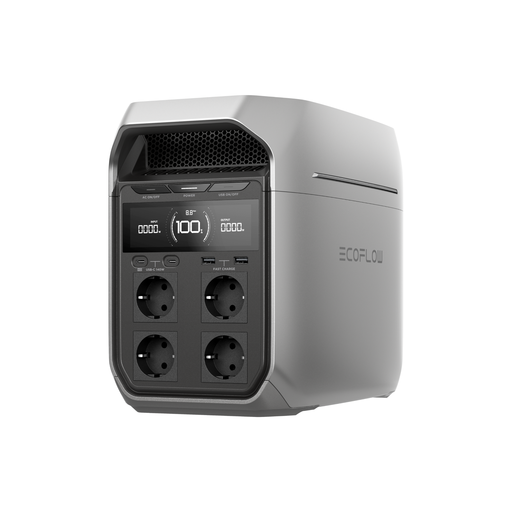 Image unavailable
EcoFlow DELTA 3 Plus power station
For individual 230 V appliances while camping, provided their power requirements are compatible with the station.
1.024 Wh; 1.800 W output power, 3.600 W peak power.
For the DELTA 3 Plus, the ADAC reports 935 Wh of measured usable AC energy; the PV charging cable was not included with the unit tested.
View at Joybuy
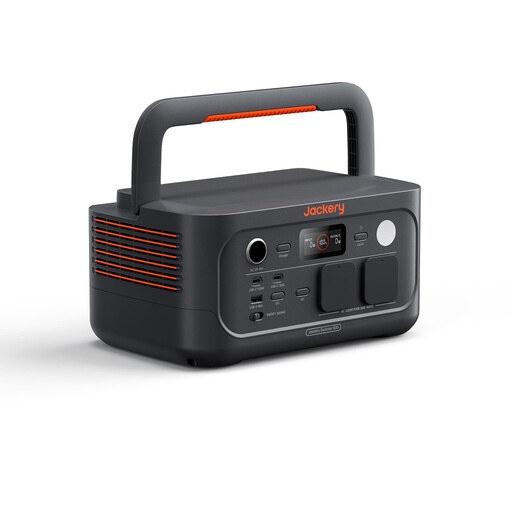 Image unavailable
Jackery Explorer 500 V2 power station
For camping, when you need a portable reserve for compatible AC, USB or 12 V devices.
512 Wh; 500 W rated power and 1.000 W peak power; two AC outputs, plus USB and 12 V outputs.
The stated weight is 5,7 kg. Check the usable energy available at the output you need for the running time you have planned.
View at Joybuy
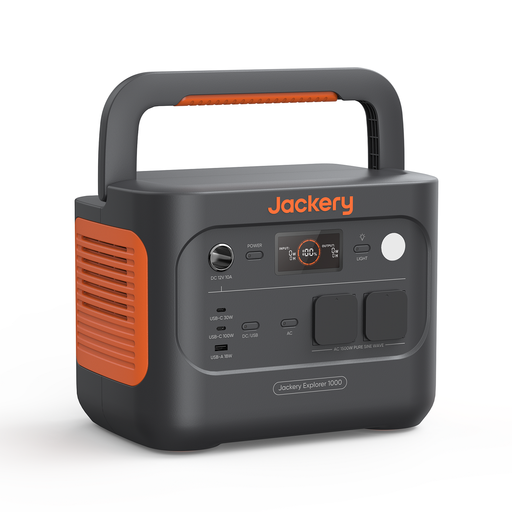 Image unavailable
Jackery Explorer 1000 V2 power station
For selected AC appliances while camping, provided their power requirements are compatible with the station.
1.070 Wh; 1.500 W AC output; 100 W USB-C output.
If you’re staying in one place for longer, also check that the solar and vehicle inputs suit your recharging plans.
View at Joybuy
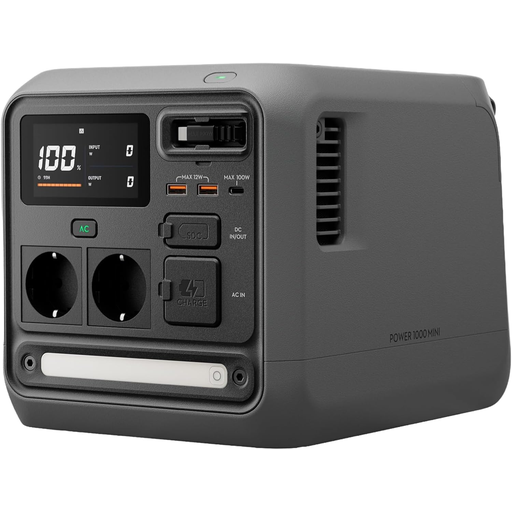 Image unavailable
DJI Power 1000 Mini power station
A portable energy reserve for camping, provided the requirements of your connected devices are compatible with the station.
1.008 Wh; 1.000 W output power; LFP battery.
Before choosing, check that the connections and power are suitable for the devices you actually plan to use.
View at Joybuy
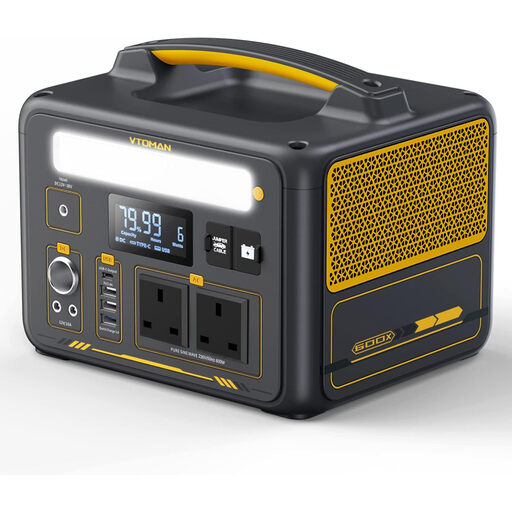 Image unavailable
VTOMAN Jump 600X power station
For compatible 230 V, USB-C or 12 V devices while camping, provided their power requirements are within the device’s specifications.
299 Wh; 600 W AC rated power; 60 W USB-C output and three regulated 12 V/10 A DC outputs.
Compare the 299 Wh capacity with your devices’ consumption and planned running time.
View at Joybuy
Frequently asked questions
How can I work out whether the energy reserve will last for a day parked up?
For each device, multiply its power in watts by the number of hours you plan to use it, then add the figures for the same period. Compare your estimate with the usable energy available at the AC or DC output you plan to use. Rated capacity and measured usable energy can differ. The ADAC lists these figures separately for the models it tested.
Can I power a laptop or cool box directly via USB or 12 V?
It depends on whether the output’s connection, voltage and power match the requirements of the specific device. For USB-C, check the charging power required; for a cool box, check its 12 V operating specifications. A USB or 12 V output won’t be enough for devices that need 230 V.
Can I charge a power station from the vehicle and a solar panel at the same time?
Don’t assume simultaneous charging is permitted just because both charging inputs are available. The ADAC warned of a risk of overvoltage to the vehicle when this combination was used with the Ective BlackBox 10 and Jackery Explorer 1000 v2. The instructions for the specific model must explicitly allow it.
Is a power station with a 230 V socket automatically suitable for the onboard system?
No. A socket on the station doesn’t mean it’s designed to feed power into a motorhome’s 230 V onboard system. If you’re planning to integrate it, a qualified professional must confirm the manufacturer’s approval for both the station and vehicle, as well as the necessary protective measures.
Do I need to secure the power station while driving?
Yes, if you’re carrying it as a load in Germany. Under § 22 Abs. 1 StVO, it must be stowed and secured so that it cannot slide, fall over or roll around, even during emergency braking or a sudden evasive manoeuvre. The Federal Ministry of Justice and the Federal Office of Justice set out this requirement in the German Road Traffic Regulations.


