
Lieferung heute & morgen

Qualitätsgarantie

Willkommens-Angebote freischalten: KOSTENLOSE Lieferung | Bis zu 80 % RABATT | Kostenlose 30-Tage-JoyPlus-Testphase
App herunterladen
As a Joybuy Product Recommendation Officer, I analyse market data to provide you with objective, practical advice. A correctly functioning Tyre Pressure Monitoring System (TPMS) is crucial for the safety of motorhomes, trailers, and campers. Incorrect tyre pressure on your motorhome not only increases fuel consumption and accelerates tyre wear but can, in the worst-case scenario, lead to a blowout.
However, the market for aftermarket systems is overwhelming. Many products promise more than they can deliver. Before you make a decision, you should be aware of the three most common pitfalls that can lead to a poor purchase.
To avoid these pitfalls, focus on three core technical parameters. These determine the reliability and real-world usability of a system for your vehicle.
The required tyre pressure for motorhomes and vans is often significantly higher than for passenger cars. A system must be able to cover this higher range.
For retrofitting a tyre pressure monitoring system, models with external sensors are the most pragmatic solution.
The display's power supply and a stable radio connection are essential for continuous operation.
Based on these objective criteria, we have compiled a selection of products suitable for different user profiles and vehicles.
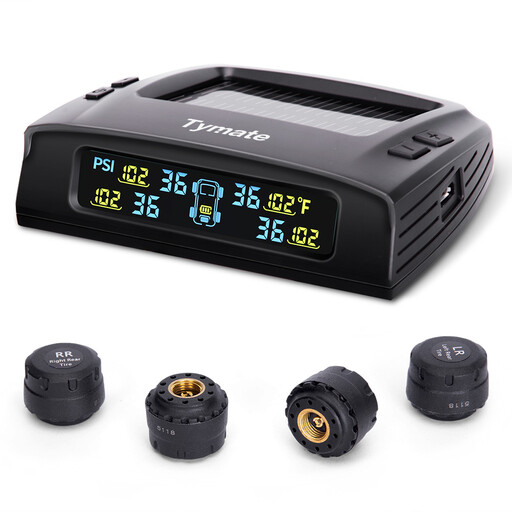
Why This Fits Their Persona: This system is a solid entry-level choice for standard vehicles like camper vans, smaller motorhomes, or SUVs. It covers all basic safety functions and is very user-friendly thanks to its external sensors and solar-powered display.
It bypasses the hidden costs trap with easily replaceable CR1632 batteries in the sensors. The 5 different alarm modes provide reliable and precise warnings, instead of delivering inaccurate data.
Combination of solar charging and a USB port for continuous operation. An automatic sleep mode conserves the battery when not in use.
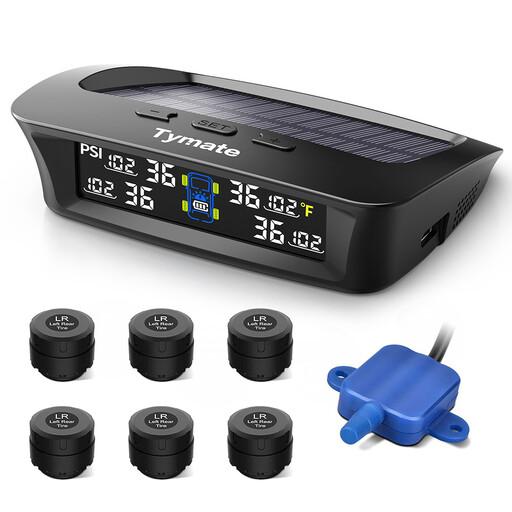
Why This Fits Their Persona: Ideal for owners of larger motorhomes who also tow a trailer. With six sensors and a signal booster, the entire setup is seamlessly monitored, ensuring a high level of safety on long journeys.
This set solves the weak signal trap with its included repeater. It ensures a stable connection even to the rearmost tyres of the trailer and prevents signal dropouts.
An all-in-one solution for the towing vehicle and trailer. The colour display with automatic brightness adjustment ensures excellent readability day and night.
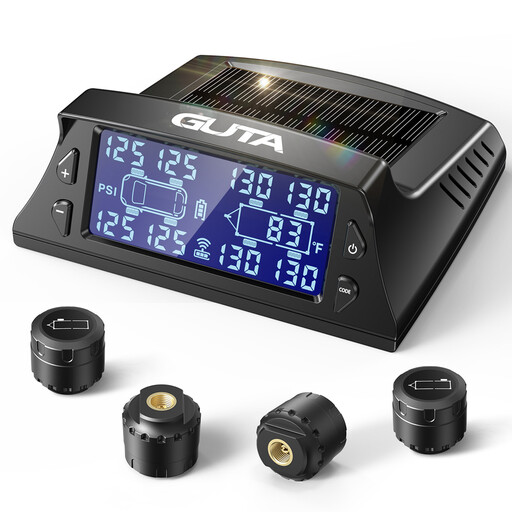
Why This Fits Their Persona: Specifically designed for heavy vehicles whose tyres require high pressure. The wide measurement range makes it the right choice for large, heavy motorhomes, semi-trailers, or small lorries.
It addresses the pitfall of unsuitable measurement ranges. By monitoring up to 13 Bar (188 PSI), it provides reliable data even for high-pressure tyres, where car systems would fail or trigger constant false alarms.
High pressure measurement range and a long sensor battery life of approx. 4 years (according to manufacturer specifications, CR2032 battery).
We have compiled a complete, up-to-date list of products that fully meet these strict selection criteria and German safety regulations.
Retrofitting is very simple and can usually be done in under 10 minutes. The external sensors are screwed onto the valves like standard valve caps. The display is then placed inside the vehicle and switched on. A trip to the workshop is not necessary.
The battery life depends on the model and the type of battery used. For sensors with CR1632 batteries, manufacturers often state a life of approx. 2 years, while models with CR2032 batteries can last up to 4 years. On all the models presented here, the batteries can be easily replaced by the user.
Yes. The solar panel primarily serves to extend the battery life and reduce the need for frequent charging. All reliable systems also feature a USB charging port (usually Type-C). This ensures the display can be charged at any time, even during periods with little sun or when parked in a garage for extended periods, guaranteeing uninterrupted operation.