
Lieferung heute & morgen

Qualitätsgarantie

Willkommens-Angebote freischalten: KOSTENLOSE Lieferung | Bis zu 80 % RABATT | Kostenlose 30-Tage-JoyPlus-Testphase
App herunterladen
A tyre pressure monitoring system for your motorhome can display pressure and temperature readings while you’re driving. This is particularly useful on long journeys, in high outside temperatures or when towing a caravan or trailer. What matters, though, isn’t just the number of features: the pressure range, number of sensors and wireless range all need to suit your vehicle.
Many buyers focus first on a low price or a prominent display. It’s easy to overlook important details as a result. This guide explains what to look for in a TPMS for a motorhome, caravan, trailer or larger vehicle.
A kit with six, eight or ten sensors isn’t necessary for every vehicle. For a motorhome with four wheels, a TPMS with 4 sensors may be enough. If you’re towing a caravan or trailer, you’ll also need to account for its tyres.
Before buying, count:
A TPMS with 6 sensors, TPMS with 8 sensors or TPMS with 10 sensors is mainly useful if you need to monitor several axles or a vehicle and trailer combination.
A system with a measurement range up to 116 PSI is designed for many cars and smaller vehicles. Motorhomes, lorries and heavy trailers may require higher tyre pressures, however. According to their product specifications, some systems cover pressures up to 188 or 203 PSI.
Check the information on:
The displayed reading doesn’t replace a check with a suitable tyre pressure gauge or maintenance in line with the manufacturer’s recommendations.
A wireless tyre pressure monitoring system sends readings by radio signal. In a short motorhome, the sensors may connect directly to the display. On long vehicles, when towing a caravan or with a lorry and trailer, metal surfaces and distance can affect signal transmission.
A tyre pressure monitoring system with a repeater can extend the signal range in these situations. Whether you need a repeater depends on the vehicle’s length, construction and installation position. Check the manufacturer’s stated maximum vehicle length before buying.
A suitable system should display tyre temperature as well as pressure. The temperature ranges stated for the products featured here vary by model, from around -20 to 85 °C or -40 to 105 °C.
Also check which types of alert the system provides. Common alerts include:
On several models, alert thresholds such as -15 % for low pressure and +25 % for high pressure are calculated automatically from a reference pressure. Make sure you set the reference pressure correctly before setting off.
External sensors screw onto the valves and can generally be added to an existing vehicle. Check that your valves are suitable for the sensors’ size and weight. Some product specifications recommend using metal valves.
To understand the ongoing costs, check:
Stated battery life is based on the manufacturer’s information and may vary depending on use, temperature and wireless operation.
A clear display should make it easy to identify which tyre each reading relates to. Colour displays, automatic backlighting and flashing tyre symbols can make the system easier to use. Sleep mode after an extended period of inactivity helps reduce power consumption; some systems wake automatically when you start driving.
CE and RoHS markings in the product information relate to specific conformity or substance requirements. They don’t replace checking that the system is suitable for your vehicle, valves and intended use.
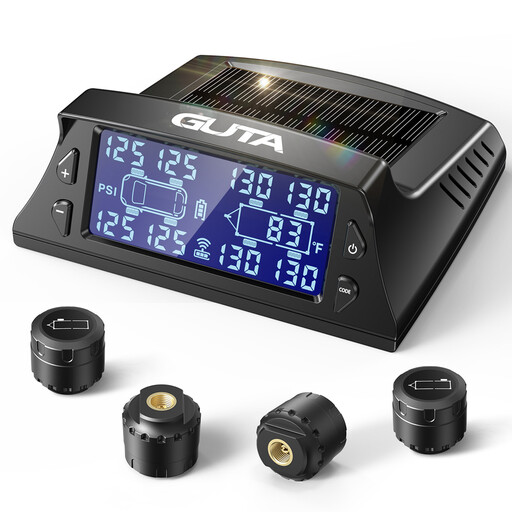
Why this product suits this profile: This kit is designed for four tyres and, according to the product information, offers a pressure range of 0 to 188 PSI and a temperature display. It’s a good option if you’re looking for a straightforward system for a single motorhome.
The stated measurement range is clearly specified. The number of sensors also helps beginners avoid buying more than they need for a single vehicle.
0–188 PSI, temperature range of -20 to 105 °C, automatic reference calibration and external sensors with a stated CR2032 battery life of around four years.
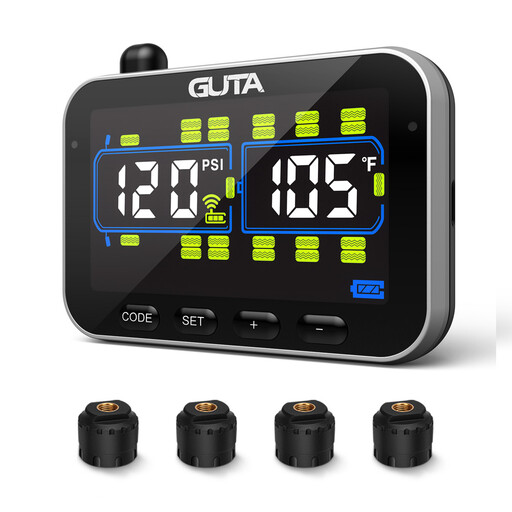
Why this product suits this profile: This model combines a wide pressure range with a colour display, six alert types according to the product information, and a repeater. It’s worth considering if you prioritise a comprehensive display and signal support.
The repeater helps address potential range limitations with longer vehicles. Pre-labelled sensors make it easier to match them to the tyres.
0–203 PSI, temperature monitoring from -40 to 105 °C, an 850-mAh battery, colour display and a stated sensor battery life of around four years.
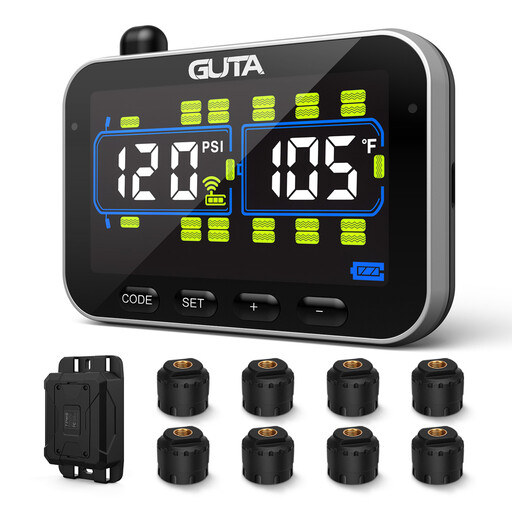
Why this product suits this profile: According to the product information, its eight sensors, repeater and pressure range up to 188 PSI make it suitable for larger vehicles, vehicle and trailer combinations, or monitoring several tyres.
The higher number of sensors can reduce the need to combine several separate kits. The repeater helps with the longer signal path involved when towing a trailer.
Eight sensors, repeater, 0–203 PSI, six stated alert types and a temperature range of -40 to 105 °C.
We’ve put together a complete, regularly updated list of products that meet these strict selection criteria and the safety requirements in force in the EU.
Before your first journey, assign the sensors to the correct tyre positions and fit the valve caps or locking rings correctly. Then follow this routine:
A tyre pressure warning system for your motorhome provides additional information while you’re driving. It doesn’t replace visual checks or the prescribed maintenance intervals.
For a motorhome with four monitored wheels, a four-sensor kit is generally enough, as long as you don’t need to monitor any other tyres. If you have a caravan, trailer or several axles, a TPMS with 6, 8 or 10 sensors may be a better fit.
Battery life depends on the sensor type, temperature and usage. The product information for the GUTA models featured here states that CR2032 batteries last around four years. For the Tymate model with CR1632 batteries, the stated battery life is around two years. Treat these figures as a guide.
Not necessarily. A direct wireless connection may be enough for shorter vehicles. For a long motorhome, a motorhome and caravan combination, or tyre pressure monitoring on a trailer, a repeater can help with signal transmission. The vehicle’s exact length, construction and installation position are what matter.