
Lieferung heute & morgen

Qualitätsgarantie

Willkommens-Angebote freischalten: KOSTENLOSE Lieferung | Bis zu 80 % RABATT | Kostenlose 30-Tage-JoyPlus-Testphase
App herunterladen
A tyre pressure monitoring system for motorhomes can display pressure and temperature readings while you are driving. This is particularly useful on long journeys, with heavy loads or when towing a caravan or trailer. However, the systems available differ significantly in terms of measuring range, sensor battery life, range and alarm functions.
If you only look for terms such as “solar TPMS” or “real-time monitoring”, you may overlook important details. Three common buying misconceptions occur particularly often:
A motorhome TPMS should cover a measuring range suitable for the vehicle. A lower range is sufficient for many cars and SUVs. Motorhomes, caravans, vans and lorries may, however, use tyres with considerably higher pressure values.
Look out for the following details:
According to the manufacturers’ specifications, the systems presented here use the current pressure as a reference. The stated thresholds include 15 per cent below and 25 per cent above the reference value. These values do not replace the pressure specified by the vehicle or tyre manufacturer. Before every journey, the tyre pressure should be checked when the tyres are cold using a suitable gauge.
Tyre temperature monitoring shows changes while you are driving. Rising temperatures can be affected by factors such as the outside temperature, driving speed, load or tyre pressure. The display provides a reading, but not a complete analysis of the cause.
The following features are particularly useful:
According to the manufacturer’s specifications, the Tymate system has a temperature range of -20 to 85 °C. The GUTA system is specified as covering -20 to 105 °C. These figures should always be checked against the information on the relevant product page.
External tyre pressure sensors are screwed onto the valves. This makes retrofitting easier, but requires correctly fitted valve caps, seals and lock nuts. After installation, check that each sensor has been assigned to the correct tyre position.
The following points are also important for a wireless tyre pressure monitoring system:
A repeater may be required for vehicles exceeding the stated length. According to the manufacturer’s specifications, the GUTA model recommends a repeater for vehicle lengths of more than 20 feet. This point should be checked particularly carefully before ordering a lorry tyre pressure monitoring system or one for a long motorhome.
The following products have been assigned to different usage situations based on their stated measuring ranges, number of sensors, display and power supply. Information on accuracy, operating time and alarms comes from the respective manufacturers’ specifications.
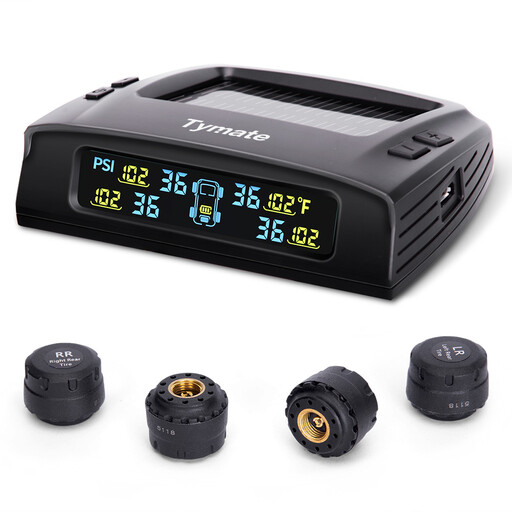
Why this product suits this profile: The system features four external sensors, a colour LCD display and a stated measuring range of 0–8 BAR or 0–116 PSI. This makes it suitable for anyone looking for a straightforward retrofit solution for a motorhome, SUV or car.
Pressure and temperature readings are displayed for four tyres. The manufacturer also specifies warnings for rapid air loss, over- or under-inflation, high temperature and low sensor voltage.
Colour LCD display with automatic backlighting, sleep mode after at least ten minutes of inactivity and CR1632 sensor batteries with an approximately two-year operating life, according to the manufacturer.
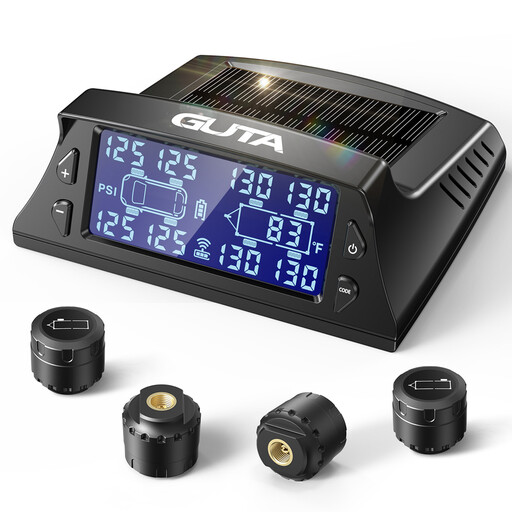
Why this product suits this profile: With a stated measuring range of 0–13 BAR or 0–199 PSI, it also covers higher pressure values. This makes the model an interesting option for caravans, larger recreational vehicles, trailers and certain transport or commercial vehicles.
The wider pressure range prevents the system from already being operated at its measuring limit. Automatic calibration and several alarm types make it easier to identify unusual readings.
Solar-assisted power supply, LCD display with automatic backlighting, CR2032 sensor batteries with up to four years of operating life according to the manufacturer, and a temperature range of up to 105 °C.
Why this product suits this profile: The wide measuring range and temperature display appeal to users who regularly drive with changing loads, tow trailers or travel long distances and want to check readings before and during their journey.
Automatic activation after standby helps to reduce unnecessary energy consumption. However, for vehicles over 20 feet, the wireless range should be checked and a repeater planned if necessary.
Four external sensors, 0–199 PSI measuring range, warnings for rapid air loss and low sensor voltage, plus USB-C charging for the display.
Screw each sensor onto the corresponding valve and secure it according to the instructions. After installation, a brief stationary check is recommended: do the tyre position, pressure reading and temperature display match? When checking the tyre pressure of a trailer, the coupling, cables and tyres should also be inspected independently of the TPMS.
The main ongoing costs include:
A solar TPMS can reduce the display’s charging intervals, but it does not eliminate the need to check the sensor batteries. If tyres are changed or the system is used seasonally, the sensor assignment should be checked again.
We have put together a complete, regularly updated list of products that fully meet these strict selection criteria and the safety regulations applicable in the EU.
A system with four sensors is sufficient for four monitored tyres. For a motorhome with twin tyres, a spare wheel or an additional caravan, further tyre positions must be taken into account. Before buying, check whether the system can be expanded.
Battery life depends on the sensor, battery type, temperature and usage. According to the manufacturers’ specifications, the models mentioned provide approximately two to four years of operating life. These figures are guidelines; a low sensor voltage warning should not be ignored.
Yes, provided that the wireless range, measuring range and number of sensors are suitable for the vehicle combination. Transmission may be affected in long vehicles or when towing a caravan. Before purchase, check the stated vehicle length and whether a repeater can be used.