
Lieferung heute & morgen

Qualitätsgarantie

Willkommens-Angebote freischalten: KOSTENLOSE Lieferung | Bis zu 80 % RABATT | Kostenlose 30-Tage-JoyPlus-Testphase
App herunterladen
A tyre pressure monitoring system for motorhomes can display pressure and temperature readings while you’re on the move. However, not every motorhome TPMS is equally suitable for caravans, trailers, SUVs, lorries and articulated lorries. The key factors are the number of sensors, pressure range, signal range and how the system is actually fitted to your vehicle.
Many poor purchases aren’t down to missing features, but to technical specifications that don’t suit the vehicle. For example, a system for four tyres won’t necessarily be enough for a motorhome towing a caravan. Nor will an advertised signal booster solve every range issue. The criteria below will help you assess marketing claims objectively.
A tyre pressure monitoring system with 4 sensors is designed to monitor four wheels. A motorhome with twin wheels, an additional caravan or a trailer may have considerably more tyres. Before buying, count all the wheels you want to monitor, including spare wheels and those on a trailer.
For larger combinations, a TPMS with 6 sensors or a TPMS with 10 sensors may be suitable. For vehicles with multiple axles, the maximum number of tyres supported can also matter more than the number of sensors included.
Smaller vehicles and SUVs often don’t need an extremely high pressure range. But vans, motorhomes, lorries and trailers can require higher readings. A system with a range of 0 to 87 PSI or 0 to 116 PSI won’t necessarily suit every heavy vehicle combination.
If you’re looking for a tyre pressure warning system for lorries and trailers, compare the cold tyre pressure specified by the tyre and vehicle manufacturers with the system’s pressure range. Make sure the readings in PSI, BAR and kPa are clearly labelled. A tyre pressure monitoring system doesn’t replace checks with a suitable pressure gauge or the information in your vehicle documentation.
On long vehicles, the receiver may struggle to pick up signals from the rear sensors. A TPMS with a signal booster is therefore a practical option for long motorhomes, trailers and articulated lorries. You should still check the manufacturer’s recommended vehicle length.
Power supply is also important: some systems charge the display via USB-C, while the external motorhome tyre pressure sensors use coin-cell batteries. Solar assistance can supplement the monitor’s power supply, but it doesn’t replace regular checks of the charge level and sensor batteries.
A complete tyre pressure and temperature monitoring system displays not only the pressure but also the measured tyre temperature. This is particularly relevant for long journeys, high outside temperatures and heavy vehicle loads. Alarm thresholds should be easy to set and understand. For the products featured here, the current pressure is calibrated as the reference; depending on the model, relative thresholds of -15% for low pressure and +25% for high pressure are specified.
Useful alerts include clear warnings for:
A colour or backlit display can make readings easier to see. Even so, drivers should treat warnings as a prompt to act and make sure the vehicle remains safe to drive, without unnecessary use of the device while on the move.
External sensors are usually screwed onto the valves. Before fitting them, check that the valves are suitable and whether the additional weight should be discussed with your vehicle or tyre service provider. Make sure each sensor is assigned to the correct tyre position.
An automatic sleep and wake function reduces power consumption. Battery life figures should be treated as manufacturer estimates, as they can be affected by temperature, signal range and how often the system is used.
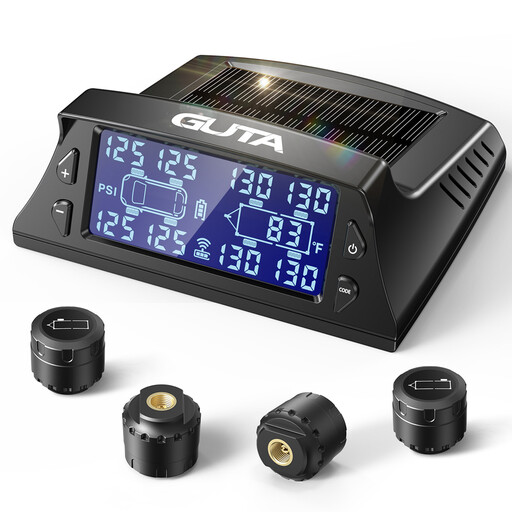
Why this product suits this profile: This set is designed for users monitoring four tyres and offers a pressure range up to 0–188 PSI, as well as temperature monitoring. Its straightforward design makes it suitable for compact motorhomes and trailers up to around 20 feet long.
The number of sensors and the pressure range are clearly specified. The product information also notes that longer vehicles may need a repeater.
Four external sensors, an LCD display, USB-C charging, automatic calibration and a stated sensor battery life of around four years.
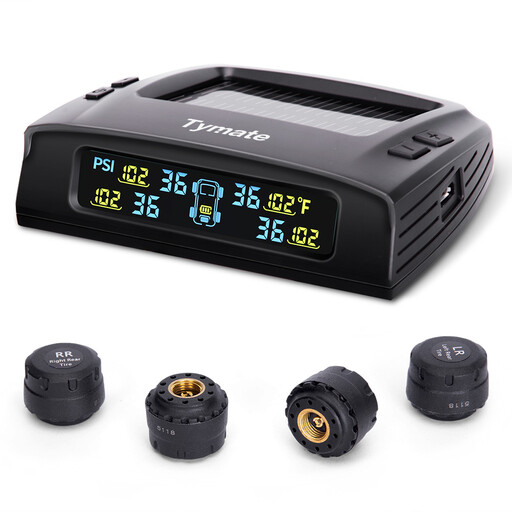
Why this product suits this profile: The colour LCD display with automatic backlighting is ideal for drivers who want to distinguish pressure and temperature readings at a glance. The stated range goes up to 116 PSI.
The pressure range is clearly stated as 0–8 BAR or 0–116 PSI, so check it against your vehicle’s requirements before buying.
Colour LCD, five stated alarm types, sleep mode after at least ten minutes at a standstill and external CR1632 sensor batteries.
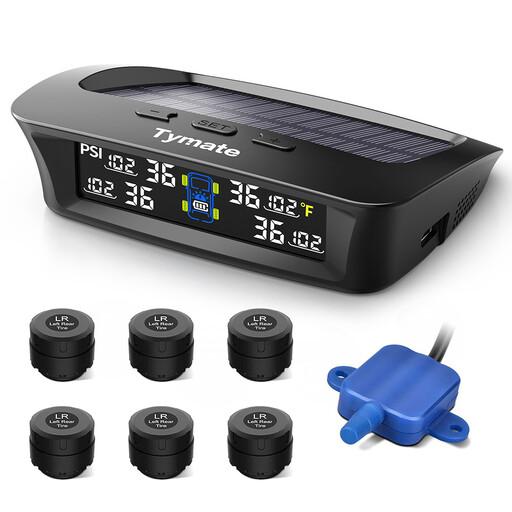
Why this product suits this profile: This set is designed to monitor multiple tyres on vehicles up to around 50 feet long. The repeater helps transmit signals across longer vehicle combinations.
It considers the number of sensors, the repeater and the suitable vehicle length together, rather than focusing only on the display features.
Six sensors, a repeater, a colour display, a temperature range of -20 to 85 °C, and automatic sleep and wake functions.
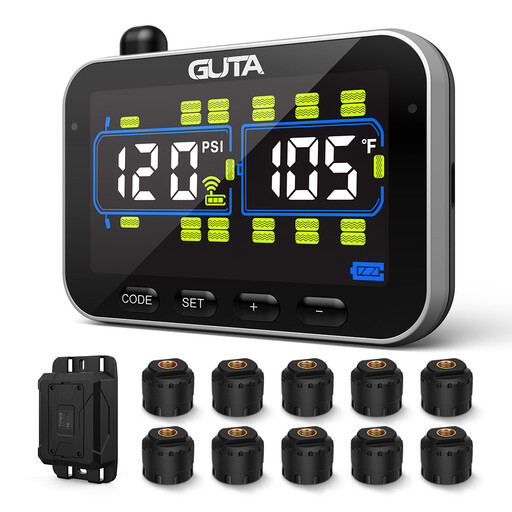
Why this product suits this profile: This system is designed for larger vehicle combinations, lorries, trailers and fleet use. According to the product information, it supports up to 24 tyres and uses a repeater.
The high number of sensors reduces the risk of leaving additional tyres unmonitored. You should still check your specific vehicle configuration before buying.
Ten sensors, a repeater, a pressure range up to 0–188 PSI according to the product name, a colour LCD and six stated alarm types.
We’ve put together a complete, regularly updated list of products that meet these strict selection criteria and fully comply with the safety regulations in force in the EU.
With the systems described here, the external sensors are screwed onto the valves. The sensors are then assigned to the relevant tyre positions and the reference readings are calibrated. Before use, check the valves and seals, and make sure the sensors are fitted securely. For longer vehicles, you should also check the signal range and whether a signal booster is needed.
Battery life depends on the model, temperature and usage. GUTA systems are stated to have a battery life of around four years with CR2032 batteries. For Tymate systems with CR1632 batteries, the manufacturer gives an estimate of around two years. These are indicative figures; pay attention to low sensor battery warnings.
Aside from the purchase price, the main costs are replacement batteries and, if needed, replacing damaged sensors. Depending on the model, the monitor is charged via USB-C or runs with solar assistance. Before buying, it’s worth comparing the sensor battery type, battery life, availability of replacement parts and warranty cover.