
Lieferung heute & morgen

Qualitätsgarantie

Willkommens-Angebote freischalten: KOSTENLOSE Lieferung | Bis zu 80 % RABATT | Kostenlose 30-Tage-JoyPlus-Testphase
App herunterladen
A motorhome tyre pressure monitoring system can display pressure and temperature readings while you’re driving. This is especially important on long journeys, with heavy loads, and when towing a combination of a towing vehicle and trailer. However, systems differ significantly in measurement range, number of sensors, signal range and power supply.
Many poor purchases happen not because of the price, but because of unsuitable technical specifications. A TPMS designed for a car, for example, isn’t automatically suitable for a long caravan or a heavy motorhome.
A TPMS with 4 sensors typically covers four wheels. For a caravan or trailer with four wheels, this may be sufficient. However, a motorhome with additional wheels, or a combination of towing vehicle and trailer, often requires six or more monitoring points.
What matters, therefore, isn’t just the number of sensors included in the box. Buyers should check:
Some systems are designed for smaller vehicles, SUVs or standard cars. For motorhomes, lorries and certain trailer tyres, a higher pressure range may be required. Specifications such as 0–8 bar or 0–116 psi or 0–13 bar or up to 199 psi should be compared with the tyre pressure prescribed by your vehicle manufacturer.
However, the maximum measurable value alone isn’t a mark of quality. What’s important is that the range covers the actual operating pressure and that the alarm can be set sensibly. For the systems mentioned here, product information states that some use automatic reference calibration with alarm thresholds of -15% for low pressure and +25% for high pressure.
A solar tyre pressure monitoring system can reduce the display’s energy needs, but it still requires a suitable position with enough sunlight. In addition, many units have an internal battery. The external tyre pressure sensors usually run on button cell batteries, whose lifespan depends on usage, temperature and battery type.
Before buying, you should therefore check the following points:
A tyre pressure warning system shouldn’t just show the pressure. A tyre pressure and temperature monitoring system can also alert you to unusual temperature readings. According to the product information from the respective brands, the alarm functions include rapid air loss, pressure that’s too high or too low, increased tyre temperature and low sensor voltage.
The displayed readings don’t replace a visual check or a tyre pressure check with a separate gauge. Before driving, you should check the pressure on cold tyres according to your vehicle’s specifications.
According to product information, the systems featured use a radio frequency of 433.92 MHz. On long vehicles or trailers, signal transmission can be affected by distance and structural obstacles. A repeater can support the connection between sensors and display on certain models.
So pay attention to the stated maximum vehicle length. The specifications vary: some systems are designed for vehicles up to around 20 feet, while one model with a repeater supports up to 50 feet according to the product description.
Screw-on external sensors can be attached to the valves without a garage visit. Before installation, you should check that the valve shape, thread and available space are compatible. With metal valves, twin tyres or special trailer valves, an additional check may be necessary.
After fitting, it’s a good idea to check for correct seating and possible leaks. The securing elements and tools provided by the manufacturer should be used according to the instructions.
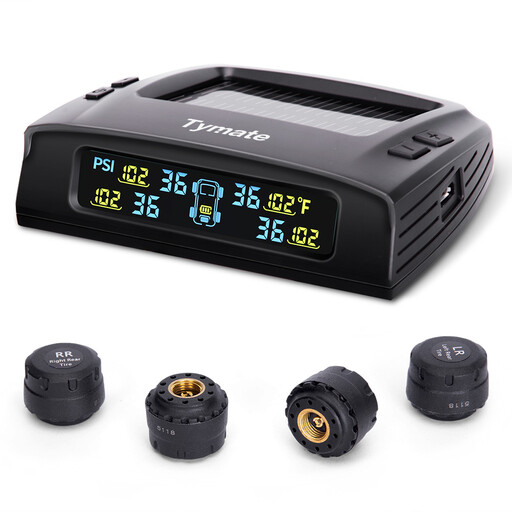
Why this product fits the profile: According to product information, this system is aimed at cars, SUVs and vehicles with four wheels to monitor. It offers an LCD colour display as well as pressure and temperature readouts.
The measurement range of 0–8 bar or 0–116 psi according to manufacturer specifications is clearly stated. The automatic sleep and wake-up function can reduce unnecessary energy consumption when stationary.
Four external sensors, a temperature range of -20 to 85 °C according to product information, and replaceable CR1632 batteries with a stated lifespan of around two years.
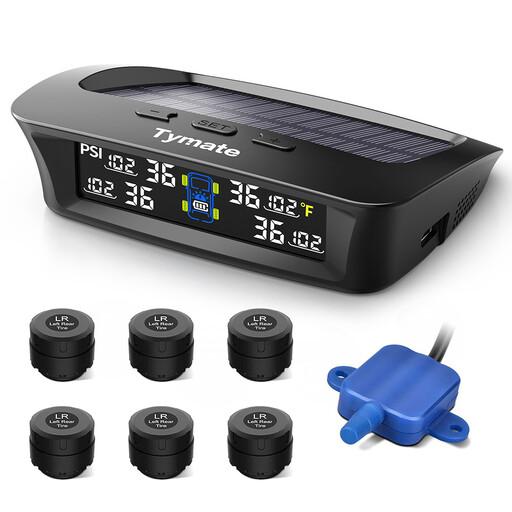
Why this product fits the profile: The version with six sensors is of interest to users who want to monitor multiple wheels on a motorhome, caravan or towing vehicle.
The number of sensors and the included repeater are explicitly stated. This makes it easier to check before buying whether the planned vehicle length and number of wheels are covered.
According to product information: six sensors, repeater, LCD colour display, automatic reference calibration and a 500 mAh battery in the monitor.
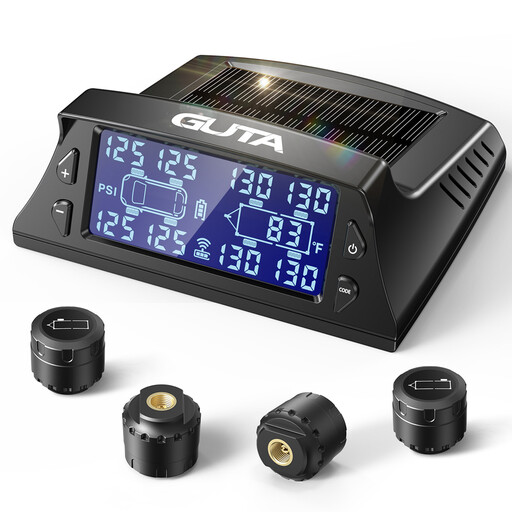
Why this product fits the profile: The wide pressure range, according to the product description, is of interest for motorhomes, trailers and vehicles with higher tyre pressure requirements.
The measurement range of up to 13 bar or 199 psi according to manufacturer specifications can be compared in advance with the prescribed vehicle pressure. For longer vehicles, the optional repeater note should also be considered.
Pressure measurement up to 199 psi according to product information, temperature range up to 105 °C and CR2032 sensor batteries with a stated lifespan of around four years.
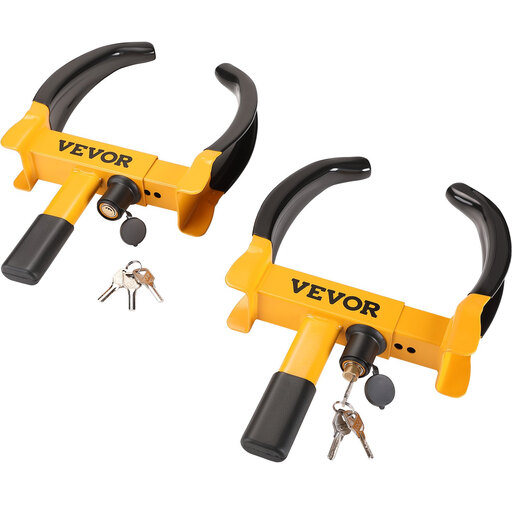
Why this product fits the profile: A wheel clamp for car and caravan complements tyre monitoring with a mechanical security device for parked vehicles.
The wheel clamp doesn’t rely on radio, battery or sensor batteries. However, before use, you must check the wheel size, rim shape and the available adjustment range.
According to product information: two pieces, nine adjustable positions and six keys. The steel construction is intended for use on various vehicle types.
We’ve put together a complete, regularly updated list of products that fully meet these strict selection criteria and the safety regulations in force in the EU.
First, the sensors are assigned to the respective wheel positions. Then you should check the current tyre pressure on cold tyres and save it as a reference according to the instructions. After fitting, a quick functional check is recommended. On long vehicles, you should also check whether a repeater is needed.
The lifespan depends on the model and usage. According to product information, the systems mentioned use CR1632 or CR2032 batteries with a stated runtime of approximately two to four years. Low temperatures, frequent measurement cycles and longer periods of inactivity can affect the actual service life.
In addition to the purchase price, replacement batteries for the external sensors and possibly a repeater may be needed. With a solar or battery-powered display, there are normally no regular battery costs for the monitor. So before buying, it’s worth checking the battery type, availability and warranty conditions.