If there’s little room to move your mouse alongside your laptop, keyboard and paperwork, a stationary thumb-operated trackball could be a good fit. Logitech describes the ERGO M575S as a mouse whose body stays put on the desk while you move the pointer. If you prefer a conventional mouse, choose a compact model based on how it fits your hand, its scroll wheel and its connectivity. A vertical mouse may suit you if its grip and size are right for your hand, but it still needs room to move. The Federal Institute for Occupational Safety and Health also recommends leaving enough space for your mouse, keyboard and arm support.
Who should consider which mouse features?
Teachers with little room to move a mouse
If you prepare lessons between your laptop and paper documents, consider desk space and room to move the mouse separately. The Federal Institute for Occupational Safety and Health recommends leaving enough space to position your mouse and keyboard flexibly, as well as to support your arm.
Teachers who spend long periods writing
When you spend a long time working on worksheets and planning documents, hand size, handedness and grip all matter. A vertical mouse is one possible design, but it won’t automatically suit every hand. Logitech says the Lift is designed for small to medium-sized hands.
Teachers who switch between devices
If you prepare teaching materials on several computers or at different workstations, choose a portable mouse with connectivity that works with your devices. Bitkom lists creating worksheets and researching lesson content among teachers’ digital activities.
What to look for when buying
For a small desk, the mouse’s dimensions aren’t the only thing that matters: the Federal Institute for Occupational Safety and Health also recommends leaving room for a suitable layout and arm support. Logitech describes a stationary trackball as a way to move the pointer without shifting the mouse body.
| What matters |
What to check before buying |
Who may find this especially important |
| Room to move and arm support |
Space beside the keyboard; with a trackball, how it’s operated by the thumb; with a conventional mouse, the room needed for the mouse and forearm. |
If paperwork leaves little room to move a mouse, I still want to be able to position my mouse and arm comfortably. Around 33% of consumers cite room to move as their main concern. |
| Fit and hand position |
Hand size, left- or right-handed version, and the grip of the specific model. |
When preparing lessons for long periods, I want a shape that suits my hand and preferred grip. Around 27% of consumers say hand fit is their main concern. |
| Document navigation |
Scrolling behaviour and, where relevant, customisable buttons. Consider glass tracking only if you work on a glass surface. |
When I’m reviewing long documents, comfortable pointer control and scrolling matter more to me than one sensor specification. Around 20% of consumers cite document navigation as their main concern. |
| Quiet operation and connectivity |
Bluetooth or the USB receiver you need, whether it’s included, and the connectivity options of the specific model. |
At a shared workstation, I want quiet clicks and a mouse that connects to my devices. Around 20% of consumers prioritise quiet operation and switching between devices. |
Common misconceptions
-
A small mouse doesn’t need room to move
Even a compact conventional mouse needs to move across the desk. A trackball doesn’t need to be moved to control the pointer, but it still needs space on the desk. Arm support also remains important.
Check desk space, room to move and space for your forearm separately. The Federal Institute for Occupational Safety and Health recommends leaving enough room to position your mouse and keyboard flexibly.
-
A vertical shape or “Ergo” label guarantees a good fit
Vertical mice and ergonomically shaped models vary according to hand size and handedness. The F.A.Z. Buying Guide notes that the Logitech Lift isn’t suitable for large hands.
Before you decide, check your hand size and whether the specific product version is designed for left- or right-handed use.
-
“Wireless” means a USB receiver is included
Logitech says the Logi Bolt receiver isn’t included with the Logitech MX Anywhere 3S; the mouse can connect via Bluetooth.
Check whether your computer supports Bluetooth or needs a receiver, and whether that receiver is included with the version you’ve chosen.
Brands to consider
Logitech
The relevant models here range from the stationary ERGO M575S trackball and low-profile Pebble Mouse 2 M350s to the compact MX Anywhere 3S and vertical Lift.
- The range covers different needs around desk space, grip and navigation. Logitech describes the MX Anywhere 3S as having a MagSpeed scroll wheel.
- According to Logitech, the Logi Bolt receiver isn’t included with the MX Anywhere 3S. The F.A.Z. Buying Guide says the Lift isn’t suitable for large hands.
CHERRY
The MW 8C ADVANCED is a compact mouse, while CHERRY says the MW 8C ERGO is designed for medium to large right hands.
- CHERRY lists Bluetooth and 2.4 GHz wireless connectivity for the MW 8C ADVANCED, along with a resolution adjustable in four steps up to 3000 dpi.
- Don’t assume the larger MW 8C ERGO is space-saving simply because of its name.
Trust
Trust describes the Yvi+ as a compact wireless mouse with quiet buttons, and the Bayo II as a vertical mouse with a 2.4 GHz USB receiver.
- The two product lines address different needs: a compact shape and quieter clicks with the Yvi+, and a different grip with the Bayo II.
- Trust’s description of the Bayo II as reducing strain isn’t proof that it will have this effect for every buyer. You’ll need a compatible USB port for the receiver.
Mice for lesson planning
This selection includes stationary trackballs and vertical mice, as well as conventional wireless models for lesson planning and working at a desk with limited space.
 No image available
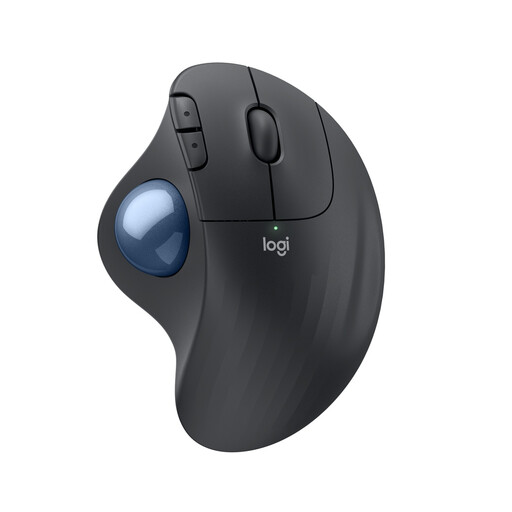
Logitech ERGO M575S – Graphite
The stationary thumb control could suit you if you want to move the pointer without sliding the mouse body across the desk.
The mouse still needs space on your desk, and the thumb control should suit the way you prefer to use a mouse.
View at Joybuy
 No image available
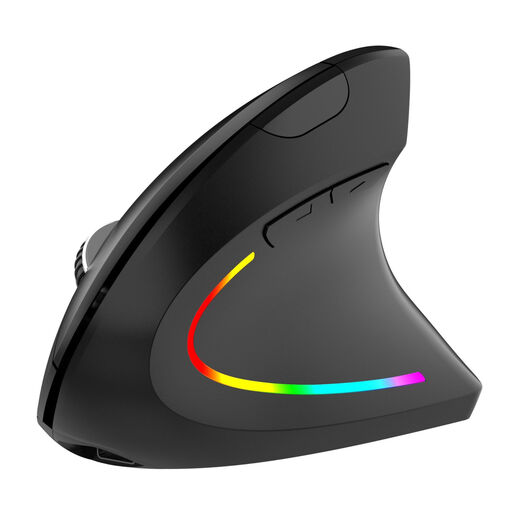
NAXSIR vertical wireless mouse, rechargeable, 6 buttons
A vertical design is an option if you’d like to try a different grip during longer work sessions.
Features listed in the product name: rechargeable, six buttons, adjustable DPI and quiet buttons. As a conventional moving mouse, it still needs room on your desk.
View at Joybuy
 No image available
Vertical wireless mouse with USB-C, Bluetooth and 2.4 GHz
This vertical mouse may suit you if you’re looking for a different grip and several connectivity options.
Features listed in the product name: USB-C charging, Bluetooth, 2.4 GHz connectivity and three DPI settings of 800, 1200 and 1600 DPI. You’ll still need room to move it to control the pointer.
View at Joybuy
 No image available
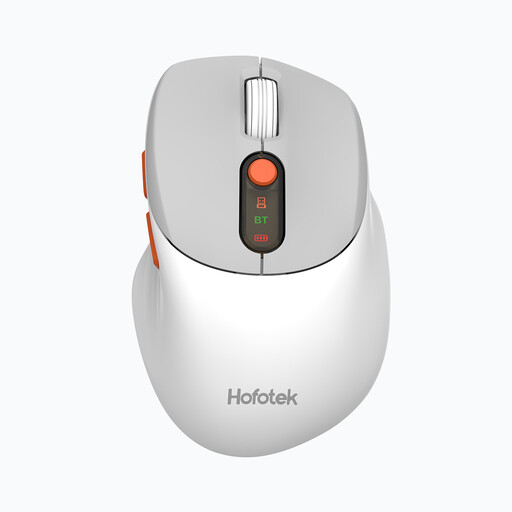
HOFOTEK M311 Silent Office Mouse
This compact mouse with quiet clicks could suit a workspace where room is limited and noise is a concern.
Features listed in the product name: 2.4 GHz and Bluetooth connectivity, several DPI settings and an AA battery. This conventional mouse also needs to be moved around.
View at Joybuy
 No image available
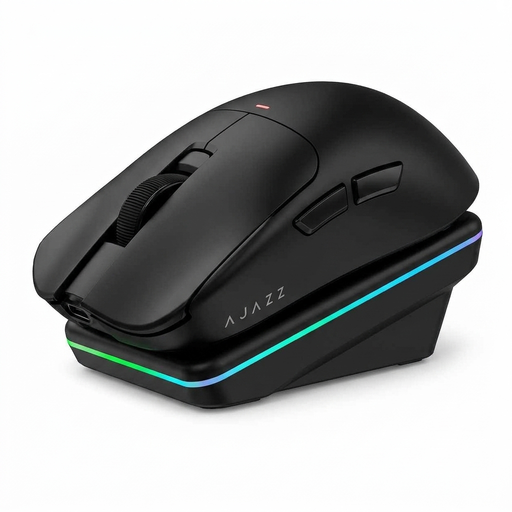
AJAZZ AJ200 AI MC wireless mouse with charging dock
The product description mentions office work and several connectivity options. Check that its size and shape suit your limited workspace.
Features listed in the product name: tri-mode connectivity via Bluetooth, 2.4 GHz and USB-C, plus a 24000 DPI sensor. The DPI figure alone doesn’t prove it will be better for working with documents.
View at Joybuy
Frequently asked questions
How should I arrange my mouse alongside my keyboard and teaching materials?
Allow space for your mouse, keyboard and arm support. The Federal Institute for Occupational Safety and Health recommends a desk surface that allows for flexible positioning. The ASR A6 requirements for workplaces should not be assumed to apply to every home desk without first checking their scope.
Do I need a spare USB port for a wireless mouse?
It depends on the connectivity of the specific model. Logitech says the MX Anywhere 3S can connect via Bluetooth; its compatible Logi Bolt USB receiver isn’t included. The Trust Bayo II is described as coming with a 2.4 GHz USB micro receiver. Check the connectivity options and ports on your devices.
What should I check about the battery and receiver before buying?
Check whether the specific mouse uses a battery or rechargeable battery, and whether any receiver you need is included. Logitech lists a replaceable battery for the ERGO M575S; this doesn’t tell you how other models are powered.
What should I look for in a wireless mouse in Germany?
The German Federal Network Agency lists correct CE marking, manufacturer details, a German-language instruction manual and a declaration of conformity among the checks for radio equipment. This isn’t a blanket endorsement of individual models.
How should I dispose of an old mouse?
A mouse that has reached the end of its life is electrical waste and shouldn’t go in your household rubbish. The German Environment Agency lists recycling centres and suitable retailer take-back points; removable batteries should be collected separately.


