
Lieferung heute & morgen

Qualitätsgarantie

Willkommens-Angebote freischalten: KOSTENLOSE Lieferung | Bis zu 80 % RABATT | Kostenlose 30-Tage-JoyPlus-Testphase
App herunterladen
Finding durable and stimulating outdoor toys can be a challenge. Parents and grandparents want products that not only entertain but also support a child's development and can withstand the elements in the garden or on the balcony. A mud kitchen offers an exciting opportunity to give children a space for creative and sensory play with natural materials like sand, water, and soil.
This article serves as a guide. It explains which features to look for when making a selection and presents a variety of models to provide you with a basis for an informed decision.
Choosing the right model depends on several factors, including the available space, the child's age, and the desired play features. Here are three key aspects you should consider.
An outdoor play kitchen is constantly exposed to the weather. Therefore, the material is crucial for its longevity. Models made from solid wood are a popular choice as they are robust and stable. Ensure the wood is treated with a weatherproof finish to protect it from moisture and sun exposure. Plastic components, such as the play tubs, should also be UV-resistant and easy to clean. A well-made wooden children's kitchen can bring joy for many years with proper care.
Mud kitchens come in various sizes and designs. For a small balcony or patio, a compact mud table or a combined sand play table is a suitable option. These models offer basic functions in a small footprint. If you have a garden, you might consider a larger children's garden kitchen. Such models often feature additional elements like an oven, painted hobs, hooks for accessories, or an integrated water play table with a working tap. Consider which features would be most appealing to your child and how many children will be playing with it at the same time.
The child's safety is the top priority. Check that the construction is stable and sturdy to prevent it from tipping over. Rounded corners and edges minimise the risk of injury. The worktop height should be appropriate for the child's age and height, allowing them to play comfortably while standing. Manufacturers usually provide an age recommendation that serves as a guideline. For toddlers, it is especially important that there are no small, swallowable parts and that play is supervised by an adult.
Based on the criteria above, we have compiled a selection of models that stand out for their different concepts and features.
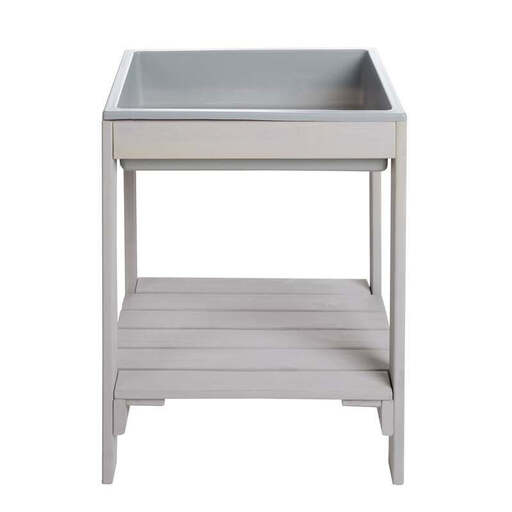
Why It Stands Out The 'Tiny' play table focuses on the essentials and is extremely versatile due to its compact design. It functions as a classic mud, sand, and water table for outdoor use and can easily be brought indoors during winter to be used as a craft table with a practical storage tub.
Advantages
Who It's For This model is an excellent choice for families with limited space who are looking for a flexible and durable play solution for children between 1.5 and 8 years old.
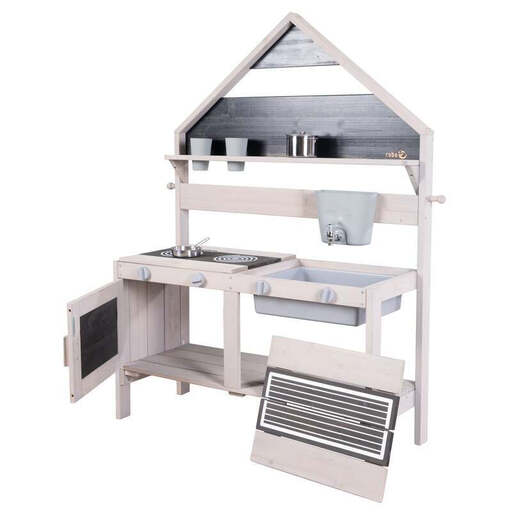
Why It Stands Out This roba mud kitchen offers a comprehensive play experience modelled on a real kitchen. With numerous details like hobs, rotating knobs, an oven, and a working tap, it encourages imaginative role-playing.
Advantages
Who It's For Ideal for families with a garden who are looking for a fully equipped children's garden kitchen that offers long-lasting fun and diverse role-playing opportunities for children aged 18 months and up.
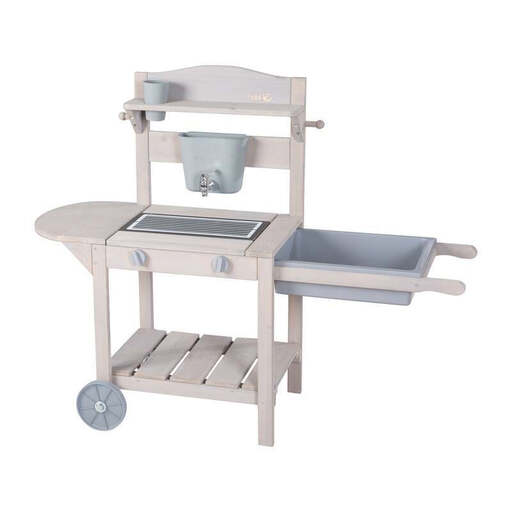
Why It Stands Out The special feature of this model is its mobility. Thanks to its two wheels, the play kitchen can be moved effortlessly between indoors and outdoors. The BBQ theme with a printed grill surface offers a change from the classic kitchen look.
Advantages
Who It's For This kitchen is a great fit for families who want to use a flexible play kitchen outdoors and indoors, and whose children enjoy BBQ role-playing.
The models presented offer a glimpse into the variety of mud kitchens available. However, every family and every child has individual needs. If you want to compare more designs, sizes, or features, you might find the right product in our broader selection.
Discover our entire range of outdoor toys for toddlers.
1. From what age is a mud kitchen recommended? Most manufacturers recommend their models for children aged 18 months and older. At this age, children begin to refine their motor skills and develop an interest in role-playing. It is important that use, especially for the youngest children, is always under adult supervision to ensure safety.
2. How do you care for a wooden mud kitchen? To ensure the longevity of a wooden children's kitchen, it should be cleaned regularly with a damp cloth. After playing with water, it is advisable to empty the tubs and let the surfaces dry. To protect the wood from extreme weather, it can be beneficial to cover the kitchen when not in use or store it in a sheltered place, such as a shed or basement, during the winter months.
3. What skills does playing with a mud kitchen promote? Playing with a mud kitchen is educationally valuable. It fosters creativity and imagination as children prepare "dishes" from sand, leaves, and water. Handling different materials trains sensory skills and fine motor skills. When playing together with other children, social skills such as sharing, communicating, and cooperating are also practised.