Households planning to keep a small stock
If you eat bars on several evenings, the number of bars, weight per bar and how easily the pack can be stored matter more than simply calling it a ‘value pack’.


A multipack of muesli bars can suit a late-evening snack, as long as the number of bars, portion size and storage requirements match how many you’ll actually eat. Whether you choose a classic bar, a no-added-sugar option or a protein bar depends on the ingredients and nutritional information for that specific variety. Remember to check allergen information separately.
If you eat bars on several evenings, the number of bars, weight per bar and how easily the pack can be stored matter more than simply calling it a ‘value pack’.
If you’re choosing a sweet snack carefully, compare the sugar content per 100 g with the ingredients list. The Verbraucherzentrale points out that ingredients used to sweeten a product can contribute to its sugar content, even when they’re listed under different names.
If you need to avoid certain ingredients or protein is your main priority, check the labelling for the specific variety. Another variety from the same brand may have a different recipe.
First, work out how many bars you’re likely to eat. Then compare the recipes on the same basis and, if needed, check the allergen information for each variety.
| Criteria | What to check | Who it matters most to |
|---|---|---|
| Pack size | Compare the number of bars, weight per bar and storage instructions with how many you plan to eat. | If I only have a bar occasionally as a late-evening snack, I don’t want a larger stock sitting around for too long. This is the main consideration for around 45% of consumers. |
| Ingredients and nutritional information | Check the sugar and protein per 100 g, as well as the ingredients list for the specific variety. | When choosing a sweet snack, I want to know what’s in the recipe I’ve picked. Around 33% of consumers give this check top priority. |
| Allergens or protein content | If you need to avoid allergens, check the ingredients and precautionary statements; if protein is a priority, compare the amount per 100 g. | I either need clear information about possible allergens or I’m looking for a particular protein content. For around 22% of consumers, one of these is the main factor when choosing. |
Figures per 100 g make bars of different sizes easier to compare, but they don’t necessarily reflect the contents of a single portion. EDEKA24 lists CORNY Schoko as containing 34 g of sugar per 100 g; the differently formulated CORNY Nuts & Protein Schoko is listed as containing 4.5 g of sugar and 27 g of protein per 100 g. This doesn’t mean one is automatically better than the other: the rest of the ingredients and the portion size also matter.
Names such as ‘protein’ or ‘no added sugar’ are no substitute for checking the nutritional information and ingredients list. Classic muesli bars and protein bars from the same brand can also differ considerably.
Compare the figures that matter to you per 100 g, then read the ingredients for the specific variety you’ve chosen.
A familiar brand doesn’t tell you which allergens are present in every variety. According to Lebensmittelverband Deutschland, ‘May contain traces of …’ is a voluntary statement about possible unintended traces, not confirmation that traces are definitely present.
Check the specific packaging again, especially if you choose a different variety or pack size.
The variety you want may not be available everywhere, whether in shops or online. When planning your stock, what matters is the pack you can actually choose.
Before buying, check the variety, number of bars and storage instructions. Only plan on an alternative if its own labelling meets your needs.
If the variety you want isn’t available locally, you may need to make an extra trip.
The examples below show different product types and pack formats. Information about individual varieties doesn’t necessarily apply to a brand’s entire range.
CORNY offers classic muesli bars, oat bars and a separate protein range in multipacks.
The peanut variety listed by ALDI SÜD contains eight muesli bars, each weighing 25 g.
REWE lists several ja! muesli bars in packs of eight, each weighing 25 g. Varieties include chocolate and sweet & salty peanut.
Knack & Back specialises in fresh dough and bake-at-home products, not muesli bars.
This selection includes Corny bars in several recipes, plus a Balisto biscuit bar for portioned late-evening snacks. Compare muesli bars and biscuit bars as different types of product, and check the pack information for each variety.
 No image available
A stock of twelve portions, each weighing 50 g. Check the ingredients and allergen information on the pack for the Peanut Butter variety.
 No image available
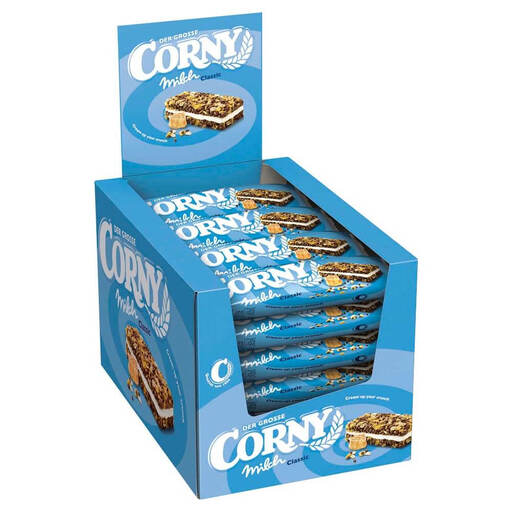
If a larger stock suits how much you eat, this pack contains 24 bars, each weighing 40 g. Check the nutritional and allergen information when comparing it with other varieties.
 No image available
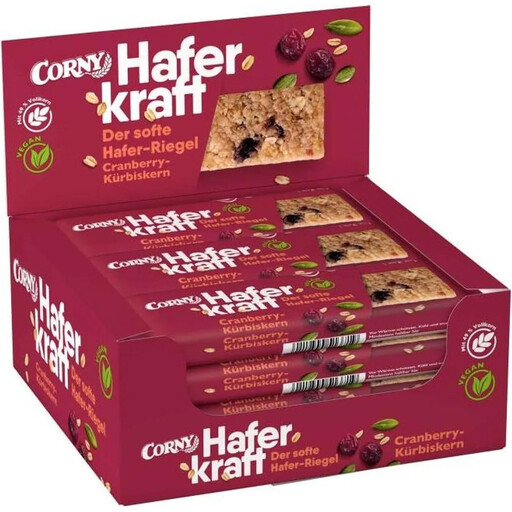
The cranberry variety gives you twelve bars, each weighing 50 g, for several snack breaks. Check the ingredients and allergen information for this variety rather than assuming they’re the same as other Haferkraft bars.
 No image available
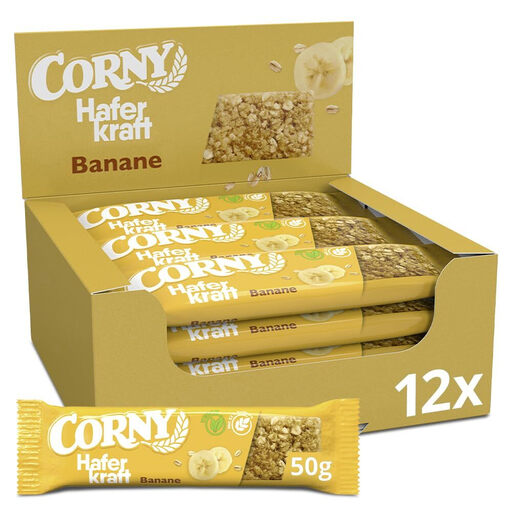
This pack contains twelve bars, each weighing 50 g, so you can stock up on the banana variety. When comparing varieties, check the sugar content per 100 g and the ingredients list on each pack.
 No image available
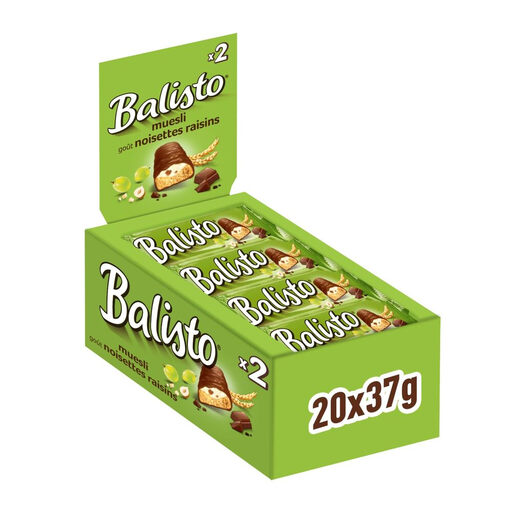
If you’re after a biscuit bar rather than a classic muesli bar, take a look at this pack of 20, each weighing 37 g. When choosing this type of product, check its ingredients and nutritional information.
First compare the number of bars, total weight and weight per bar with how many you plan to eat. A larger pack is only practical if you enjoy that variety and can store the bars according to the pack instructions.
No. The wording alone isn’t enough to make your choice. Check the sugar and other nutritional information per 100 g, as well as the ingredients list for the specific variety. The Verbraucherzentrale points out that different ingredients used to sweeten a product can contribute to its sugar content.
Check the ingredients list and any precautionary statements on the specific pack. The German Federal Government explains how ingredients and substances that can cause allergies are labelled on prepacked foods. According to Lebensmittelverband Deutschland, a precautionary statement about traces is voluntary and relates to possible unintended traces.
Follow the storage instructions on the pack you’ve chosen. For ja! sweet & salty peanut, REWE recommends storing it in a cool, dry place. According to Lebensmittelverband Deutschland, the best-before date is a quality date. For unopened products stored appropriately, passing this date doesn’t automatically mean they need to be thrown away.
You can find current public notices on the food warning portal run by the German federal states and the Federal Office of Consumer Protection and Food Safety. If there’s a notice, check the product name and affected batch in particular.