What to look for when buying
First decide whether a base you can customise, fruit flavour or ready-made crunchy muesli matters most to you. Then compare the nutrition information per 100 g and for the portion you actually eat.
| Criterion | What to check when buying | Who it matters to |
|---|
| Sugar and carbohydrates |
Work out the sugar and total carbohydrate content per 100 g for the portion you eat; include any toppings. |
If you plan breakfast around the amount of carbohydrates, you need a clear figure for the whole bowl. Around 36% of shoppers put this need first. |
| Wholegrains and fibre |
Check the ingredients list for wholegrain flakes and compare the fibre content per 100 g across similar mixes. |
If I want a wholegrain base to be the main part of breakfast, I want to compare its fibre content with other mixes. This is the top priority for around 29% of shoppers. |
| Fruit without added sugar |
Check the sugar content and dried fruit in the ingredients list; take your portion size into account. |
Fruit flavour matters to me, even though dried fruit adds sugar to my portion. Around 21% of shoppers prioritise this. |
| Ready-made crunchy mix |
For claims such as ‘less sugar’, check the actual sugar content as well as the ingredients, fat and energy per 100 g. |
A ready-made crunchy mix suits my breakfast routine better, but a relative reduction in sugar isn’t enough on its own to decide. Around 14% of shoppers put this preference first. |
Products for different types of breakfast
This selection includes plain oats for making your own mixes, as well as ready-made crunchy mueslis. For each option, compare the carbohydrates in your portion and the ingredients you add.
 No image available
Jeden Tag coarse rolled oats, 500 g
A plain base that’s a good choice if you want to decide the quantity and other ingredients yourself.
According to the product information, these are made from wholegrain oats. Per 100 g, they contain 59 g of carbohydrates, of which 0.7 g are sugars, and 10 g of fibre. Calculate the amounts for your portion.
View at Joybuy
 No image available
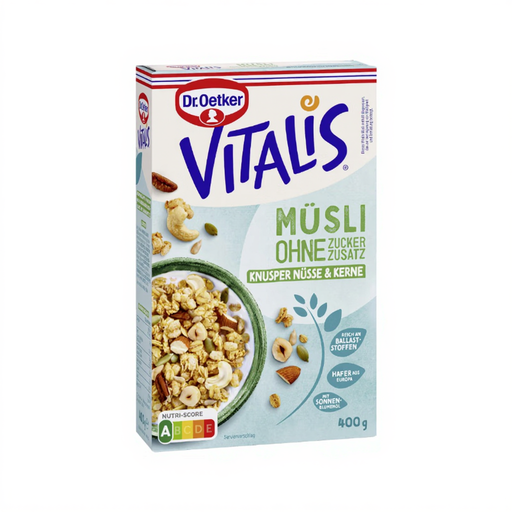
Dr. Oetker Vitalis No Added Sugar Crunchy Nut Muesli, 400 g
A ready-made crunchy nut mix for shoppers looking for an option with no added sugar and keen to check the ingredients.
The product information lists 50 g of carbohydrates per 100 g, of which 2 g are sugars. Ingredients include cashew nuts, hazelnuts and the sweeteners maltitol and steviol glycosides. If you have an allergy, check the current pack.
View at Joybuy
 No image available
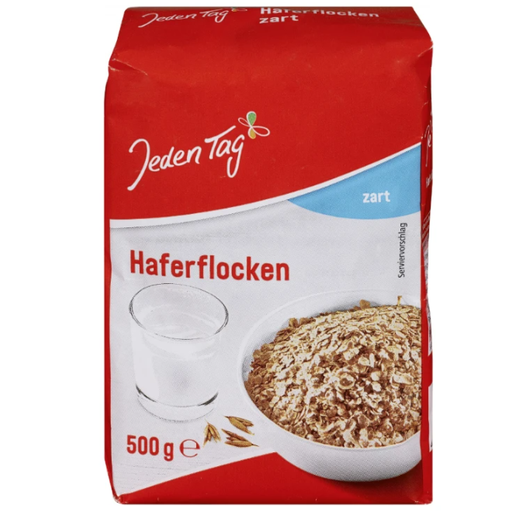
Jeden Tag fine rolled oats, 500 g
A fine oat base for creating your own portions.
According to the product information, the flakes are made from wholegrain oats and contain 59 g of carbohydrates per 100 g, of which 0.7 g are sugars. If you’re comparing flakes by fibre content, check the information on the pack.
View at Joybuy
 No image available
Alnatura Organic fine oats, 500 g
A plain organic oat base that lets you choose your own fruit and other ingredients.
The product information lists wholegrain oat flakes as an ingredient, with 59 g of carbohydrates per 100 g, of which 1.1 g are sugars. Check the fibre content on the pack if it influences your choice.
View at Joybuy
 No image available
Dr. Oetker Vitalis Less Sweet Pure Crunchy Muesli, 600 g
A ready-made crunchy option for shoppers who want to compare a relative reduction in sugar with the actual nutrition figures.
According to the product information, it contains 58% wholegrain oat flakes. Per 100 g, it contains 57 g of carbohydrates, of which 13 g are sugars, and 14 g of fibre. The ingredients include sugar and glucose syrup, so ‘Less Sweet’ doesn’t mean the muesli is unsweetened.
View at Joybuy
Frequently asked questions
Is muesli with no added sugar also sugar-free?
No: the two terms don’t mean the same thing. Muesli with no added sugar can still contain sugar from ingredients such as dried fruit, so compare the sugar content per 100 g and in your portion.
Can muesli with dried fruit be part of breakfast when you have diabetes?
It depends on the whole meal and your personal plan. DiabetesDE says there are no foods that are universally off limits for people with diabetes, but dried fruit does add sugar and carbohydrates to your portion.
Which information on the pack should I compare first?
Start with the sugar and total carbohydrate content per 100 g, then calculate both for the portion you actually eat. Next, check the ingredients list, fibre content and, if needed, allergen information.
Is a high fibre content enough to choose a muesli?
No, fibre is just one part of the mix. Also compare the sugar, total carbohydrates and ingredients such as dried fruit, so the portion you choose fits your meal plan.
What does ‘less sugar’ mean on crunchy muesli?
It describes a relative reduction compared with a product used for comparison, not the sugar content in your portion. Check the actual figure and ingredients list: Kölln states that its Knusper Klassik 50% less sugar still contains 8 g of sugar per 100 g.


