Which options are relevant to you?

For people who count carbohydrates

If you track carbohydrates as part of your personal meal plan, the amount you actually eat matters. The carbohydrate value per 100 g helps you work out the amount in your portion; diabetesDE explains why this is particularly important for people with insulin-treated diabetes.

For people focusing on sugar and wholegrains

If you’re looking for a wholegrain blend that isn’t too sweet, compare its sugar and fibre content, as well as the ingredients. Dried fruit and sweetening ingredients may be just as important to your choice as the wholegrain claim.

For people who check ingredients carefully

If you prefer organic ingredients or need to avoid certain foods, check the specific recipe and allergen labelling. Organic muesli and products with no added sugar can still contain dried fruit, nuts or gluten-containing grains.

What should you look for when buying?

Start with the carbohydrate content of the portion you plan to eat. Then compare sugar, fibre and wholegrain ingredients, and finally check that the specific blend meets your ingredient and allergen requirements.

What to check What to look for when buying Who it matters most to
Carbohydrates and portion size Work out the carbohydrate content for your weighed portion using the value per 100 g; account for toppings separately. If I include breakfast in my personal carbohydrate plan, I need to know how much I actually eat. For around 42% of consumers, being able to plan in this way is their main priority.
Wholegrains, sugar and fibre Compare wholegrain ingredients, fibre and ‘of which sugars’ per 100 g. I want to choose a wholegrain blend without judging a fruity or sweet recipe by its name alone. Around 33% of consumers make this comparison their main priority when choosing.
Ingredients and allergens Check the grains, nuts, dried fruit and allergen labelling on the specific pack. If I need to avoid certain ingredients or prefer a particular recipe, the ingredients list determines my choice. For around 25% of consumers, finding the right blend is the priority.

Common mistakes when buying muesli

  • Assuming ‘no added sugar’ means ‘sugar-free’

    The two claims don’t mean the same thing. Lebensmittelklarheit points out that products with no added sugar may contain sweeteners or sugar substitutes; dried fruit can also contain naturally occurring sugars.

    Compare ‘carbohydrate’ and ‘of which sugars’ in the nutrition information, and read the ingredients list before working out the values for your portion.

  • Forgetting portion size when choosing wholegrain

    Wholegrain muesli still contains carbohydrates. The amount you eat matters when planning your meals; milk, yoghurt, plant-based drinks, fruit and toppings aren’t included in the nutrition information for dry muesli.

    Weigh your portion of muesli and account for any additional ingredients separately. If you have insulin-treated diabetes, your personal plan should follow the guidance provided as part of your treatment.

  • Overlooking dried fruit when checking sugar content

    A blend can have no added sugar and still contain sugars from fruit. For example, Alnatura says that the sweetness of its Urkorn muesli comes exclusively from the fruit it contains.

    If the declared sugar content is important to you, compare muesli with fruit against fruit-free blends using the nutrition information.

  • Increasing your fibre intake too quickly

    A sudden switch to meals that are much higher in fibre can cause digestive discomfort. So it’s worth choosing a muesli that suits how you’re changing your diet overall.

    Increase the amount gradually and make sure you drink enough. If symptoms persist or you have specific dietary requirements, it’s a good idea to seek professional advice.

Brands to consider

Kölln

Mühlenklassiker Wholegrain Base Muesli is an example of a blend you can customise with ingredients of your choice.

  • Kölln says this product contains 88% wholegrain and has a recipe with no added sugar or raisins.
  • The blend contains oats, wheat and barley. Even without added sugar, the carbohydrates in the portion you eat still matter.

Seitenbacher

Seitenbacher Muesli Low Sugar provides specific nutrition information for comparing a fruit-free wholegrain blend.

  • Seitenbacher gives values of 1 g sugar, 9 g fibre and 55 g carbohydrates per 100 g for this product.
  • The recipe contains spelt, almonds and barley malt, among other ingredients. Check separately that the ingredients suit you and consider your portion size.

Alnatura

Urkorn Muesli combines wholegrain flakes with dried fruit and almonds.

  • According to Alnatura, the sweetness of this product comes exclusively from the fruit it contains.
  • This description is no substitute for comparing sugar and carbohydrates per portion; you should also check that the ingredients suit you.

Brüggen

Alongside other mueslis, Brüggen also describes how it makes crunchy varieties.

  • Brüggen says that for its crunchy varieties, grain ingredients are mixed with syrup before baking.
  • This describes the production process, not every recipe. For a specific crunchy muesli, compare the ingredients list and nutrition information.

REWE Bio

In 2024, REWE product tests described organic crunchy muesli varieties made with wholegrain oat flakes or spelt flakes.

  • The different grain bases are a good reason to compare the ingredients in each variety carefully.
  • Customer reviews on the test page aren’t a comparison of nutrition values. The information on the specific pack is what matters.

Muesli and oats at Joybuy

This selection includes crunchy muesli as well as oats to use as a base for your own mix. Oats aren’t a ready-made muesli; for all options, use the pack information and any additional ingredients to plan your portion.

Jeden Tag Less Sweet Crunchy Oat Muesli, 750 g

Jeden Tag Less Sweet Crunchy Oat Müsli, 750 g

An option if you’re looking for crunchy oat muesli. Compare the carbohydrate and sugar values on the pack with your planned portion, rather than treating ‘Less Sweet’ as nutrition information.

View at Joybuy
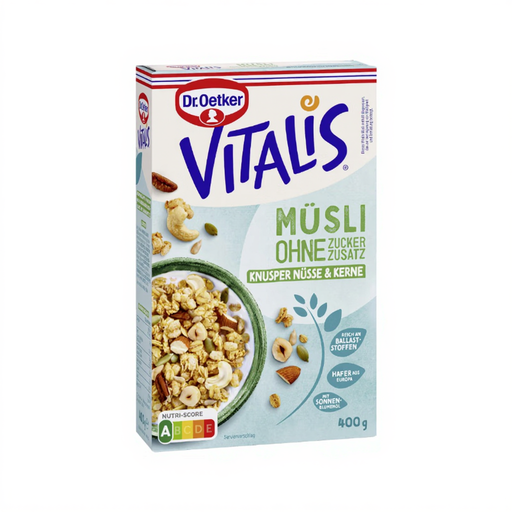
Dr. Oetker Vitalis No Added Sugar Crunchy Nut Müsli, 400 g

Dr. Oetker Vitalis No Added Sugar Crunchy Nut Müsli, 400 g

A crunchy nut option for anyone who enjoys this kind of blend. As well as sugar and carbohydrates, check the ingredients and allergen labelling; the variety name ‘No Added Sugar’ doesn’t replace these checks.

View at Joybuy

Kölln coarse rolled oats, 500 g

Kölln Coarse Rolled Oats, 500 g

Oats are a good base if you want to make your own muesli, but they aren’t a ready-made muesli blend. When planning your portion, remember to account for any ingredients you add yourself as well as the oats.

View at Joybuy
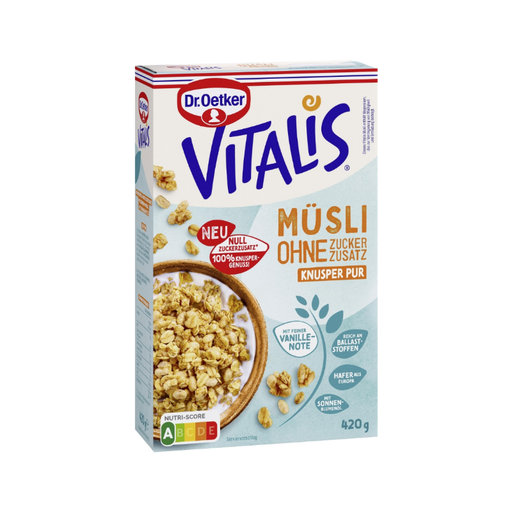
Dr. Oetker Vitalis No Added Sugar Crunchy Müsli, 420 g

Dr. Oetker Vitalis No Added Sugar Crunchy Müsli, 420 g

An option if you prefer crunchy muesli. Before planning your portion, read the full nutrition information and ingredients list on the pack; the variety name alone won’t tell you how many carbohydrates it contains.

View at Joybuy

Frequently asked questions

Is wholegrain muesli automatically a good choice if you have diabetes?

No, the wholegrain claim alone doesn’t determine that. Muesli contains carbohydrates, so the recipe, portion size and other ingredients in your breakfast need to fit your personal meal plan.

What does ‘no added sugar’ mean on muesli?

It doesn’t mean the same as ‘sugar-free’. Lebensmittelklarheit points out that sweeteners or sugar substitutes may be used; fruit can also contain naturally occurring sugars. So compare the ingredients list and the ‘of which sugars’ value in the nutrition information.

Why does portion size matter if you have insulin-treated diabetes?

The carbohydrates in the portion you actually eat are relevant to your personal plan, as diabetesDE explains. Weigh your portion and use the carbohydrate value per 100 g to calculate the amount; your personal insulin plan should follow the guidance from your own training and treatment.

How should I switch to a higher-fibre muesli?

Making the change gradually and drinking enough can help you fit it into your routine. If digestive discomfort persists or you have specific dietary requirements, you should seek professional advice.

Which allergens should I check in wholegrain muesli?

Always check the ingredients and allergen labelling for the specific variety. The recipes described here show that they may contain gluten-containing grains and nuts, among other things; you can’t tell what a product contains from the brand or category alone.