If you’re planning your carbohydrate intake carefully with diabetes, compare wholegrain granola and muesli using the nutrition information for the portion you intend to eat – not just the words ‘wholegrain’ or ‘no added sugar’. A simple base muesli gives you more flexibility with additional ingredients, while fruit muesli and crunchy varieties deserve a closer look at dried fruit and sweetening ingredients.
Who is this comparison useful for?
People keeping an eye on portions and carbohydrates
You want to know how many carbohydrates are in the bowl of muesli you actually eat. diabetesDE – German Diabetes Aid says that carbohydrate intake is relevant to individual calculations for people with insulin-treated diabetes.
People interested in wholegrains and fibre
You’re looking for wholegrains as the basis of your breakfast and comparing fibre content, rather than relying on the front of the pack alone. diabetesDE lists wholegrain cereal products and fibre among the factors to consider when choosing food.
People comparing fruit muesli and sugar
You enjoy fruit muesli but want to distinguish added sugar from the sugars in dried fruit. To do this, check both the ingredients list and the sugar information in the nutrition table.
Which details matter when buying?
First compare the nutrition information per 100 g, then calculate the figures for the amount you actually plan to eat. Whether you prefer a simple wholegrain base, fruit muesli or a crunchy variety will determine which ingredients you should check more closely.
| What to check |
What to look for when buying |
Who it matters most to |
| Carbohydrates and portion size |
Work out the carbohydrates per 100 g for the weighed amount of muesli; consider other ingredients in the bowl separately. |
If my bowl is larger than the manufacturer’s suggested portion, I want to calculate the figures based on the amount I actually eat. Around 31% of consumers prioritise the carbohydrate content of their portion. |
| Sugar and dried fruit |
Compare ‘of which sugars’ per 100 g, as well as dried fruit and sweetening ingredients in the ingredients list. |
With fruit muesli, I want to know where the sweetness comes from, even if the pack says ‘no added sugar’. Around 31% of consumers make sugar and sources of sweetness their main consideration. |
| Wholegrains and fibre |
Check the wholegrain ingredients, any stated wholegrain percentage and the fibre information for the same variety. |
If you’re looking for a wholegrain breakfast base, you’ll want to know how much wholegrain it contains without assuming this tells you about the rest of its nutritional content. This is the top priority for around 25% of consumers. |
| Ingredients and allergens |
Check the ingredients list, highlighted allergens and any ‘may contain’ warnings on the specific pack. |
If I need to avoid certain ingredients or want to add things to my muesli, I need a suitable mix with clear labelling. Around 13% of consumers prioritise checking the ingredients. |
Common comparison mistakes
-
Assuming ‘no added sugar’ means ‘sugar-free’
Dried fruit naturally contains sugar. Kölln says its Früchte Hafer-Müsli ohne Zuckerzusatz contains 40% dried fruit, so the claim alone doesn’t tell you how much sugar is in the finished muesli.
Check ‘of which sugars’ in the nutrition information and read the ingredients list for the variety you’ve chosen.
-
Choosing based on wholegrains alone
A stated wholegrain percentage tells you about the cereal base, but not necessarily the sugar or carbohydrate content of the whole product.
After checking the wholegrain content, compare the carbohydrates, sugar, fat and ingredients for the same variety.
-
Confusing the manufacturer’s portion with your own bowl
Nutrition information for a suggested portion only applies to your meal if you eat the same amount. Milk, yoghurt, fruit and other ingredients all add to it.
Weigh the amount of muesli you want and include any other ingredients in your comparison.
-
Overlooking allergens in a cereal mix
Nuts or sesame may be included alongside cereals. For example, Alnatura lists hazelnuts and sesame as ingredients in its Maxi Müsli.
Check the ingredients, highlighted allergens and ‘may contain’ warnings on the pack of the specific product.
Brands and product ranges to consider
Kölln
The product ranges mentioned here show the difference between a wholegrain base and an oat muesli containing fruit.
- Kölln says its Mühlenklassiker Vollkorn Basis-Müsli contains 88% wholegrain and no added sugar.
- Kölln says its Früchte Hafer-Müsli ohne Zuckerzusatz contains 40% dried fruit. Check the sugar information as well when comparing this product.
Alnatura
Maxi-Müsli is an example of a mix of wholegrain flakes, fruit, nuts and seeds.
- Alnatura says that the sweetness in its Maxi-Müsli comes from the fruit it contains.
- According to Alnatura, it contains hazelnuts and sesame. If needed, check the allergen information and nutrition details on the pack.
Seitenbacher
In its muesli range, consumers can look specifically for wholegrain varieties.
- Seitenbacher highlights wholegrains as a feature of its muesli range.
- For a buying decision, it’s the ingredients and nutrition information for the particular mix that count – not the brand alone.
ja! (REWE)
The Trauben-Nuss-Müsli Vollkorn shows why it’s still important to check the nutrition table, even for a wholegrain product.
- REWE lists 55.5 g of carbohydrates per 100 g for ja! Trauben-Nuss-Müsli Vollkorn.
- For the same product, REWE lists 10.6 g of sugar per 100 g; its ingredients also include sweetened cornflakes.
Muesli and crunchy varieties at Joybuy
This selection includes crunchy muesli as well as Bircher and fruit muesli. Compare the nutrition information and ingredients on each pack against the portion you plan to eat.
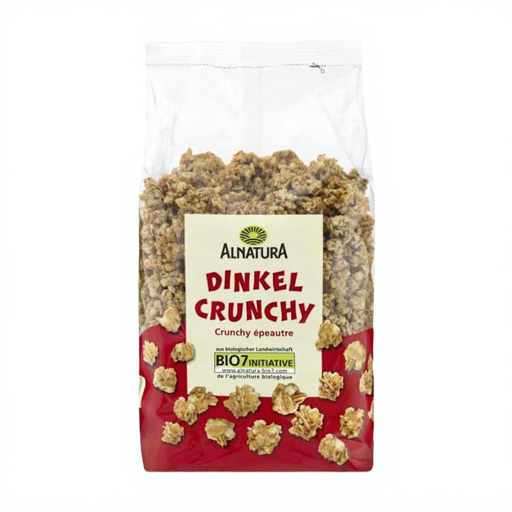 Image unavailable
Alnatura organic crunchy spelt muesli, 750 g
If you’re looking for a crunchy spelt muesli, compare the carbohydrates and sugar per 100 g with the portion you plan to eat. Check the ingredients list for sweetening ingredients too.
View at Joybuy
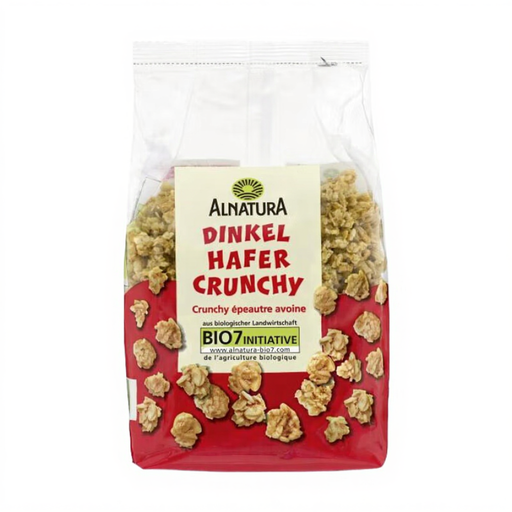 Image unavailable
Alnatura organic crunchy spelt and oat muesli, 375 g
This variety could suit you if you’re looking for a crunchy muesli made with spelt and oats. For comparison, check the carbohydrate and sugar information, as well as the sweetening ingredients listed on the pack.
View at Joybuy
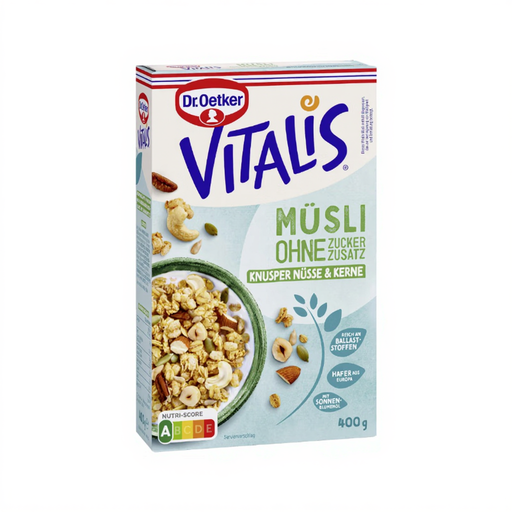 Image unavailable
Dr. Oetker Vitalis crunchy nut muesli with no added sugar, 400 g
If you’re comparing a crunchy nut variety, look beyond the ‘no added sugar’ claim and check the total carbohydrates and sugar per 100 g too. If you have a nut allergy, check the specific ingredients and allergen information.
View at Joybuy
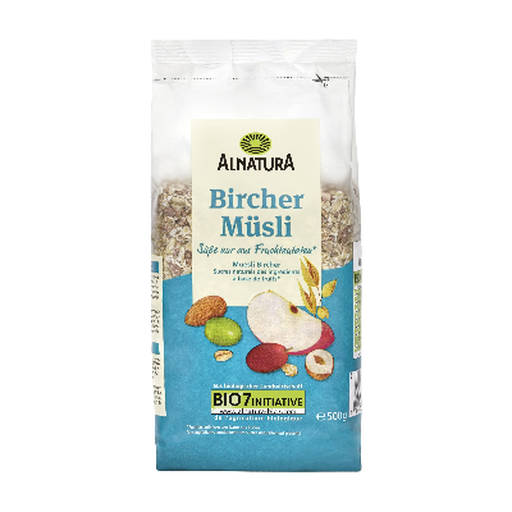 Image unavailable
Alnatura organic Bircher muesli, 500 g
With Bircher muesli, it’s worth checking the cereal and fruit ingredients. Also compare sugar and carbohydrates per 100 g, and take any other ingredients in your bowl into account.
View at Joybuy
 Image unavailable
Kölln 50% fruit muesli with no added sugar, 500 g
If you prefer fruit muesli, don’t assume ‘no added sugar’ means ‘sugar-free’. Check the current pack for sugar, total carbohydrates and the ingredients, based on the portion you plan to eat.
View at Joybuy
Frequently asked questions
Does ‘no added sugar’ on muesli also mean ‘sugar-free’?
No. The Verbraucherzentrale (German consumer advice centre) explains that ‘no added sugar’ relates to the addition of certain types of sugar and sweetening ingredients; ingredients such as dried fruit can still contain naturally occurring sugar. So compare the ‘of which sugars’ line and the ingredients list.
Which amount matters when calculating carbohydrates for insulin-treated diabetes?
It’s the carbohydrates in the amount you actually eat that matter, not just the figures for a manufacturer’s suggested portion. diabetesDE – German Diabetes Aid explains why carbohydrate information matters for individual calculations; how you use it as part of your treatment depends on the personal training you’ve received.
How can I tell whether a muesli has a wholegrain base?
Check the ingredients list and any stated wholegrain percentage for the specific variety. To compare the muesli as a whole, you’ll also need its nutrition information, particularly the carbohydrates and sugar.
How should I store muesli once it’s opened?
Follow the instructions on the pack. Alnatura recommends storing its Maxi-Müsli in a dry place and keeping it away from heat; advice may differ for other products.


