Those who like to stock up
You buy muesli for several breakfasts and want to choose a pack size your household will actually get through. It’s also important to consider whether you can store the quantity as directed on the pack.


A larger pack of muesli could suit your weekly shop if your household eats that variety regularly and you can store it as directed on the pack. Before choosing, compare the ingredients and nutritional information for the specific varieties. A larger pack or a ‘no added sugar’ claim alone tells you little about what it contains.
You buy muesli for several breakfasts and want to choose a pack size your household will actually get through. It’s also important to consider whether you can store the quantity as directed on the pack.
You want to assess the fruit, grains and sugar content by checking the ingredients list and nutritional information, rather than relying on the front of the pack. The Rhineland-Palatinate Consumer Advice Centre also recommends checking the quantities of ingredients featured in product claims.
You check the ingredients and allergen advice for each variety before adding it to the household cupboard. The Federal Office of Consumer Protection and Food Safety notes that allergens which must be declared are highlighted in the ingredients list.
Start with the amount your household will get through. Then compare the recipes and, if needed, check for allergens and read the storage advice on the specific pack.
| What to consider | What to check when buying | Who it matters to |
|---|---|---|
| Pack size | Compare the total weight and number of individual packs with how much you typically use. | If you’re planning several breakfasts, you’ll want enough without any going to waste. This need to stock up is the main consideration for around 36 % of consumers. |
| Ingredients and nutritional information | Check the order of ingredients and the nutritional information per 100 g; look for stated quantities of any fruit or nuts featured in product claims. | If you’re choosing between fruit, chocolate and other types of muesli, you’ll want to know what’s actually in them and how much sugar they contain. Around 29 % of consumers put these checks first. |
| Allergens | Check which allergens are highlighted in the ingredients list and look for any ‘may contain’ advice on the specific pack. | If anyone in your household needs to avoid certain ingredients, the labelling for each variety is key. This takes priority for around 21 % of consumers. |
| Storage and consumption | Read the storage advice and consider whether your household will eat that variety regularly in the quantity supplied. | If you’re short on cupboard space or tastes in your household change, the pack needs to suit your routine. Around 14 % of consumers say this is their first consideration. |
Even fruit muesli with no added sugar can contain sugar from its ingredients. The claim on the front of the pack doesn’t tell you the total sugar content.
If you want to compare different varieties, check the sugar content per 100 g in the nutrition table.
A picture on the pack doesn’t show what proportion of the muesli is made up of that ingredient. That’s why the Rhineland-Palatinate Consumer Advice Centre recommends checking the ingredients list and stated quantities.
For ingredients featured on the pack, look for the stated percentage and check where they appear in the ingredients list.
Ingredients and allergen advice can vary between mueslis from the same brand. So, a pack you already know isn’t a substitute for checking a different variety.
For every variety you choose, read the ingredients list and, where relevant, the ‘may contain’ advice on the current pack.
The brands below offer different types of muesli. When choosing what to buy for your weekly shop, check the labelling for the specific variety rather than relying on the brand name alone.
Kölln offers a range of mueslis. The product pages featured here include a fruit muesli multipack and a chocolate multipack.
Alnatura Maxi Muesli is described as an organic muesli in a 1-kg pack.
Seitenbacher offers a 1-kg version called Mühlen Müsli 1, as well as describing other types of muesli.
familia features a range of Müesli lines, including organic and protein varieties.
Brüggen describes making traditional, crunchy and other types of muesli, including products for retailer own-label ranges.
These mueslis, in 600-g and 750-g packs, could suit a breakfast cupboard that’s used regularly. To work out whether the quantity and recipe are right for you, consider how much your household gets through and check the current labelling on the pack.
 No image available
For households that regularly eat crunchy oat muesli and will get through a 750-g pack.
Pack contents: 750 g. The name ‘Less Sweet’ doesn’t replace checking the nutritional information per 100 g. If you have allergies, check the ingredients and ‘may contain’ advice too.
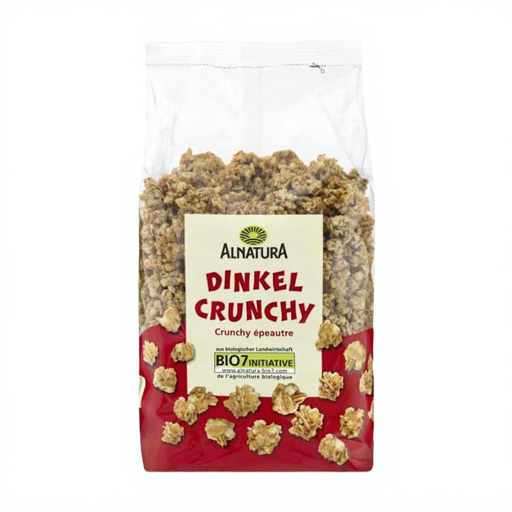 No image available
For households looking for a 750-g pack of crunchy spelt muesli.
Pack contents: 750 g. If grain types or other allergens are important to your choice, check the ingredients and ‘may contain’ advice on the pack.
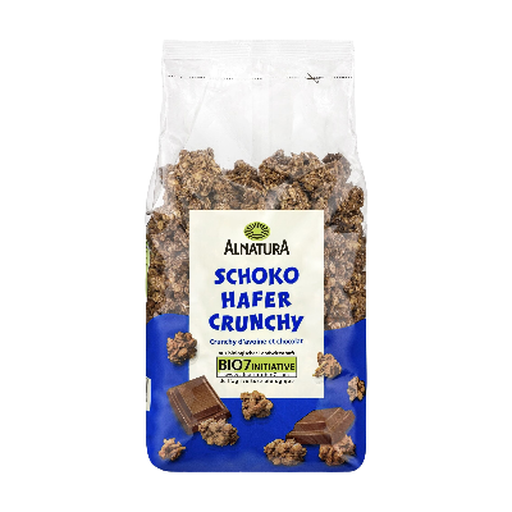 No image available
For households that regularly enjoy crunchy chocolate oat muesli.
Pack contents: 750 g. To compare it with other varieties, check the ingredients and nutritional information per 100 g.
 No image available
For a regular muesli supply, if a 600-g pack is a better fit for how much you use.
Pack contents: 600 g. Check the ingredients list and sugar content per 100 g to understand what ‘Less Sweet’ means for this variety.
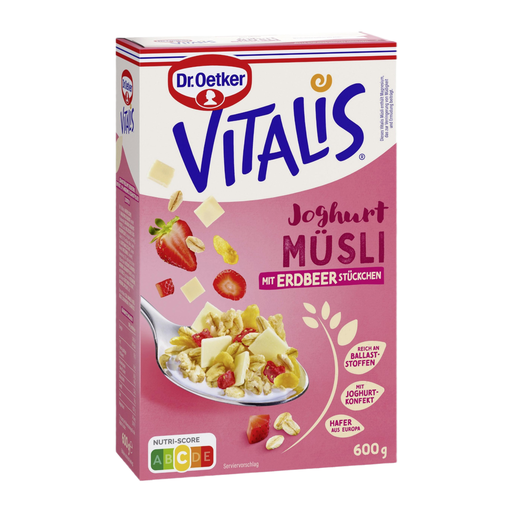 No image available
For households looking for yoghurt and strawberry muesli for regular breakfasts.
The product title states 600 g; check the net weight against the pack before buying. If you have allergies, check the labelling for this variety.
The pack size should suit how much your household gets through regularly. Also compare the ingredients and nutritional information per 100 g; if allergens are relevant, check the labelling for the specific variety.
No. ‘No added sugar’ doesn’t mean that a muesli is low in total sugar. Ingredients such as dried fruit can contain sugar, so compare the sugar content per 100 g when choosing between varieties.
Check the ingredients list and any ‘may contain’ advice on the individual pack. According to the Federal Office of Consumer Protection and Food Safety, allergens which must be declared have to be highlighted in the ingredients list.
Follow the storage advice on the specific pack. Alnatura Maxi Muesli is described as needing to be stored in a dry place, away from heat. Plan your stock so your household can use it regularly.
Look for a stated quantity for the featured fruit in the ingredients list. For fruit muesli, the Rhineland-Palatinate Consumer Advice Centre recommends looking beyond the pictures on the pack and checking the ingredients and quantities.