Compare sugar levels carefully
If you want to keep your total sugar intake as low as possible, the nutrition information per 100 g is more useful than a “no added sugar” claim. Dried fruit can also contribute to the stated sugar content.


If keeping your total sugar intake as low as possible is important to you, start by comparing the “of which sugars” figure per 100 g. “No added sugar” does not mean “sugar-free”. For breakfast in your holiday apartment, you should also consider the ingredients and allergens, how much you’ll need and how to store the muesli once opened.
If you want to keep your total sugar intake as low as possible, the nutrition information per 100 g is more useful than a “no added sugar” claim. Dried fruit can also contribute to the stated sugar content.
Muesli with no added sugar can be a good choice for a fruity breakfast with milk, yoghurt or a plant-based drink. If sugar content is important to you, check the total sugars figure too.
If you’re shopping for several breakfasts or need to avoid certain ingredients, check the specific product’s allergen information, pack size and storage instructions before you travel.
First decide whether total sugar content or fruity flavour with no added sugar matters more to you. Then check the ingredients and pack size for your stay in a holiday apartment.
| What to check | Buying tip | Who it matters to |
|---|---|---|
| Total sugars | Compare the “of which sugars” figure per 100 g. Under Regulation (EC) No 1924/2006, a solid food can only be labelled “sugar-free” in Germany if it contains no more than 0.5 g of sugars per 100 g. | I want to avoid not only added sugar but also keep the stated total sugars as low as possible; this is a priority for around 36% of consumers. |
| Fruit flavour | For muesli with no added sugar, check both the fruit ingredients and the sugars figure per 100 g. | I’d rather have a fruity mix than the lowest possible total sugar content. This is a priority for around 29% of consumers. |
| Ingredients and allergens | Check the current ingredients list, highlighted allergens and any warnings about possible traces on the product itself. | If certain grains or nuts aren’t suitable for me, I need to check the specific recipe; around 21% of consumers put this first. |
| Pack size and storage | Choose a quantity that suits the number of people and breakfast days, and follow the storage instructions after opening. | For a short stay, I want to buy an amount that’s easy to use up and store. Around 14% of consumers prioritise this practical consideration. |
These claims mean different things. REWE lists 22 g of sugars per 100 g for Kölln Früchte Hafer-Müsli ohne Zuckerzusatz; Kölln states that it contains 40% fruit.
If you’re looking for muesli labelled “sugar-free”, check that it meets the limit of no more than 0.5 g of sugars per 100 g. For other sugar targets, compare the nutrition information directly.
The consumer advice centre points out that claims such as “sweetness only from fruit” don’t, on their own, tell you anything about total sugar content.
Read the claim on the front alongside the ingredients list and the “of which sugars” figure.
According to the manufacturer, Seitenbacher Müsli zuckerarm contains spelt and almonds, among other ingredients. A low sugar content doesn’t tell you whether it’s suitable for you.
Check the ingredients and allergen information on the current pack, especially if you’re shopping for several people.
On a short stay, you could end up with a large pack left open. How to store it depends on the specific product.
Plan the amount according to the number of people and breakfast days, and follow the pack’s instructions after opening.
Its Früchte Hafer-Müsli ohne Zuckerzusatz is a good example of why fruit content and total sugars should be considered separately.
Müsli zuckerarm has a clearly stated sugar content, making it easy to compare with other products.
Bircher muesli is an option to mix with milk, yoghurt or plant-based alternatives.
This food retailer publishes product information that can help you compare individual mueslis.
Brüggen says it produces muesli for own-label ranges and to customers’ specifications, among other products.
This selection includes crunchy muesli and Bircher muesli to suit different breakfast preferences in a holiday apartment. For each option, compare the sugar content and ingredients on the current pack; similar-sounding claims don’t necessarily mean the recipes are the same.
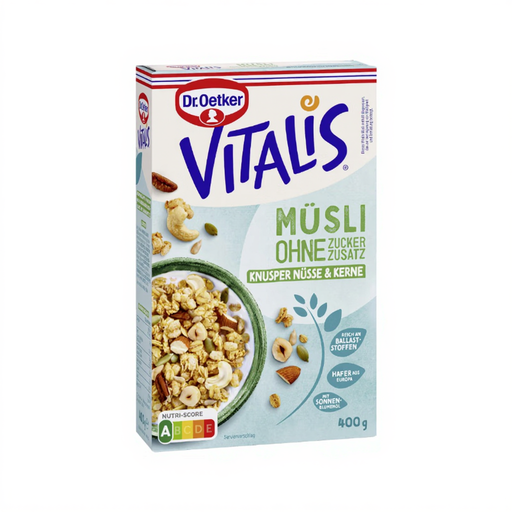 No image available
A crunchy muesli option if you’re looking for a variety with no added sugar. The wording in the product name doesn’t mean “sugar-free”; check the total sugars, ingredients and allergens on the pack before buying.
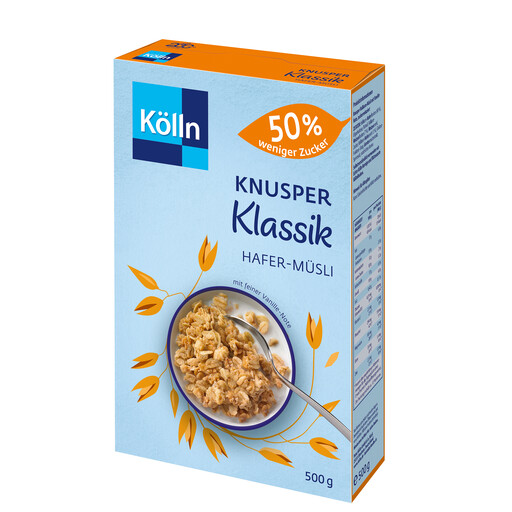 No image available
A 375 g pack for anyone looking for crunchy oat muesli. The comparative sugar claim in the product name doesn’t replace checking the sugars per 100 g or reading the ingredients, and it doesn’t mean the product is sugar-free.
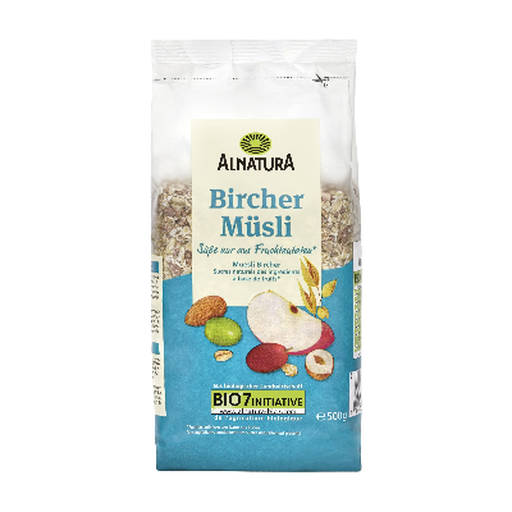 No image available
A Bircher muesli option to mix with milk, yoghurt or a plant-based alternative for breakfast in your holiday apartment. Alnatura lists fruit ingredients, date syrup, hazelnuts and almonds in this muesli; check the total sugars and allergen information.
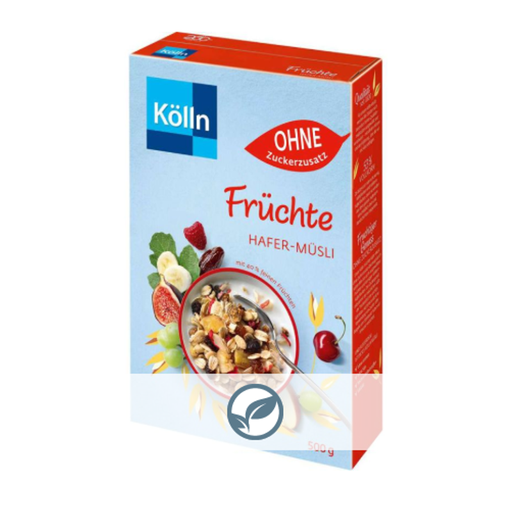 No image available
A fruity muesli option if you value fruit flavour with no added sugar more than keeping total sugars as low as possible. Check the sugar content of this 500 g variety on the pack; it’s not the same as Kölln Früchte Hafer-Müsli, which contains 40% fruit.
No. Under Regulation (EC) No 1924/2006, a solid food in Germany must contain no more than 0.5 g of sugars per 100 g to be labelled “sugar-free”. Muesli with no added sugar can still contain sugars from its ingredients. For example, REWE lists 22 g per 100 g for Kölln Früchte Hafer-Müsli ohne Zuckerzusatz.
Compare the “of which sugars” figure per 100 g for each product. This means you’re comparing the same quantity in both cases; the ingredients list will also show which fruit or other sweet-tasting ingredients they contain.
Follow the storage instructions on the specific pack. For the products featured here, the instructions include storing them in a dry place and sealing the inner bag tightly after opening.
No. A vegan label doesn’t replace checking the allergen information. Check the current ingredients list and any warnings about possible traces on every muesli; the recipes featured here differ in their grain and nut ingredients.
Alnatura recommends plant-based alternatives as well as milk and yoghurt for its Bircher muesli. Choose an option that suits your dietary requirements and follow the preparation instructions for the specific product.