For people who prioritise a low sugar content
You compare the ‘of which sugars’ figures per 100 g and want to choose for yourself whether to add fresh fruit to your bowl, and how much.


If keeping sugar low is your priority at Sunday breakfast, start by comparing the ‘of which sugars’ figures per 100 g and consider a fruit-free muesli. Fruity muesli with no added sugar can still contain sugar from dried fruit. For crunchy or high-protein blends, it’s also worth checking the ingredients and allergens.
You compare the ‘of which sugars’ figures per 100 g and want to choose for yourself whether to add fresh fruit to your bowl, and how much.
You’d like a blend with no added sugar for Sunday breakfast, but are happy for it to contain sugars from fruit.
As well as sugar, you look at whether the recipe is vegan, and check its protein, fibre and seed content. Ingredients and allergens are still part of your decision.
First decide what matters most to you: total sugars, fruit flavour, crunch or ingredients. Then compare the nutritional information per 100 g and the ingredients in the specific blend.
| Criteria | What to check | Who it matters to |
|---|---|---|
| Total sugars | Compare ‘of which sugars’ per 100 g; don’t assume ‘low sugar’ means the same as ‘no added sugar’. | If I want to keep sugar low, I choose a blend by checking the nutrition table and prefer to add fruit myself. For around 37% of consumers, this sugar figure comes first. |
| Fruit flavour | Check the ingredients list and ‘of which sugars’, especially for dried fruit and fruit ingredients. | For my Sunday breakfast bowl, I want fruit flavour without added sugar, even if the fruit itself contains sugars. Around 27% of consumers prioritise this. |
| Crunch | For crunchy muesli, check the ingredients and sugar content as well as any sugar-reduction claim. | A crunchy blend matters more to me than a recipe with no added sugar. Around 18% of consumers choose muesli mainly for its texture. |
| Ingredients | Check the ingredients, highlighted allergens and ‘may contain’ warnings. Compare protein and fibre per 100 g if these matter to you. | Whether a blend suits my diet and my requirements around ingredients and allergens determines whether I buy it. This check comes first for around 18% of consumers. |
These claims don’t mean the same thing. Kölln points out that its Früchte Hafer-Müsli with no added sugar tastes sweet because it contains dried fruit. By contrast, the Verbraucherzentrale explains that ‘sugar-free’ for solid foods means no more than 0.5 g of sugar per 100 g.
If total sugars are what matter, check the ‘of which sugars’ figure per 100 g on the specific pack.
A sugar-reduction claim is a comparison, not a claim that sugar hasn’t been used as an ingredient. Kölln still lists sugar in the recipe for its Knusper Klassik 50 % weniger Zucker.
For crunchy muesli, check both the ingredients list and the stated sugar content.
According to the Verbraucherzentrale, dried fruit and other sweetening ingredients contribute to the sugar content. A fruity blend may therefore have a different sugar content from a fruit-free base.
If you want to decide how much fruit to add, compare a fruit-free blend and add fruit to taste.
The sugar content doesn’t tell you which grains, nuts or other allergens a product contains. The recipes reviewed from Seitenbacher and Alnatura also differ in these ingredients.
Check the ingredients, highlighted allergens and ‘may contain’ warnings on each specific pack.
Kölln offers, among other products, fruity oat muesli with no added sugar and crunchy varieties with a sugar-reduction claim.
Its zuckerarm muesli is a fruit-free blend for people who want to prioritise the sugar content of the muesli base.
Alnatura offers, among other products, Bircher muesli with fruit ingredients and a vegan protein muesli with seeds.
Brüggen makes muesli, including products for supermarket own-label ranges. The manufacturer’s information therefore covers more than just one product for consumers.
These mueslis cater for three different Sunday breakfast preferences: a crunchy nut blend with no added sugar, crunchy muesli with a sugar-reduction claim, and fruity muesli with no added sugar. The sugar content on each pack remains key to your choice.
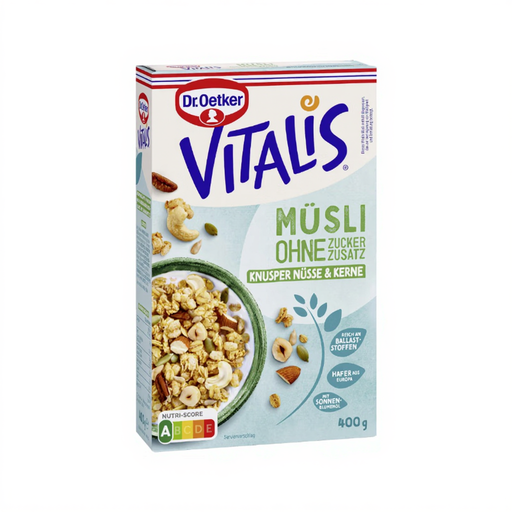 No image available
A crunchy nut muesli with no added sugar for Sunday breakfast. As well as ‘of which sugars’, check the sweeteners and any warnings about grains and nuts.
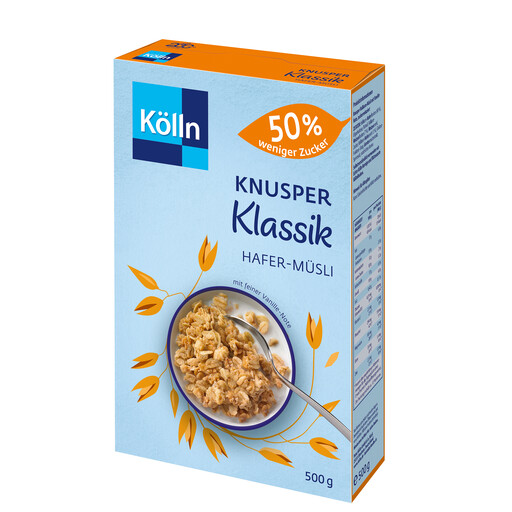 No image available
For anyone looking for crunchy oat muesli with a sugar-reduction claim. The wording in the product name doesn’t mean ‘no added sugar’. Check the sugar content and ingredients list, as well as any warnings about cereals containing gluten.
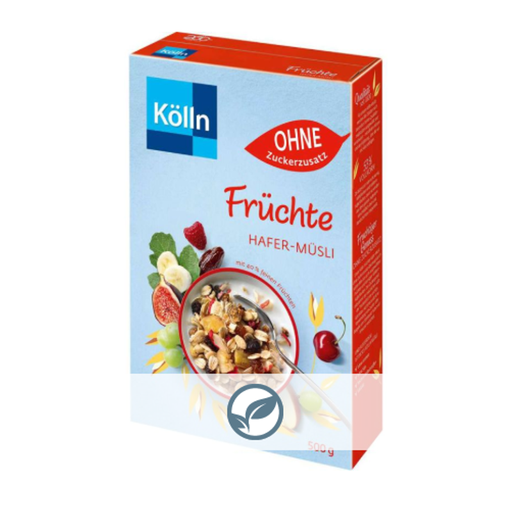 No image available
For a fruity muesli bowl with no added sugar, if the lowest possible total sugar content isn’t your only priority. Compare ‘of which sugars’ per 100 g and check the warnings about grains and possible traces.
No, muesli with no added sugar can still contain sugars from its ingredients. The Verbraucherzentrale explains that ‘sugar-free’ for solid foods means no more than 0.5 g of sugar per 100 g. Kölln points to the dried fruit in its Früchte Hafer-Müsli with no added sugar. So compare the ‘of which sugars’ figure.
Compare the ‘of which sugars’ figures per 100 g on the packs. The Verbraucherzentrale explains that ‘low sugar’ for solid foods means no more than 5 g of sugar per 100 g; Seitenbacher states that its fruit-free zuckerarm muesli contains 1 g per 100 g. Toppings and portion size also affect what ends up in your bowl.
Yes, the sugar content tells you nothing about allergens. Seitenbacher lists oats, spelt, barley and almonds, among other ingredients, in its zuckerarm muesli. Alnatura lists soya, oats and barley in its protein muesli, as well as possible traces of other ingredients. Always check the information on the specific pack.
Alnatura recommends mixing its Bircher muesli with milk or yoghurt and leaving it to soak for ten minutes; plant-based alternatives are also suggested. If you add more fruit, take the quantity into account when comparing the finished breakfast bowl.