Don’t choose a multipack of muesli or granola based only on claims such as ‘no added sugar’ or its size. Compare the carbohydrate and sugar content per 100 g and in the portion you actually eat, check the ingredients and allergens, and consider whether you’ll use the full quantity. ‘No added sugar’ does not mean sugar-free, and you can’t tell from the front of the pack whether a portion suits your personal eating plan.
Who might find this selection useful?
Households planning their carbohydrate intake
If the amount of carbohydrate in your breakfast matters to your personal plan, the portion you actually eat is more important than a suggested serving size you don’t stick to. The German Diabetes Association emphasises that eating plans for people with type 2 diabetes should be tailored to the individual.
People looking for a blend with no added sugar
A fruity muesli with no added sugar may suit your ingredient preferences. However, sugar from the fruit it contains still counts towards the nutritional values.
Households looking to stock up
If you’re planning several breakfasts from one pack, net weight, ingredients, allergens and storage instructions after opening are all important things to consider. Before buying multiple packs, check that the blend suits everyone who’ll be eating it.
What should you look for when buying?
Start by checking the nutritional information and ingredients for your usual portion. Then you can decide whether a multipack is the right size for your household.
| What to consider |
What to check |
Who should pay particular attention |
| Carbohydrates and portion size |
Compare carbohydrates per 100 g with the amount you actually eat; consider the other ingredients in your breakfast separately. |
If I plan my breakfast around its carbohydrate content, I want to know what’s in my own portion. This is the main consideration for around 42% of consumers. |
| Sugar and ingredients |
Check ‘of which sugars’ per 100 g and read the ingredients list; don’t confuse ‘no added sugar’ with ‘sugar-free’. |
I want to avoid added sweetening ingredients without overlooking the sugar in dried fruit. Around 33% of consumers consider this the most important factor. |
| Pack size and practicality |
Check the net weight, allergens and storage instructions before choosing multiple or particularly large packs. |
If I’m buying for several breakfasts, I want a stock-up option my household can actually use. This is the main reason to buy for around 25% of consumers. |
Common misconceptions
-
Assuming ‘no added sugar’ means ‘sugar-free’
Muesli can contain sugar from fruit even if no sugar has been added. So that claim alone won’t tell you whether the blend suits your planned portion.
Also check ‘of which sugars’ and ‘carbohydrate’ in the nutritional information, as well as the ingredients list.
-
Assuming ‘less sugar’ means low in sugar
A reduction claim is a comparison, not an absolute value. Kölln states that its Knusper Klassik contains 50% less sugar, but it still has 8 g of sugar per 100 g; the ingredients list includes sugar and glucose-fructose syrup.
When comparing similar mueslis, check the amount in grams per 100 g rather than relying on the front of the pack.
-
Choosing a large pack without considering your household
A multipack still needs to suit the people who’ll be eating it, both in terms of the recipe and the quantity. An unsuitable ingredient can be a particular concern when you buy several packs.
Check the ingredients and allergens before buying multiple packs, and follow the storage instructions on the pack you receive.
-
Checking for allergens only after you’ve bought it
According to the manufacturer, Seitenbacher Mühlen Müsli 1 contains peanuts and soya. If you’re shopping for several people, don’t assume you can tell from the product type alone.
Check the highlighted allergens and any ‘may contain’ warnings on the specific pack.
Brands to consider
Kölln
Kölln sells its Früchte-Hafer-Müsli with no added sugar in a pack of 4 × 1,200 g. It has a different recipe from Knusper Klassik, which carries a reduced-sugar claim.
- It’s important to distinguish between ‘no added sugar’ and ‘less sugar’ when choosing between these varieties.
- According to Kölln, Knusper Klassik contains sugar and glucose-fructose syrup; its reduction claim does not mean ‘no added sugar’.
Seitenbacher
According to the manufacturer, Mühlen Müsli 1 is available in a 1 kg pack.
- Seitenbacher states that this muesli contains 52 g of carbohydrates, 13 g of sugar and 10 g of fibre per 100 g.
- The ingredients and allergen information need to suit your household; the manufacturer lists peanuts and soya, among other ingredients.
Alnatura
Alnatura offers Maxi-Müsli in a 1 kg pack, as well as oats to use as the base for your own muesli blend.
- According to Alnatura, the sweetness in Maxi-Müsli comes exclusively from the fruit it contains.
- Fruit sweetness alone doesn’t tell you the total sugar content or the amount of carbohydrate in a portion.
REWE / ja!
REWE lists ja! Früchte-Müsli in a 1 kg pack.
- REWE states that this variety contains 59.4 g of carbohydrates and 18.4 g of sugar per 100 g.
- If you want to limit dried fruit, check the ingredients; REWE lists raisins, among other ingredients.
EDEKA / GUT&GÜNSTIG
Knuspermüsli weniger süß is a 600 g option for shoppers who specifically want to compare crunchy muesli.
- EDEKA states that it contains 12.8 g of sugar per 100 g, a figure you can compare with the nutritional information for similar products.
- According to EDEKA, the ingredients include glucose-fructose syrup, sugar and honey.
Muesli and oats at Joybuy
This selection includes crunchy and fruit muesli in a range of pack sizes, as well as an oats and UHT milk set for making your own blends. Compare ready-made muesli and the ingredients for mixing your own according to how you plan to use them.
 Image unavailable
Jeden Tag Less Sweet Crunchy Oat Muesli, 750 g
For households looking for crunchy muesli in a 750 g pack. Check the nutritional information and ingredients for this variety before deciding whether ‘Less Sweet’ makes it the right choice for you.
View at Joybuy
 Image unavailable
Dr. Oetker Vitalis Less Sweet Pure Crunchy Muesli, 600 g
A 600 g option for shoppers comparing crunchy muesli. The ‘Less Sweet’ description doesn’t replace checking the sugar and carbohydrate content and ingredients per 100 g.
View at Joybuy
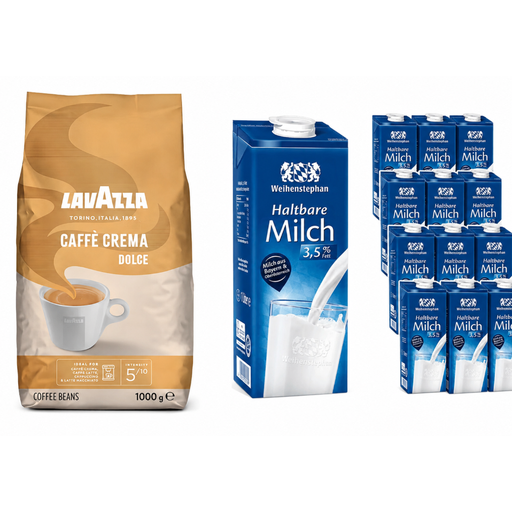 Image unavailable
Kölln Fine Oat Flakes, 6 × 500 g, with Weihenstephan UHT milk 3.5%, 6 × 1 l
For making your own muesli, if the UHT milk included also suits your household’s needs. The set contains six 500 g packs of oats and six 1 l packs of milk; it isn’t ready-made granola.
View at Joybuy
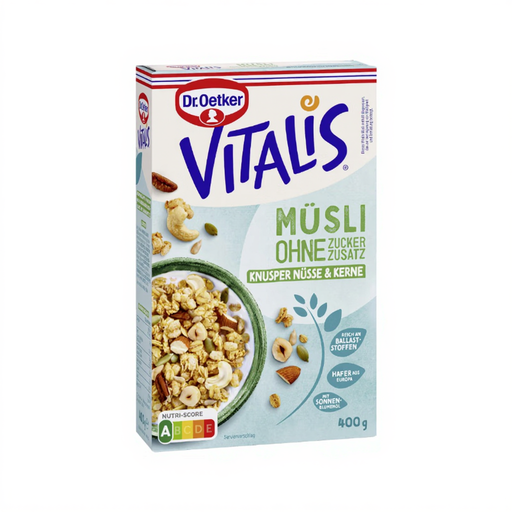 Image unavailable
Dr. Oetker Vitalis No Added Sugar Crunchy Nut Muesli, 400 g
A 400 g option for shoppers looking for a nutty crunchy muesli labelled ‘No Added Sugar’. Here, too, the carbohydrates in the portion you actually eat and the allergen information are important when choosing.
View at Joybuy
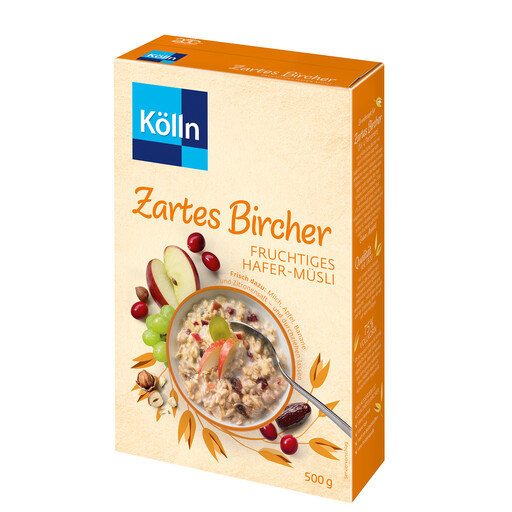 Image unavailable
Kölln Bircher Fruit Muesli, 500 g
For shoppers looking for fruit muesli in a 500 g pack. Check the sugar and carbohydrate content and read the ingredients for this variety, rather than assuming that ‘fruit muesli’ means it has no added sugar.
View at Joybuy
Frequently asked questions
Can I eat muesli or granola if I have diabetes?
Yes. Muesli and granola aren’t automatically off the menu. diabetesDE – German Diabetes Help explains that people with diabetes don’t generally need special foods; your choice and portion size should suit your individual eating and treatment plan.
Does muesli with no added sugar contain no sugar?
No. Sugar can still come from ingredients such as fruit. As well as checking the ‘no added sugar’ claim, look at ‘of which sugars’ and ‘carbohydrate’ per 100 g.
Does ‘less sugar’ mean a low sugar content?
No. A reduction claim alone doesn’t tell you the absolute sugar content is low. EDEKA states that its Knuspermüsli weniger süß contains 12.8 g of sugar per 100 g, despite the ‘30% less sugar’ claim. Compare the figure on the pack with similar mueslis.
Which carbohydrate figure should I use for my portion?
What matters is the amount in the portion you actually eat, not necessarily the serving suggested on the pack. The German Diabetes Association emphasises individual meal planning for people with type 2 diabetes. Ask your healthcare professional how carbohydrates should be accounted for in your personal treatment plan.


