A muesli multipack is a good fit for regular Sunday breakfasts if your household enjoys that variety, has room to store it and is likely to use it all. A simple flake mix gives you more freedom to add your own ingredients. With fruit, nut and crunchy mueslis, make sure the sweetness, ingredients and allergens suit everyone at the breakfast table.
Who benefits from buying in bulk?
Households that eat muesli regularly
If you serve the same mix on several Sundays, you can choose the total quantity and number of individual packs to suit how much you actually use. When planning your stock, it’s also important to check the best-before date and storage instructions.
Families with different preferences
If not everyone likes the same level of sweetness, fruit or nuts, the exact recipe matters more than the name on the pack. If anyone has a known allergy, check the ingredients and allergen information for each variety individually.
Households that like to make their own mix
You can add fruit, yoghurt, milk or a plant-based drink to a basic mix, one portion at a time. For example, REWE describes its Bio 5-Korn-Müsli as a mix without dried fruit, while Alnatura’s Maxi-Müsli already contains sultanas and hazelnuts.
What should you look for when choosing?
For Sunday breakfast, first work out how much of a particular variety you’ll actually need. Then check the recipe and allergen labelling to see whether the mix is right for your household.
| What matters |
What to check |
Who it matters to |
| Quantity to stock up on |
Total weight, number of individual packs, best-before date and storage instructions. |
If we eat the same variety on several Sundays, I want to stock up without anything being left unused. The right quantity to keep in stock is the top priority for around 42% of consumers. |
| Recipe and sweetness |
Ingredients list and sugar content per 100 g; compare wholegrain flakes, fruit and nuts if needed. |
For our breakfast table, I want to be able to add fruit myself rather than commit to a ready-made fruit mix. Around 33% of consumers prioritise finding a recipe that suits them. |
| Allergens |
Current ingredients and allergen labelling, plus any ‘may contain’ warnings for each variety. |
If anyone in our household needs to avoid certain ingredients, what matters most to me is whether the specific pack is suitable. This is the top priority for around 25% of consumers. |
Which common mistakes can you avoid?
-
Choosing the biggest pack without considering how much you use
A large overall quantity is only practical if you eat that variety regularly and can store the packs appropriately.
Before you buy, check the total weight, how the contents are split between packs, the best-before date and the storage instructions.
-
Assuming ‘no added sugar’ means ‘sugar-free’
Fruit can also contribute to the sugar content of muesli. The Consumer Advice Centre recommends checking sweeteners in the ingredients list rather than relying on the front of the pack alone.
Also check the sugar content per 100 g in the nutritional information.
-
Guessing the allergens from the product name
Whether a mix is suitable for someone with an allergy depends on its exact recipe and labelling, not on descriptions such as ‘basic’ or ‘fruit’ muesli.
For each variety, check the current ingredients list, highlighted allergens and any ‘may contain’ warnings.
-
Treating your entire stock as if it were one unopened pack
According to the Consumer Advice Centre, the best-before date applies to unopened food stored correctly. Once opened, follow the instructions from the manufacturer of the product in question.
Open individual packs as you need them and follow the storage instructions on the packaging.
Key brands and product ranges
Kölln
Kölln offers various muesli varieties in larger packs, including 4 × 1,200 g.
- The separate packs could be useful if you’re stocking up for several Sundays.
- Fruit and crunchy muesli have different recipes, so check the ingredients and sweetness of each variety.
Seitenbacher
Seitenbacher offers muesli in a range of recipes; one carton offer contains nine 400 g packs.
- The individual packs let you open the carton gradually.
- The mix described contains wheat, oats and almonds, among other ingredients. Always check the labelling for the variety you choose.
Alnatura
Alnatura Maxi-Müsli is a 1 kg pack of wholegrain flakes, sultanas and roasted hazelnuts.
- The ingredients already make this a fruit and nut mix for breakfast.
- A 1 kg pack is not a multipack, and the hazelnuts it contains should be taken into account when choosing for your household.
REWE Bio
REWE describes its Bio 5-Korn-Müsli in the 1 kg pack as a basic mix without dried fruit.
- You can add fruit or other ingredients yourself to individual portions.
- This product is listed as containing gluten-containing cereals and sesame, among other allergens, and may contain traces of other allergens.
Brüggen
Brüggen makes muesli using customer-specific recipes for retailers’ own brands, among other products.
- The range described includes traditional and crunchy muesli recipes.
- The manufacturer’s name alone doesn’t tell you the ingredients or pack format of a specific own-brand product.
Bulk packs of rolled oats at Joybuy
These two packs contain rolled oats as a base for creating your own mix; they are not ready-made muesli or granola. The second pack also includes UHT milk, so it’s only a good fit if you need both items.
 Image unavailable
Kölln Fine Tender Rolled Oats, 4 × 500 g
For households that like to put together their Sunday breakfast with rolled oats and their own choice of ingredients. The pack contains four 500 g bags; it isn’t a ready-made muesli or granola mix.
View at Joybuy
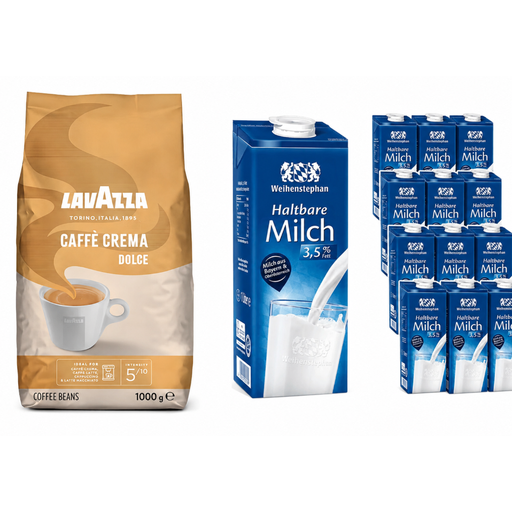 Image unavailable
Kölln Fine Rolled Oats, 6 × 500 g + Weihenstephan UHT milk 3.5%, 6 × 1 l
For households planning to use both rolled oats and UHT milk for several breakfasts. The bundle contains six 500 g packs of rolled oats and six 1 l cartons of Weihenstephan UHT milk with 3.5% fat; the oats aren’t a ready-made muesli or granola.
View at Joybuy
Frequently asked questions
Does ‘no added sugar’ mean that muesli is sugar-free?
No. ‘No added sugar’ doesn’t mean ‘sugar-free’. Fruit can still contribute sugar, so compare the ingredients list and the sugar content per 100 g in the nutritional information. The Consumer Advice Centre points out that a product can contain sugar even if ‘sugar’ isn’t listed as an ingredient.
Do I need to check allergens in muesli ordered online?
Yes. Your choice should be based on the allergen labelling for the specific variety. The Federal Ministry of Agriculture, Food and Regional Identity explains that any allergenic ingredients used which must be declared have to be listed on food packaging. Also check the latest product information and any ‘may contain’ warnings.
How should I store a larger stock of muesli?
Follow the storage instructions on each pack and open individual packs as you need them. The Consumer Advice Centre explains that the best-before date applies to unopened food stored correctly. For muesli that has been opened, it’s also important to follow the manufacturer’s instructions.


