
Lieferung heute & morgen

Qualitätsgarantie

Willkommens-Angebote freischalten: KOSTENLOSE Lieferung | Bis zu 80 % RABATT | Kostenlose 30-Tage-JoyPlus-Testphase
App herunterladen
A muffin tin may seem straightforward at first glance. In practice, however, the material, cup design and care requirements determine whether it proves useful in everyday use. Anyone who focuses only on an eye-catching non-stick coating or a low price may overlook important details.
Typical buying mistakes include:
Carbon steel and other types of steel heat up while retaining their shape well, making them suitable for classic muffins, cupcakes and savoury bakes. A non-stick carbon steel muffin tin can make releasing the muffins easier. At the same time, the coating must be protected from scratches. Metal cutlery, sharp objects and abrasive cleaners are unsuitable for many models.
A silicone muffin tin is lightweight, flexible and usually easy to remove baked goods from. For safe handling, it should either have a reinforced frame or be placed on a baking tray. Silicone tins can often be stored compactly because they can be bent or rolled.
Stoneware retains heat and can also be used as serving ware. However, it is heavier and sensitive to sudden changes in temperature. Do not place a hot tin directly on a cold or damp surface.
A muffin tin for 12 muffins is suitable for families, parties or preparing several portions. The spacing between the cups and the overall dimensions are also important. A model measuring 33 x 24 cm will not fit in every small oven and requires enough space on the oven rack.
As a general rule, fill the cups only according to the manufacturer’s instructions. For the Le Creuset Non-Stick Muffin Pan, it is recommended that the recesses be filled no more than two-thirds full. This leaves room for the batter to rise.
Compare the stated maximum temperature with your recipes. Depending on the material, the models featured here are suitable for temperatures of up to 230 °C, 240 °C or 260 °C, for example. These temperatures do not automatically apply to hobs or naked flames.
Also pay attention to specific care instructions:
The following models differ in terms of material, cleaning, stability and intended use. The selection is based on the product data provided for each model.
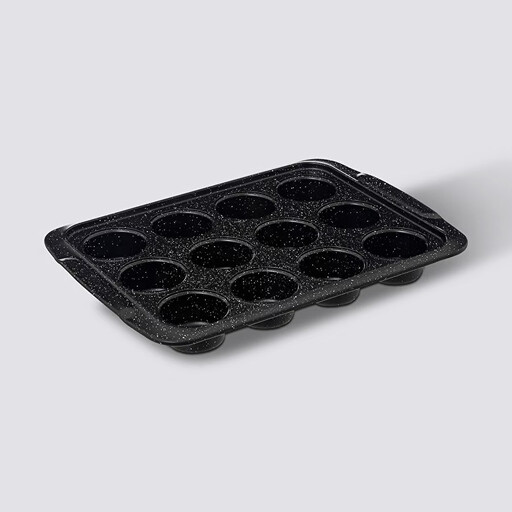
Why this product suits this profile: This steel muffin tin has 12 cups, handles and overall dimensions of 33 x 24 x 3.8 cm. It is designed for use in the oven and is suitable for regular standard-sized batches.
The product information clearly states the number of cups and that the tin is not dishwasher-safe. This makes it easier to assess the cleaning effort realistically before buying.
12 steel cups, steel handles and a weight of 610 g. Not suitable for the microwave or dishwasher.
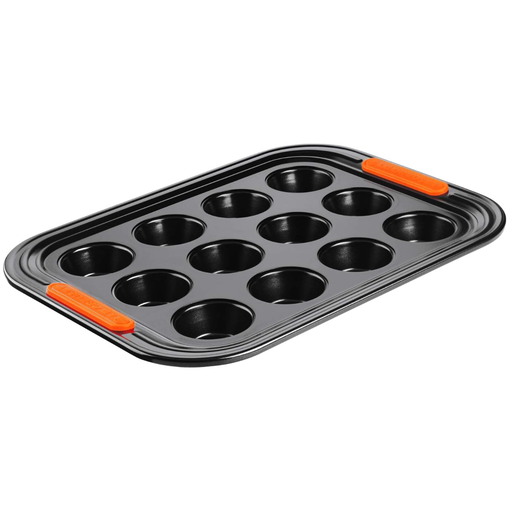
Why this product suits this profile: This carbon steel muffin tin has 12 deep cups, a non-stick coating and a stated oven temperature rating of up to 240 °C.
The care instructions explicitly rule out dishwasher use. Working with a soft sponge and suitable kitchen utensils from the outset helps protect the coating properly.
Heavy carbon steel, deep cups, a rolled rim with silicone inserts and a stated lifetime manufacturer’s warranty.
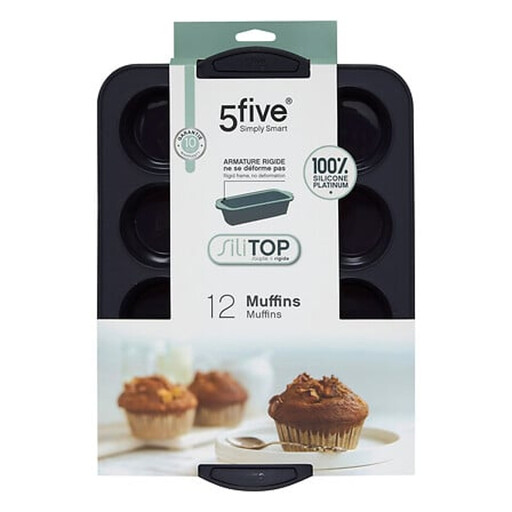
Why this product suits this profile: This 12-cup silicone tin combines flexible cups with a steel structure. It is designed for muffins, cupcakes and other small bakes.
The integrated steel structure addresses the limited inherent stability of many flexible silicone tins. The tin should still be filled on an oven rack or baking tray.
12 cups, 33.1 x 23.7 x 4.1 cm, a total capacity of 0.85 l and a weight of approximately 345 g.
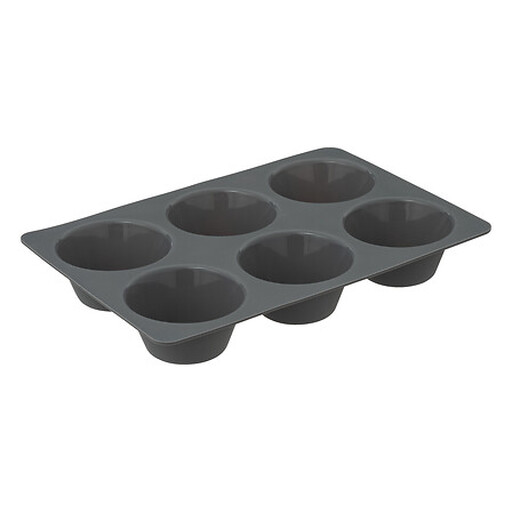
Why this product suits this profile: This flexible food-grade silicone mould is designed for use in the oven and freezer and, according to the product information, is dishwasher-safe.
The dimensions of 35 x 20 x 4 cm and the flexible material make storage easier to plan. Before buying, check whether the mould fits on your existing oven rack.
100% food-grade silicone, a flexible rim, easy release and dishwasher cleaning according to the product description.
We have put together a complete, regularly updated list of products that fully meet these strict selection criteria and the safety regulations applicable in the EU.
Before using a muffin and cupcake tin for the first time, clean it with warm water and mild washing-up liquid. For coated tins, a thin layer of grease is usually sufficient unless the manufacturer’s instructions state otherwise. Silicone can also be lightly greased, particularly when using sticky or very sugary batters.
Keep the following points in mind when baking:
There are additional options for specialist tins: The Le Creuset Stackable Muffin Pan stoneware models each hold 200 ml and, according to the product information, are oven-safe up to 260 °C, dishwasher-safe and stackable. They are also suitable for individual desserts, savoury appetisers or baked eggs. For classic batches of 12, metal or silicone models with twelve cups are usually more practical.
A 12-cup muffin tin makes sense if you want to prepare a standard baking mix or several portions at the same time. Before buying, check the overall dimensions, cup width and maximum oven temperature.
That depends on how you intend to use it. Silicone is flexible, lightweight and often dishwasher-safe. Metal or carbon steel is rigid and distributes heat according to the specific construction. With silicone, a sturdy base is recommended for carrying the tin.
There is no universal answer for its service life. It depends on use, cleaning, temperature and storage. Do not use sharp or abrasive objects, do not exceed the stated temperature and replace the tin if the coating is visibly damaged.