
Lieferung heute & morgen

Qualitätsgarantie

Willkommens-Angebote freischalten: KOSTENLOSE Lieferung | Bis zu 80 % RABATT | Kostenlose 30-Tage-JoyPlus-Testphase
App herunterladen
We've all been there: a drawer full of cables, but none of them are the right one when you need it. A Lightning cable for the iPhone, a USB-C cable for the new Android tablet, and a Micro-USB cable for the power bank or headphones. A multi-charging cable promises to end this chaos. But the selection process is fraught with pitfalls that can quickly turn a practical solution into an expensive mistake. Many cables charge painfully slowly, break after just a few weeks, or turn out to be power-only with no data transfer capabilities.
This guide will show you which technical features to look for to find a reliable and durable universal charging cable that meets your needs.
Before you decide on a model, you should be aware of the typical weaknesses that manufacturers often don't disclose.
To avoid the problems mentioned above, you should check three core aspects before buying. These determine whether a USB-C, Lightning, and Micro-USB charging cable is a worthwhile investment.
The total power of a cable is specified in watts (W) or amps (A). However, the crucial factor is how this power is distributed. Pay attention to the following points:
A travel charging cable must be robust. The choice of material is decisive here.
If you want to do more than just charge, this point is non-negotiable. Look for a clear indication of data transfer capability in the product description, typically specified as USB 2.0 with a speed of up to 480 Mbps. If this information is missing, it is most likely a charge-only cable.
Based on the criteria above, we have identified a few models that are a suitable solution for specific user groups.
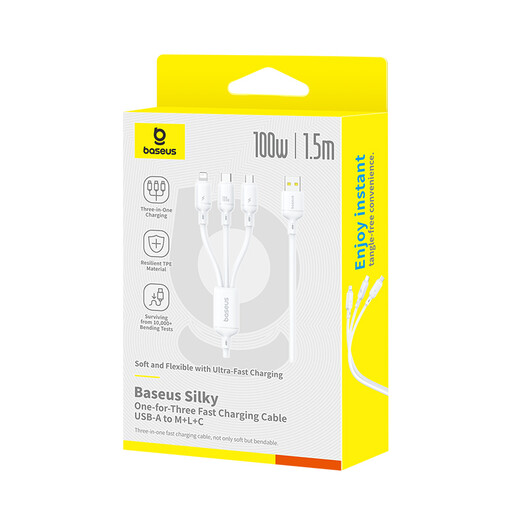
Why This Fits Their Persona: Ideal for use in the car or in your luggage. With a length of 1.5 metres and three connectors (Micro-USB, Lightning, USB-C), this cable powers all the family's devices, from older e-readers to modern smartphones.
The cable offers a high total output of up to 100W on the USB-C port, avoiding the slow-charging trap for high-power devices. Its robust construction prevents premature wear and tear.
High compatibility thanks to three different connectors. Powerful charging performance for modern devices via the USB-C plug.
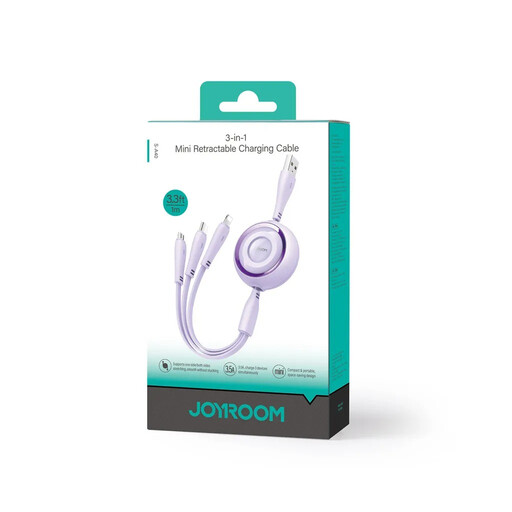
Why This Fits Their Persona: For anyone who values a tidy bag or desk. The retractable design prevents cable tangles and makes the cable extremely portable. It's the perfect solution for a handbag or backpack.
This cable is designed as a charge-only solution and doesn't advertise misleading data features. The 3.5A charging power is sufficient for standard applications and is clearly declared.
Compact, retractable design prevents cable clutter. Universal compatibility thanks to three integrated connectors.
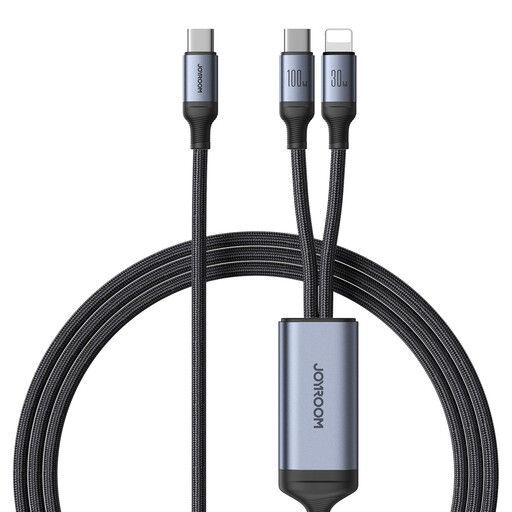
Why This Fits Their Persona: Designed for users who need maximum performance for their modern devices. This cable is capable of powering laptops, tablets, and the latest smartphones with up to 100W Power Delivery.
It focuses on the two dominant standards (USB-C and Lightning) and delivers uncompromising performance. Instead of serving many ports mediocrely, it serves two ports optimally and also supports data transfer.
Supports 100W Power Delivery for charging laptops. Combines USB-C and Lightning in one high-quality cable and enables data transfer.
We've compiled a complete, up-to-date list of products that fully meet these strict selection criteria and safety standards.
With cables from reputable manufacturers, the risk is minimal. Modern smartphones and tablets have protection circuits that regulate power intake. High-quality multi-cables also often have an integrated chip that intelligently distributes power and prevents overheating. It is advisable to use products from established brands like Baseus or Joyroom.
The total current of the cable is divided among all connected devices. For example, if a cable is rated for a maximum of 3A and you connect three devices, each device might only receive 1A in the worst-case scenario, which slows down the charging process. Models like the Baseus 3-in-1 charging cable often prioritise one port for high speeds while the others are supplied with lower power.
No, this is a common misconception. Many, especially very cheap models, are designed as charge-only cables. If you want to sync data between devices or use features like Android Auto or Apple CarPlay, you must explicitly look for support for data transfer standards like USB 2.0 in the product description. If this information is missing, be cautious.