
Lieferung heute & morgen

Qualitätsgarantie

Willkommens-Angebote freischalten: KOSTENLOSE Lieferung | Bis zu 80 % RABATT | Kostenlose 30-Tage-JoyPlus-Testphase
App herunterladen
Creating complex 3D models in multiple colours or materials places high demands on the hardware used. For advanced users, designers, and small businesses, selecting the right device is crucial for manufacturing prototypes and small-batch series efficiently and to a high standard of quality. This article serves as a guide, presenting a selection of printers designed for demanding projects. We will highlight the technical features relevant to making an informed purchasing decision.
The decision to buy a new 3D printer should be based on an analysis of your specific requirements. The following criteria will help narrow down the options.
A multi-colour 3D printer allows the use of different colours of the same material (e.g., PLA in red, blue, and green) in a single print job. A multi-material 3D printer goes a step further, capable of combining different material types like PLA, PETG, ABS, and flexible filaments (TPU), or even composite materials with carbon fibre. This is critical for producing functional parts that require both rigid and flexible segments. Pay attention to the number of supported filaments and the system's compatibility with the materials you need.
Modern high-speed 3D printers can reach speeds of 600 mm/s and more, significantly reducing production times. However, this speed must be supported by a stable frame design (e.g., CoreXY) and precise linear rails to minimise vibrations and loss of quality. At the same time, the size of the build volume is a limiting factor. A large-format 3D printer offers the ability to print voluminous objects in one piece, which reduces post-processing and enhances the model's structural integrity. Weigh whether your projects will benefit more from maximum speed or a larger build volume.
For processing engineering-grade filaments like ABS, ASA, PA (Nylon), or PC (Polycarbonate), a 3D printer with a heated build chamber is essential. An actively heated chamber keeps the ambient temperature constant during printing, reduces material warping, and improves inter-layer adhesion. This results in more dimensionally accurate and mechanically robust parts. Temperatures of 60°C or higher are an indicator of the ability to reliably process demanding engineering plastics.
Based on the criteria above, we have compiled a selection of models that are well-suited for advanced use cases due to their specific performance characteristics.
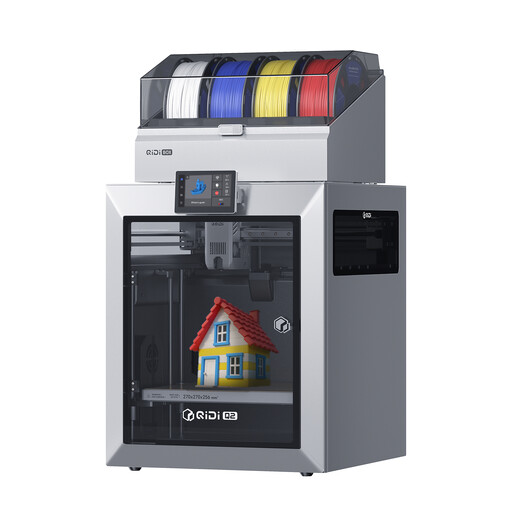
QIDIxJOYBUY TECH Q2 Combo 3D Printer
Why It Stands Out: The Q2 Combo is designed for precision and processing demanding materials. Its PTC chamber, heated up to 65°C, ensures a stable environment optimised for engineering filaments like carbon fibre composites. A special feature is the levelling system, where the nozzle itself acts as the sensor, guaranteeing high accuracy for the first layer. The material system (QIDI BOX) not only allows printing with up to 16 colours but also integrates a drying function to keep filaments in optimal condition during printing. This combination makes it a compelling Bambu Lab alternative for professional users.
Advantages:
Who It's For: Engineers, designers, and prosumers who need functional prototypes and parts made from high-performance materials like PA-CF or PC, and who value maximum precision and process reliability.
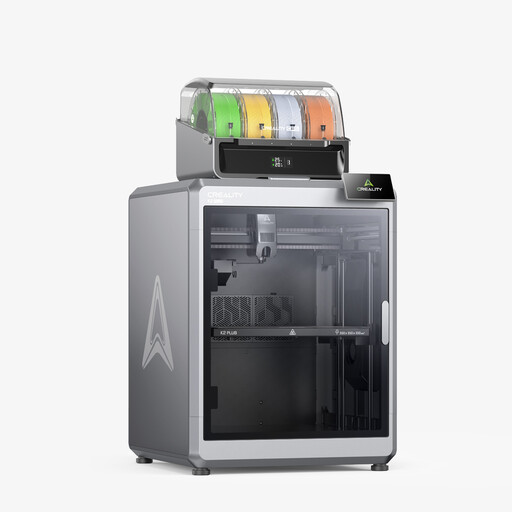
Creality K2 Plus Combo 3D Printer
Why It Stands Out: The Creality K2 Plus Combo combines a very large build volume with the advantages of a fast, multi-colour printing system. With a volume of 350 x 350 x 350 mm, it is suitable for producing large models or for the parallel manufacturing of several smaller parts. The CFS (Color Filament System) supports up to 16 colours. The integration of two AI cameras enables intelligent monitoring of the printing process to detect errors early. The chamber can be heated up to 60°C, ensuring compatibility with a wide range of filaments.
Advantages:
Who It's For: Small businesses and advanced hobbyists who produce large objects or small-batch series and are looking for a well-rounded balance between build volume, speed, and multi-colour capability.
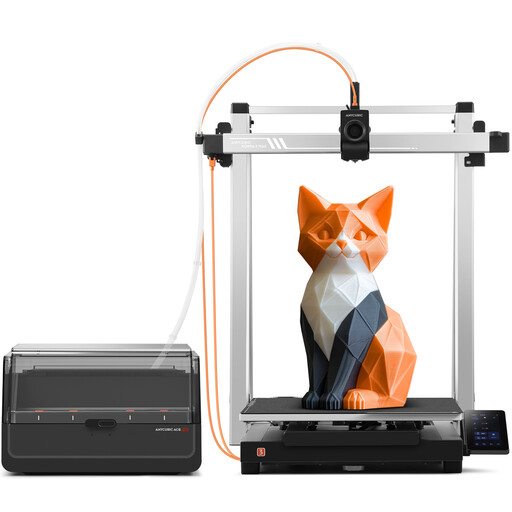
ANYCUBIC x JOYBUY Kobra 3 Max Combo
Why It Stands Out: The Kobra 3 Max Combo clearly focuses on maximum build volume. With an impressive build volume of 420 x 420 x 500 mm (88 litres), it is designed for producing exceptionally large models. The ACE Pro system allows printing with up to 8 colours. Despite its size, the printer achieves speeds of up to 600 mm/s. Features like LeviQ 3.0 Auto-Leveling and AI-powered object detection contribute to its reliability, which is crucial for very long print jobs.
Advantages:
Who It's For: Users whose projects push the boundaries of conventional printers, such as in the fields of cosplay (armour, props), architectural modelling, or for manufacturing large technical prototypes in a single piece.
The models presented here cover specific requirement profiles. If your priorities lie primarily with maximum speed and less with multi-colour capabilities, for example, other specialised devices are available. You can find a broader overview of high-performance models in our High-Speed 3D Printers category.
A multi-colour printer uses different colours of the same material. A multi-material printer can also combine different types of material (e.g., rigid PLA and flexible TPU) in a single object. Many modern systems, like the ones presented here, can do both.
For printing with standard filaments like PLA or PETG, a heated build chamber is not strictly necessary but can improve adhesion. However, for engineering-grade materials like ABS, ASA, Nylon (PA), or Polycarbonate (PC), it is crucial for preventing warping and ensuring mechanically stable parts.
High speeds significantly shorten printing time but can lead to a loss in quality if the machine's stability or cooling is insufficient. A stable CoreXY structure, high-quality linear rails, and powerful part cooling are prerequisites for achieving clean results even at 600 mm/s. For models with very fine details, reducing the speed may be beneficial.