
Lieferung heute & morgen

Qualitätsgarantie

Willkommens-Angebote freischalten: KOSTENLOSE Lieferung | Bis zu 80 % RABATT | Kostenlose 30-Tage-JoyPlus-Testphase
App herunterladen
A multi-cooker promises to revolutionise your daily kitchen routine: cooking, searing, steaming, and braising all in one appliance. But the market is flooded with models whose marketing promises often create more confusion than clarity. Before you make a decision, it's crucial to understand the common pitfalls that lead to an unused appliance just taking up space.
As your Joybuy Product Recommendation Officer, I'm here to help you separate fact from marketing slogans. We'll focus on the features that truly matter so you can find a model that genuinely fits your lifestyle.
Many appliances look convincing at first glance, but the details often reveal weaknesses that severely limit their everyday usefulness. Pay special attention to these three points:
To find the right electric pot, you should focus on three objective parameters that determine its practical value.
Size is everything. Ignore the marketing specs and use these practical guidelines for usable capacity:
Consider which cooking methods you will actually use regularly. A good multi-cooker should master at least these three core functions:
Additional functions like a steamer, rice cooker, or yoghurt maker are useful, but the quality of the basic functions is what counts. A multi-cooker with an air fryer is only worthwhile if it has a separate, high-performance lid specifically for this feature.
The choice of pot material directly impacts cooking results and durability.
Here are some recommendations tailored to specific user profiles that avoid the pitfalls mentioned.
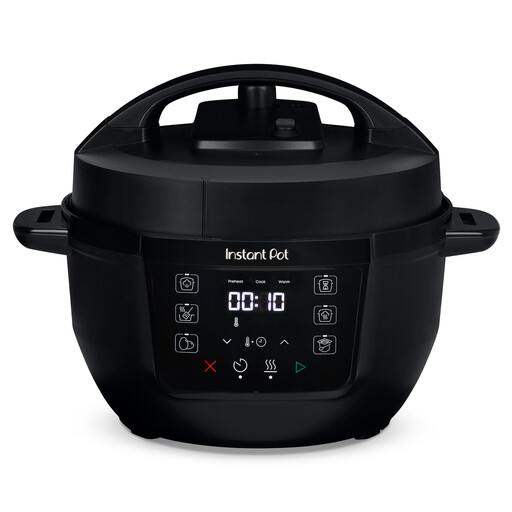
Why it's a great fit: At 3.8 litres, it's ideal for 1- to 2-person households or small kitchens. It covers the 7 most important cooking functions without being overloaded with unnecessary extras, saving valuable counter space.
The capacity is honestly rated for up to four servings, which is realistic for a 3.8-litre pot. It focuses on proven core functions, avoiding the "all-in-one" illusion.
The stainless steel inner pot and the lid are dishwasher-safe, which minimises cleaning effort.
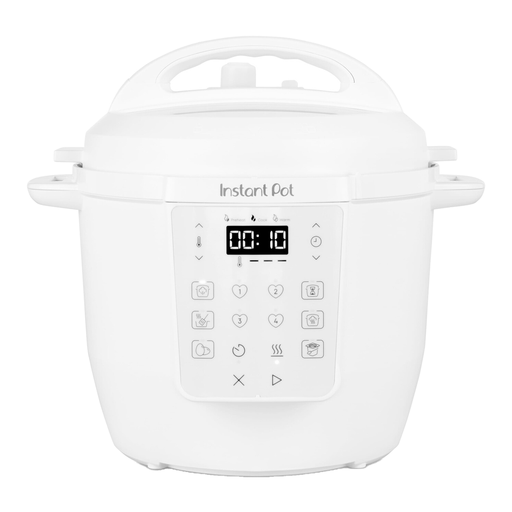
Why it's a great fit: The 5.7-litre size is the standard for families of up to six people. It's a reliable all-rounder for preparing daily main courses or for weekend meal prepping.
The 5.7-litre capacity is a proven size for family meals, avoiding the trap of an undersized pot. Its functions are focused on the essentials and are highly reliable.
The stainless steel inner pot features an anti-spin design that keeps it stable during sautéing and stirring—a practical detail for safe handling.
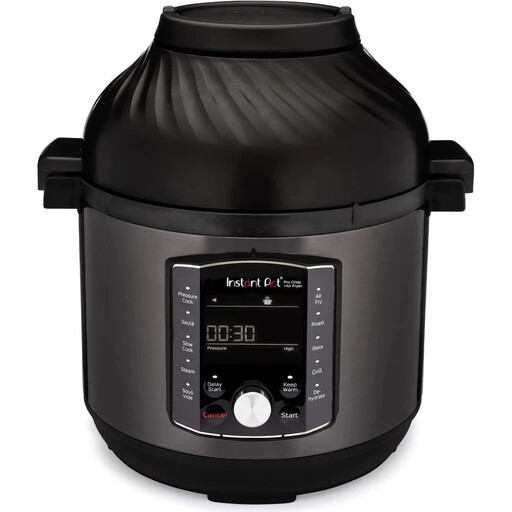
Why it's a great fit: For those who want maximum versatility without compromise. This model combines a full-fledged pressure cooker with a true air fryer and, with its 7.6-litre capacity, offers enough space for large groups or elaborate recipes.
It bypasses the "mediocre add-on" trap by providing two separate lids: one for pressure cooking and a specialised one for air frying. This ensures impressive results in both disciplines.
The stainless steel inner pot is not only optimised for the sauté function but, according to the manufacturer, can even be used on other stovetops (including induction) and in the oven.
If you'd like to compare more models selected based on objective criteria, you can find our complete collection here.
1. How much electricity does a multi-cooker use? Power consumption depends on the wattage and duration of use. In general, multi-cookers are considered more energy-efficient than a conventional oven or stovetop because the heat is contained in a closed, insulated system. A 1000-watt model running for 30 minutes consumes 0.5 kilowatt-hours (kWh). The pressure cooking function, in particular, shortens cooking times and thus helps save energy.
2. Can you sauté in every multi-cooker? No, not every model is designed for it. To get a good sear, a dedicated sear or sauté function that reaches high temperatures is required. Models with a stainless steel inner pot are often better suited for this than those with a non-stick coating, as they can tolerate higher temperatures and promote better browning.
3. What is the difference between a multi-cooker and an electric pressure cooker? An electric pressure cooker specialises in one main function: cooking under pressure. A multi-cooker is a more versatile appliance that integrates the pressure cooking function as one of many options. It also offers programs like slow cooking, steaming, rice cooking, or making yoghurt. It is therefore a more comprehensive one-pot cooker solution.