
Lieferung heute & morgen

Qualitätsgarantie

Willkommens-Angebote freischalten: KOSTENLOSE Lieferung | Bis zu 80 % RABATT | Kostenlose 30-Tage-JoyPlus-Testphase
App herunterladen
A multi cooker can prepare rice, cook soups and stews, steam vegetables or slow-cook dishes. Depending on the model, it can function as a multifunction cooker, electric cooking pot, slow cooker, pressure cooker, rice cooker or steamer. However, the wide range of functions can make comparisons difficult: not every appliance is right for every household, and some marketing claims leave important limitations unclear.
An appliance with seven or more programmes sounds versatile. However, what really matters is which functions you will actually use day to day. A rice cooker with a steaming function may be enough for one person. If you want to prepare stews, yoghurt, pressure-cooked dishes and crispy foods, you will need a different specification.
So check the following:
A capacity of 5.7 litres does not mean that the pot should be filled completely. With soups, pulses and pressure-based programmes, you often need to leave a safety margin. When choosing a model, household size matters more than the litre capacity alone.
As a general guide:
The actual quantity depends on the recipe, programme and manufacturer's instructions.
A non-stick coating can make cleaning easier, but it is susceptible to metal utensils, abrasive cleaners and excessive heat. With some appliances, the inner pot must not be used on the hob or in the oven. A dishwasher-safe pot also does not automatically mean that the lid, seals and electrical base can go in the dishwasher.
Look out for:
A compact multi cooker is practical for small kitchens, student flats and couples. In addition to the litre capacity, check the external dimensions. A 5.7-litre appliance needs enough room to open the lid and release steam safely. Place a kitchen cooker for family use on a stable, heat-resistant and well-ventilated surface.
The wattage describes the appliance's electrical power consumption, not necessarily how quickly it cooks. A model with two manual heat settings may be sufficient for soups, pasta and simple one-pot meals. Automatic programmes offer greater convenience, but they rely on the preset temperatures and times being suitable for your recipe.
For a slow cooker, low and consistent temperatures are important. A pressure cooker, on the other hand, needs a correctly locked lid, reliable steam control and clear safety instructions. These types of appliance should not be compared solely by wattage.
The inner pot should be suitable for the way you intend to use it. Stainless steel is resistant to metal kitchen utensils, while coated surfaces need to be treated more carefully. Ceramic pots may be suitable for slow cooking, but they must not be used over an open flame unless the manufacturer expressly permits it.
For pressure-cooking models, the following features are particularly important:
Steam can cause scalding. Only open a pressure lid once the pressure has been released as instructed, and keep your face and hands away from the steam outlet.

Why this product suits the profile: The 2.6-litre inner pot is suitable for smaller households. Two manual heat settings cover slow cooking and faster heating.
The functions are clearly specified: cooking, steaming, slow cooking and soup preparation. At the same time, the product description points out that high-heat searing is not supported.
2.6-litre capacity, glass lid with steam vents, detachable power cable and steaming attachment.
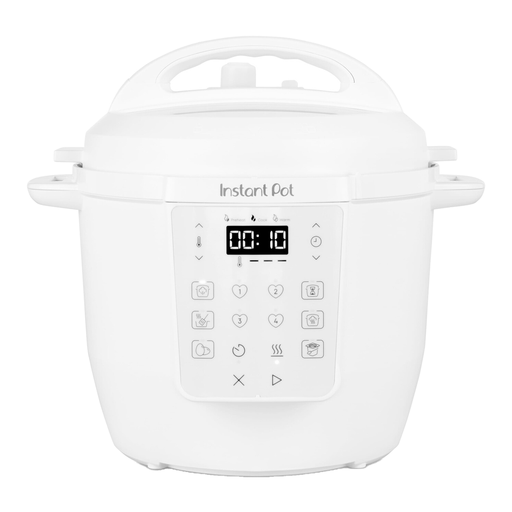
Why this product suits the profile: This model combines pressure cooking, slow cooking, searing, steaming, egg cooking, yoghurt making and keeping food warm in one appliance.
The safety features are clearly listed in the product description, including a locking lid, controlled steam release and overheating protection.
5.7-litre capacity, stainless-steel inner pot, preset programmes and dishwasher-safe components according to the product description.
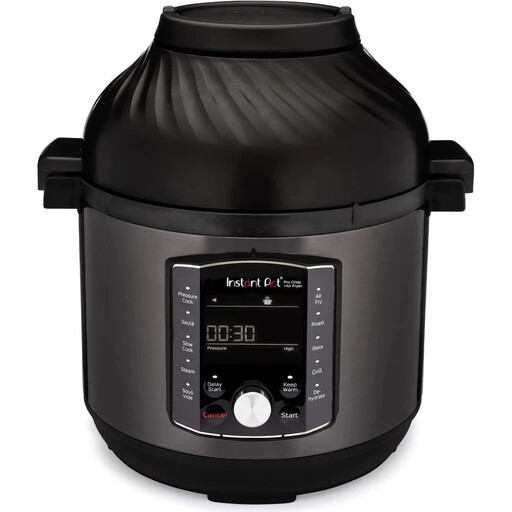
Why this product suits the profile: Two interchangeable lids combine pressure cooking and air frying. This is an appealing option for frequent users who want to prepare stews and crispy foods with one appliance.
The different cooking methods are clearly separated by dedicated lids. Before buying, you should consider the required footprint, the accessories included and the cleaning involved.
7.6-litre capacity, stainless-steel inner pot, pressure-cooking and air-frying lids, plus the temperature range stated in the product description.
Costs depend on the power rating, cooking time and frequency of use. An appliance rated at 1,000 watts theoretically uses 1 kWh when operated for one hour, provided it runs continuously at full power. In practice, the thermostat and programme control the actual consumption.
So do not compare wattage alone. An electric soup pot with a lower power rating may use a similar amount of energy, or even more, if it has a longer cooking time than a more powerful appliance with a shorter cycle. Keep-warm functions should not be left on unnecessarily for many hours.
Before using the appliance for the first time, read the operating instructions, maximum fill level and information about steam release. After every use, we recommend that you:
A long service life depends greatly on proper care, suitable replacement parts and observing the temperature limits.
We have put together a complete, regularly updated list of products that fully meet these strict selection criteria and the safety regulations applicable in the EU.
Yes, compact models with a capacity of around 2 to 4 litres generally require less worktop space. Also check the height with the lid open and the distance needed from the wall, particularly when releasing steam.
There is no single service life that applies to every model. It depends on how often the appliance is used, how well it is maintained, the coating, seals and availability of replacement parts. Regular cleaning and following the manufacturer's instructions can reduce wear and tear.
That depends on which functions you actually use. If you regularly prepare rice, soups, stews and steamed dishes, a combination appliance can be a worthwhile choice. If you only cook rice, a rice cooker may be sufficient. For fried foods, a separate or integrated air fryer is relevant. The key factors are the range of functions, energy consumption, cleaning requirements and purchase price in relation to how often you use the appliance.