
Lieferung heute & morgen

Qualitätsgarantie

Willkommens-Angebote freischalten: KOSTENLOSE Lieferung | Bis zu 80 % RABATT | Kostenlose 30-Tage-JoyPlus-Testphase
App herunterladen
A multi-cooker can prepare rice, soups, vegetables, pasta, meat or yoghurt in a single appliance. At the same time, models vary considerably in terms of pressure functions, controls, cleaning and the space they require. If you only focus on a high number of programmes, you may end up buying functions that you rarely use in everyday life.
It is therefore worth checking the actual technical specifications before buying. What matters is not the greatest number of promises, but a suitable capacity, clearly explained safety features and a cleaning routine that suits your household.
A 45-in-1 multi-cooker sounds versatile. In practice, however, individual programmes may differ only in their preset cooking times or temperatures. So check whether the functions suit the dishes you prepare: rice, steaming, braising, slow cooking, baking, yoghurt and keeping food warm are more relevant to many households than the longest possible programme list.
The stated pot size usually refers to the total volume. With pressure and steaming programmes, the pot must not be filled to the brim. A 1-litre or 1.6-litre appliance may be sufficient for singles or couples. Families often need 4 to 6 litres, particularly if meals are to be prepared for several people.
The lid seal, steam valve, inner pot and condensation container regularly come into contact with food or steam. Removable, dishwasher-safe components reduce the cleaning effort. With appliances featuring a non-stick coating, suitable kitchen utensils should be used and the manufacturer's instructions followed. Also check whether seals and accessories can be purchased separately.
For everyday use, the combination of volume and power is more important than wattage alone:
An electric rice cooker is designed for rice and related preparations. A multi-cooker usually offers more manual settings and cooking methods. A mini electric cooker, on the other hand, can take up less space, but does not necessarily replace an appliance with pressure-cooking or slow-cooking functions.
Not every multi-cooker is a pressure cooker. Electric pressure cookers operate with automated programmes, while a traditional pressure cooker is used on the hob. Look for:
With traditional models, compatibility with your hob is also important. An induction cooker or induction-compatible pot requires a magnetic base. Stainless steel alone is not sufficient evidence that a pot is suitable for induction cooking.
An inner pot made from 18/10 stainless steel can be clearly classified based on the material specification. With coated pots, care instructions and the option of purchasing a replacement are more important than a general advertising statement about durability. Practical accessories may include a steaming basket, measuring cup, rice paddle or soup ladle.
If you already own a contact grill, air fryer or air-fryer accessories, you should avoid unnecessary overlap. A multi-cooker mainly complements these appliances when cooking, steaming, braising and keeping food warm.
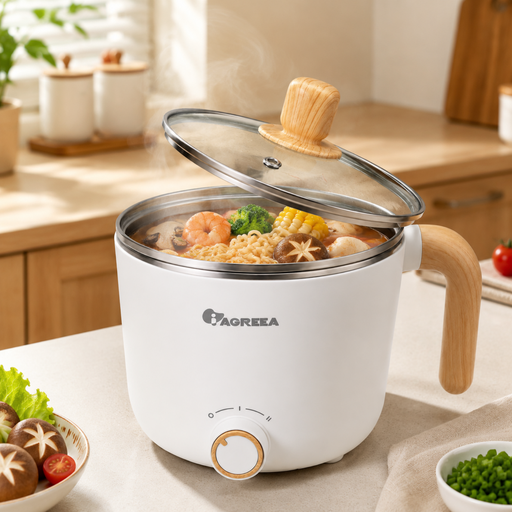
Why this product suits the profile: The 1-litre mini electric cooker takes up very little space and is designed for small portions for one or two people. Two power levels of 300 and 600 watts allow for different cooking methods.
The clearly stated volume prevents a small appliance from being confused with a family-sized model. Instead of an unnecessarily long programme list, it offers clearly defined uses such as rice, soup, pasta and vegetables.
1-litre stainless-steel inner pot, compact design and two power levels.
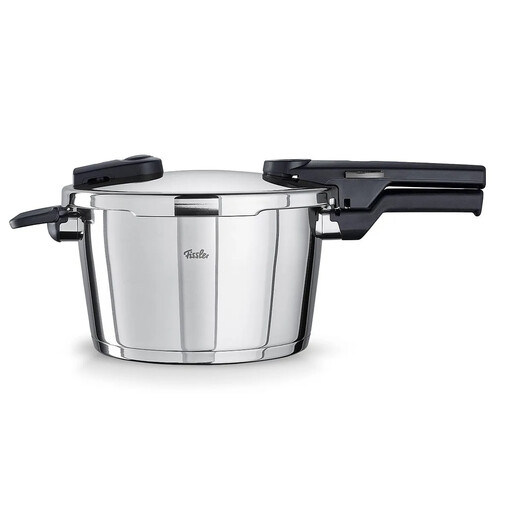
Why this product suits the profile: This hob model is aimed at households looking for a traditional 4.5-litre pressure cooker with two cooking levels and induction compatibility.
The product specifications clearly state the diameter, volume, material, cooking levels and compatible hob types. The positioning aid and locking indicator help ensure the lid is fitted correctly.
18/10 stainless steel, Superthermic base, induction compatibility and a 3-year manufacturer's warranty according to the product description.
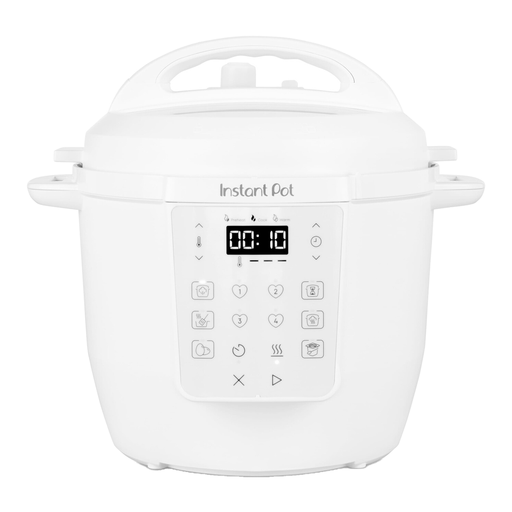
Why this product suits the profile: This electric model combines pressure cooking, slow cooking, sautéing, steaming, yoghurt making, egg cooking and keeping food warm in one 5.7-litre appliance.
The seven cooking methods are clearly named and complemented by safety features such as a locking lid, overheat protection and controlled steam release.
5.7-litre capacity, 1,000 watts, stainless-steel inner pot and dishwasher-safe components according to the product description.

Why this product suits the profile: The 45 automatic programmes, manual adjustments, delay-start function and keep-warm function offer plenty of choice for family meals and different cooking habits.
The programme list is complemented by information about temperature and time settings. The 5-litre volume provides a clearer indication of suitability for several portions than a general advertising claim about versatility.
LCD display, spherical inner pot, steaming basket, measuring cup, recipe book and dishwasher-safe removable parts according to the product description.
We have put together a complete, regularly updated list of products that fully meet these strict selection criteria and the safety regulations applicable in the EU.
An electric multi-cooker is suitable for users who prefer programmes, a delay-start function and keep-warm operation. A traditional pressure cooker, on the other hand, works directly on the hob and does not require additional electronics. However, temperature and hob power need to be controlled more manually.
When choosing, consider the following:
Depending on the model, you can prepare rice, soups, stews, vegetables, pasta, meat, pulses, yoghurt and steamed dishes. The exact range depends on the available programmes and whether time and temperature can be adjusted manually.
For one person, 1 to 1.6 litres is often sufficient. Two to four people can usually manage with around 4 to 5 litres. For larger households or batch cooking, 5.7 litres or more may be useful. Always refer to the instruction manual for the maximum permitted filling level for pressure and steaming programmes.
Consumption depends on the power rating, cooking time, programme and filling level. An appliance rated at 750 watts uses 0.75 kilowatt hours for one hour of operation in theory, provided it draws its full power continuously. In practice, actual consumption may be lower if the appliance only maintains the temperature intermittently. The specific cooking process is therefore what matters, not the wattage alone.