
Lieferung heute & morgen

Qualitätsgarantie

Willkommens-Angebote freischalten: KOSTENLOSE Lieferung | Bis zu 80 % RABATT | Kostenlose 30-Tage-JoyPlus-Testphase
App herunterladen
A multi-cooker can combine pressure cooking, braising, steaming, slow cooking and keeping food warm in one appliance. This is practical for families, working professionals, meal-prep users, singles and students – provided the model suits your actual cooking habits.
However, buying the wrong model can lead to unnecessary costs. Three common pitfalls are particularly important:
The stated litre capacity does not automatically indicate how much food can be prepared using every function. Pressure cooking usually requires some free space. The maximum markings inside the pot and the manufacturer’s specifications are therefore the key points to consider.
As a practical guide:
According to its product description, a 5.7-litre electric pressure cooker may be suitable for up to six people. However, the actual quantity depends on the recipe, ingredients and permitted filling level.
Depending on the model, a programmable cooker may offer pressure cooking, slow cooking, sautéing, steaming, rice cooking, yoghurt making or a keep-warm function. Check whether the functions can be used independently and whether the time and temperature can be adjusted.
A 7-in-1 multi-cooker, for example, is suitable for households that want to combine several cooking methods in one appliance. However, if you expect crispy results, look for a model with a separate air-fryer lid or hot-air function. A traditional pressure cooker is not a substitute for an air fryer.
For pressure appliances, important features include a securely locking lid, controlled steam release, a pressure indicator and protection against opening while residual pressure remains. The appliance should only be used in accordance with the user manual.
With a stainless-steel pressure cooker, material specifications such as 18/10 stainless steel are useful indicators. The base is also important when using the cooker on a hob. A multi-layer or encapsulated base can distribute heat across gas, electric, ceramic and induction hobs. However, this does not mean that every appliance is automatically suitable for all hob types – the manufacturer’s specification remains decisive.
Cleaning also deserves attention: dishwasher-safe inner pots and lid components save time. Sealing rings, valves and handles may require separate care and regular visual inspection, depending on the model.
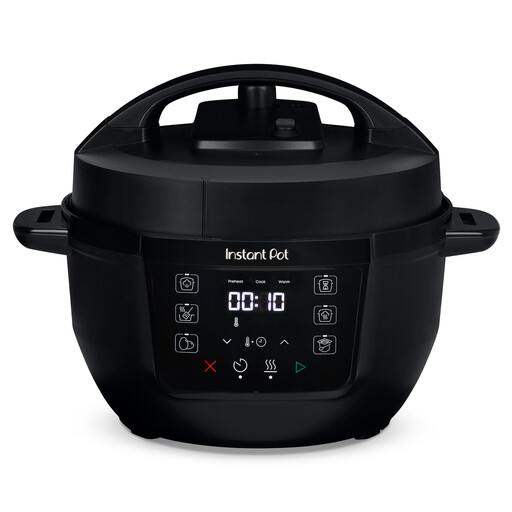
Why this product suits the profile: Its compact size is ideal for singles, couples and smaller kitchens. According to the product description, the appliance offers seven functions, including pressure cooking, slow cooking, steaming and keeping food warm.
Its manageable capacity prevents smaller households from paying for unnecessary worktop space and capacity.
3.8-litre capacity, seven cooking functions and dishwasher-safe components according to the product description.
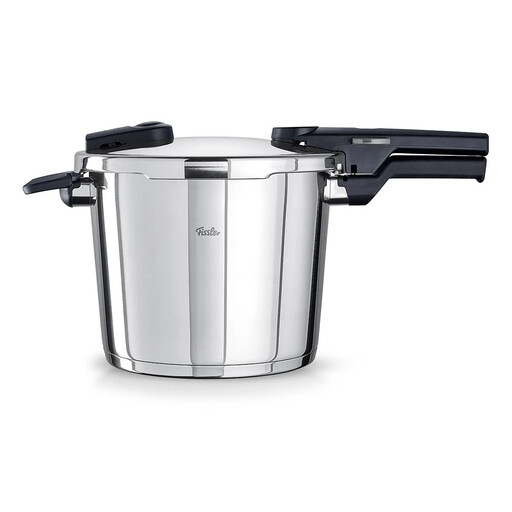
Why this product suits the profile: This classic pressure cooker is aimed at users who value stainless steel, two cooking settings and compatibility with induction, gas, electric and ceramic hobs.
Hob compatibility is explicitly stated. A locking indicator and positioning aid help you place the lid correctly.
18/10 stainless steel, Superthermic base, two cooking settings and a removable handle; according to the product details, it comes with a three-year manufacturer’s warranty.
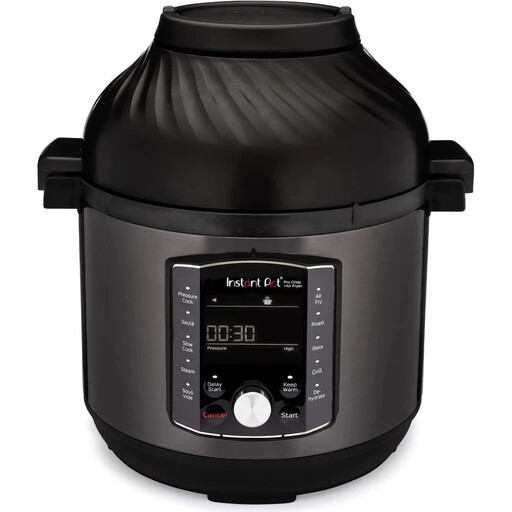
Why this product suits the profile: This model combines pressure cooking and hot-air cooking with two removable lids. This makes it suitable for families, meal prep and users who also want to prepare crispy dishes.
The air-fryer function is structurally separate from the pressure-cooking lid. This makes it clear which lid is intended for pressure cooking and which is for hot-air cooking.
7.6 litres, stainless-steel inner pot, two lids and, according to the product description, a temperature range from 21 to 232 °C.
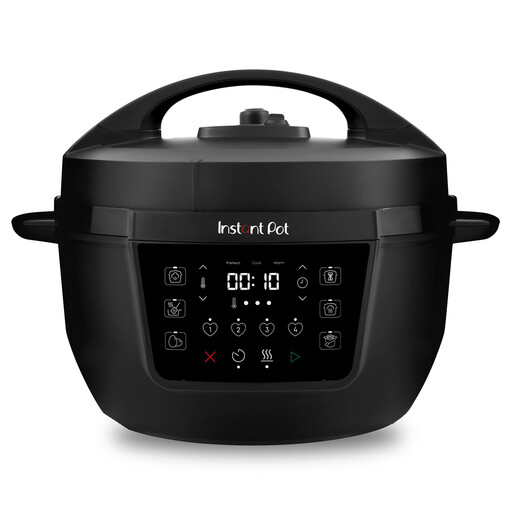
Why this product suits the profile: The wide cooking pot and stated capacity of up to eight portions are designed for family meals and larger quantities to keep in reserve.
The larger base addresses the common limitation of narrow pots when preparing bigger portions. However, the inner pot’s filling limits must still be observed.
7.1-litre capacity, seven cooking programmes, keep-warm function and, according to the product description, a dishwasher-safe lid and inner pot.
We have put together a complete, regularly updated list of products that fully meet these strict selection criteria and the safety regulations applicable in the EU.
Before using the appliance for the first time, read the user manual and check the sealing ring, valve and lid mechanism. Pressure appliances are also subject to these basic rules:
When it comes to running costs, power rating, cooking time and frequency of use are the main factors. Figures quoted by manufacturers, such as “up to 70 per cent shorter cooking time” or “up to 80 per cent less energy”, are product-specific claims and depend on the recipe, starting temperature and comparison method. For a realistic comparison, consider the electricity consumption of your specific cooking process.
Yes, models between 5.7 and 7.6 litres may be suitable for preparing several portions. The key factors are usable capacity, filling markings and the size of your usual meals. A pressure cooker of around 6 litres may be sufficient for a family of four; for meal prep or guests, a larger model may be more suitable.
Its lifespan depends on how it is used, how well it is maintained and the condition of the sealing ring, valve and coatings. A stainless-steel inner pot is generally less susceptible to scratches than coated versions. Wear parts should be checked and replaced when necessary in accordance with the manufacturer’s instructions.
That depends on the space available and the dishes you prefer to cook. If you regularly want to pressure cook and also prepare food with hot air, a combination appliance can be useful. If you only cook soups, rice or stews, you may not need the additional air-fryer function.