Anyone batch-cooking for the week
If you’re making several lunch portions at once, you’ll need to match the pot’s usable capacity to the amount you plan to cook, while leaving enough space to portion and chill the soup.


For several lunch portions, first choose a cooker based on its usable pot capacity, then consider the cooking method. Pressure cooking is a good fit if you want to cook quickly on your batch-cooking day; slow cooking works well if a longer cooking time suits your schedule. With pressure cooking, allow time for the cooker to reach pressure and release it afterwards, and follow the filling limits in your model’s instructions. If you’re taking poultry soup with you, it’s important to portion it promptly and chill it. Before buying, also check the compliance information for the specific appliance.
If you’re making several lunch portions at once, you’ll need to match the pot’s usable capacity to the amount you plan to cook, while leaving enough space to portion and chill the soup.
If you want to cook poultry and grains on your batch-cooking day without having to keep a close eye on them, compare pressure cooking with a longer slow-cook programme and factor in the full cooking process.
If you’re taking cooked poultry soup with you, you’ll need more than the right cooker: you’ll also need a reliable routine for cooling it, transporting it chilled and reheating it.
For chicken and barley soup to take with you, it’s worth checking the usable cooking capacity first, followed by the cooking process, then cooling and care.
| Consideration | What to look for | Who is it most relevant to? |
|---|---|---|
| Usable capacity | Usable capacity and fill lines for the specific model; planned portions and room to transfer the soup. | If I’m batch-cooking for several working days, the soup and barley need to fit within the permitted fill level. Around 33% of consumers prioritise having enough usable cooking capacity. |
| Cooling and transport | Space in the fridge for shallow containers, plus cooling options during your commute and at your destination. | If I’m taking soup with me, I need a practical way to get it from the cooking pot to a chilled lunch portion. Around 27% of consumers prioritise safe storage. |
| Cooking process | The pressure-cooking and slow-cook functions listed for the exact model, as well as time for the cooker to reach pressure and release it. | If I need to plan my batch-cooking day, what matters to me is whether pressure cooking or a longer cooking process fits my schedule better. Around 27% of consumers prioritise choosing the right cooking process. |
| Cleaning and care | The model’s cleaning instructions, removable parts and compatible replacement seals. | If I make soup regularly, I want to know how to clean the pot, lid and seal, and where to find suitable replacement parts. Around 13% of consumers put ease of care first. |
The stated capacity isn’t necessarily the amount you can cook with stock, chicken and barley that expands as it cooks. For example, the manufacturer lists the MD 1000 as having a 6 l pot capacity and 4 l usable capacity; the Tefal Turbo Cuisine CY754830 is listed as having a 5,0 l capacity and 3,2 l usable capacity.
Plan around the usable capacity and follow the fill limits in the instructions for your specific model. Don’t apply a filling rule from another appliance’s instructions without checking that it applies to your model.
Several cooked portions need enough space to cool and store safely. The German Federal Institute for Risk Assessment recommends keeping leftovers chilled and eating them within two to three days.
Transfer larger batches promptly into shallow containers and chill them. For portions you plan to eat later in the week, allow for freezing, and make sure you have a cool bag and access to refrigeration at work.
An appliance function is no substitute for safely cooling finished poultry soup and transporting it chilled. Keeping food warm is also not the same as storing it for several days.
Choose a cooking process that fits your schedule, then handle the finished portions in line with the German Federal Institute for Risk Assessment’s recommendations for cooling and transport.
The MD 1000 is worth considering for batches where usable capacity, pressure cooking and slow cooking are important.
According to the manufacturer, the Turbo Cuisine CY754830 combines pressure cooking and slow cooking. Its stated usable capacity can help you plan a batch.
Pressure cooking, searing and slow cooking are listed for the DUPC601BKEU multi-cooker.
This selection includes pressure multi-cookers and slow cookers for larger cooking and soup batches. When cooking poultry and barley, check the listed functions and the usable capacity for the specific model.
 No image available
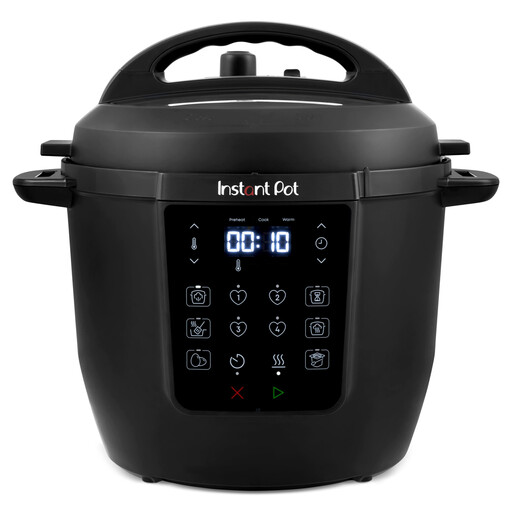
A good option if you want one appliance for pressure cooking and slow cooking several portions.
The product description lists a 5,7 l capacity, meals for up to six people, and a dishwasher-safe pot and lid.
A steam-release mechanism is also listed; follow this model’s instructions when pressure cooking.
 No image available
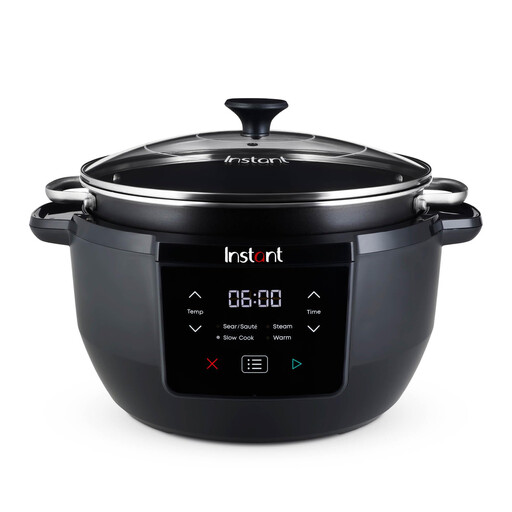
Suited to a longer cooking process if you want to prepare a larger batch for several lunches.
The product description lists slow cooking, adjustable cooking time and temperature, and a capacity of up to ten portions.
Dishwasher-safe parts are also listed. Before buying, check which components this applies to for this model.
 No image available
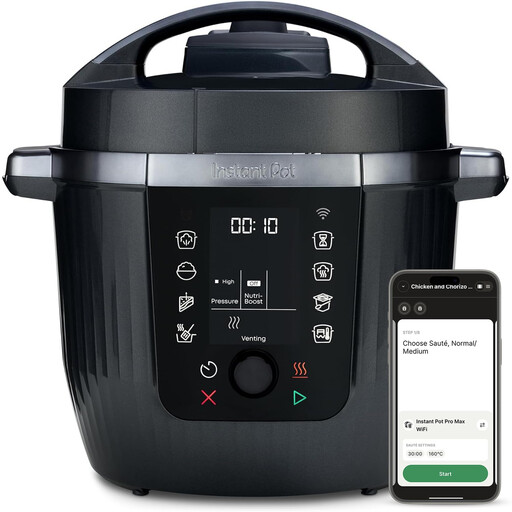
An option if you’re looking for pressure cooking, slow cooking and a soup function for your batch-cooking session.
The description lists a 5,7 l capacity, meals for up to six portions, ten cooking functions and a dishwasher-safe inner pot.
When cooking grains and other ingredients that expand, pay attention to the appliance’s fill lines. Don’t open the lid until the pressure has been fully released.
 No image available
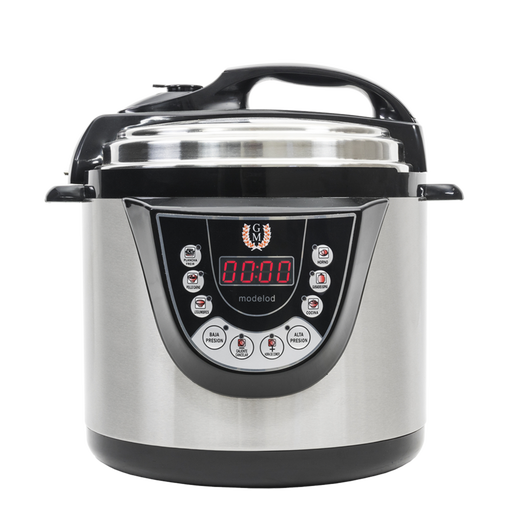
Could suit a larger batch-cooking session if you’re looking for a programmable pressure cooker.
The product name lists a 6 L capacity; the description specifies 5 l usable capacity, nine programmes and two pressure settings.
A 24-hour timer is also listed. Compare the usable capacity with your recipe and the model’s instructions.
 No image available
An option if you’re looking for dedicated programmes for poultry, soup and grains, as well as a slow-cook function.
The description lists an 8 l capacity, up to ten portions and twelve programmes, including poultry, soup or broth, and multigrain.
When pressure cooking ingredients that expand, observe the stated 1/2 fill line. Don’t open the lid while the appliance is under pressure.
It depends on the programmes and fill limits listed for your specific model. For the MD 1000, the manufacturer specifically lists poultry, soups and grains under the high-pressure programme. Follow the instructions for your appliance when setting the cooking time and fill level.
Cool the soup promptly in shallow containers and store it chilled. The German Federal Institute for Risk Assessment recommends cooling leftovers to below 7 °C within a few hours, then keeping them chilled and eating them within two to three days. Freeze portions for later in the week, and plan to use a cool bag and refrigeration at work when transporting them. When reheating, the food should reach over 70 °C throughout for at least two minutes.
Use the lid designed for your appliance and don’t open it until the pressure has been fully released. The Instant Pot Duo instructions advise against forcing the lid open, but their guidance on the valve, seal and cleaning doesn’t automatically apply to other models. Check your appliance’s instructions instead.
Electrical household appliances covered by the EU Low Voltage Directive must meet its requirements. Where the relevant EU rules require a CE mark, the manufacturer uses it to declare conformity; it isn’t an independent EU approval. Check the compliance information for the specific appliance.