Making several portions of soup at once
If you batch-cook for several meals, compare the amount you plan to make with the usable capacity and fill markings of the specific appliance. Also consider where you’ll chill the portions afterwards.


Choose a multi-cooker based on its stated usable capacity and fill markings, not just the larger litre figure on the appliance. If you regularly pressure-cook, the controls and the specific model’s fill limits matter too. For soup and grains, a multi-cooker with suitable programmes but no stated pressure function may also be an option. Whichever appliance you choose, make sure the chicken is thoroughly cooked and cool portions promptly.
If you batch-cook for several meals, compare the amount you plan to make with the usable capacity and fill markings of the specific appliance. Also consider where you’ll chill the portions afterwards.
If you often want to pressure-cook chicken, grains and stews, the pressure function and the model-specific filling and pressure-release instructions are important factors to consider.
If you make soup often, clear controls, removable parts and how easy the pot and lid are to clean can make all the difference. Check the care instructions for the exact model you’re considering.
When making a large batch of soup, usable capacity, the cooking process and chilling afterwards all go hand in hand. The German Federal Institute for Risk Assessment (BfR) recommends dividing larger quantities between several shallow containers to cool.
| What to consider | What to check when buying | Who should pay particular attention? |
|---|---|---|
| Usable soup capacity | Compare the usable capacity and fill markings with the quantity you plan to make; the fill limit may be lower when cooking grains that expand. | If I’m batch-cooking for several meals, the amount I plan to make needs to fit within the usable capacity and below the fill mark. That’s why around 36% of consumers put making a sufficiently large batch first. |
| Cooking process | Decide whether you want to pressure-cook or would rather control the temperature and cooking time without pressure. Programme names alone don’t tell you how long your recipe needs to cook. | If I regularly cook chicken and pearl barley, I want to know in advance whether pressure-cooking or a controllable non-pressure cooking process suits the way I cook. Around 29% of consumers prioritise the cooking process. |
| Portioning and chilling | Allow for suitable containers and enough fridge space. The BfR recommends dividing larger quantities between several shallow containers and cooling them to below 7 °C within a few hours. | If I’m batch-cooking for several days, I plan for containers and chilling space as well as the batch itself. That’s why around 21% of consumers prioritise safe portioning and chilling. |
| Controls and cleaning | Compare the controls and cleaning instructions for the specific model, and check which replacement parts are available. | If I make soup often, I want an appliance that’s easy to use and parts I can clean without a fuss. Around 14% of consumers put ease of use and care first. |
The litre figure may refer to the total capacity, not the amount you can actually put in for cooking. For example, Tefal states that the Turbo Cuisine CY7548 has a 5.0 l total capacity and a usable capacity of 3.2 l.
Compare the usable capacity and the fill markings for the exact model with the quantity of ingredients you plan to use.
If the batch won’t fit, you may need to cook it in two batches.
Multi-cookers vary in how they cook. The Tefal RK812110 is listed with soup and grain programmes, while the Turbo Cuisine CY7548 has a stated fast-cooking function.
First decide whether you need pressure cooking, then compare the programmes and controls on the specific model.
According to the BfR, storing food for longer and failing to cool it properly increase the risk of food-borne illness.
Plan how you’ll portion and chill the soup promptly when deciding how large a batch to make. The BfR recommends dividing larger quantities between several shallow containers.
You may need extra shallow containers and room in the fridge or freezer for the portions.
The MD 1000 MeinHans is aimed at people looking for pressure settings, manual controls and a stated usable capacity of 4 l.
The Cook4Me+ CZ7101 offers pressure cooking with recipes guided on the display and a stated usable capacity of 4 l.
Tefal offers two different approaches here: the pressure-cooking Turbo Cuisine CY7548 and the RK812110, which has soup and grain programmes.
The Duo range is another option to compare if you’re looking for a pressure multi-cooker.
This selection ranges from pressure multi-cookers for soup and grains to a compact multi-function cooker for soup and rice. Compare the usable capacity and fill guidance with the batch you plan to make.
 No image available
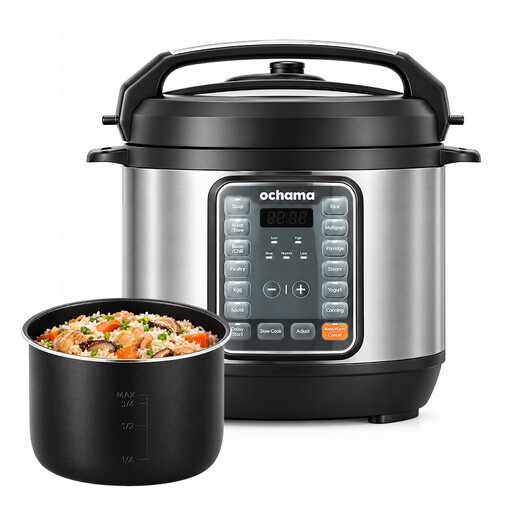
For larger batches of soup with pressure cooking; the product description states that it serves up to 10 portions. When cooking grains that expand, observe the fill limit of the 1/2 mark.
8 l capacity; 1200 W; 12 preset programmes; coated inner pot.
 No image available
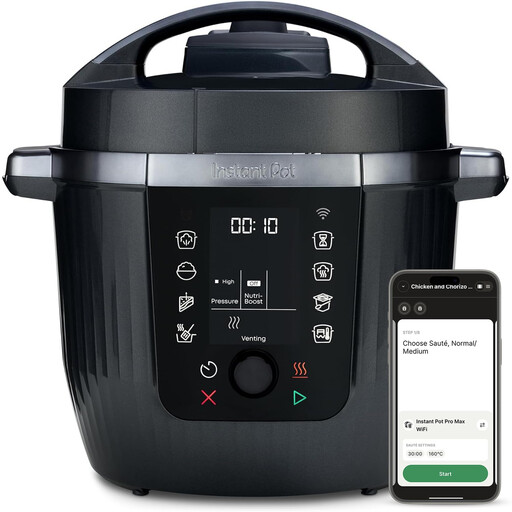
For anyone comparing pressure multi-cookers with a range of cooking modes for meal planning.
6 l capacity; 1000 W; 12-in-1; ceramic non-stick coating.
 No image available
For pressure cooking and soup; the product description states that it serves up to six portions for weekly batch cooking. The pressure must be fully released before opening.
5.7 l capacity; 1200 W; 10-in-1.
 No image available
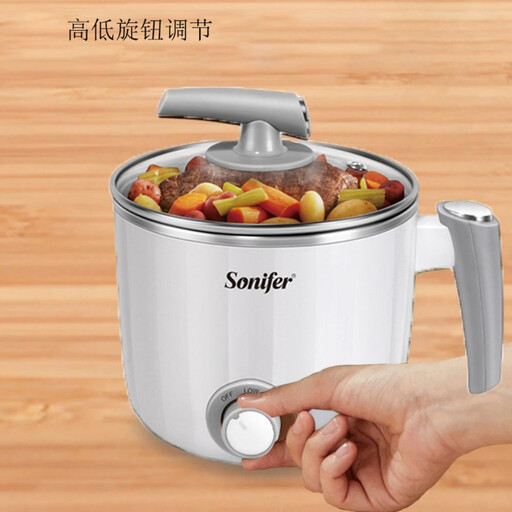
For smaller portions of soup or rice; its compact capacity limits how much you can cook at a time.
1.2 l capacity.
No. Also compare the stated usable capacity and fill markings. For example, Tefal lists the Turbo Cuisine CY7548 as having a 5.0 l total capacity and a usable capacity of 3.2 l; the Krups Cook4Me+ CZ7101 is listed as 6.0 l and 4.0 l respectively. Always follow the manual and the specifications for the exact model.
Follow the instructions for your exact model and never force the lid open while the cooker is under pressure. The manual for the Instant Pot Duo range specifies special fill limits for ingredients that expand during cooking; this guidance doesn’t automatically apply to other multi-cookers.
The BfR recommends heating poultry to a core temperature of at least 70 °C for two minutes. Divide larger quantities between several shallow containers to cool them promptly, then chill to below 7 °C within a few hours. Chilled leftovers should be eaten within two to three days; freeze them if you plan to store them for longer.
According to consumer information from the European Union, if you buy from a business seller in Germany, you’re entitled to a legal guarantee of at least two years from the date you receive the goods. If a fault is covered, the seller must first repair or replace the product free of charge. This is separate from any additional manufacturer’s guarantee.
By applying the CE marking, the manufacturer declares that the product complies with the EU product rules that apply to it. It doesn’t certify that the appliance is suitable for every quantity of soup or every cooking method you have in mind. So check the markings and documentation for the specific product you’re considering too.