Hosts using dried chickpeas
If you want to cook dried pulses, an explicitly stated pressure-cooking function and the instructions for the specific model are important. Remember to allow time for the pressure to build up and release.


For dried chickpeas, a multi-cooker with an explicitly stated pressure-cooking function is a suitable choice, provided you follow the preparation guidance, fill limits and instructions for the specific model. When cooking for guests, focus on usable capacity rather than the litre figure alone. Sautéing and keeping food warm can make preparation easier, but neither replaces thorough cooking or checking the food’s temperature.
If you want to cook dried pulses, an explicitly stated pressure-cooking function and the instructions for the specific model are important. Remember to allow time for the pressure to build up and release.
If you’re cooking for several guests, work out the recipe quantity based on the appliance’s usable capacity and fill limit. The litre figure in a product name doesn’t automatically tell you how much stew will fit in one batch.
If you’re using chickpeas that are already cooked, sautéing and cooking functions can make it easier to prepare the dish in the same appliance. If you’re keeping it hot for longer, the stew’s actual temperature is what matters.
First, check whether you’ll be using dried or already-cooked chickpeas. Then compare your recipe quantity with the usable capacity and fill limit. Additional features such as sautéing and keeping food warm are further points to consider.
| What you need from it | What to look for | Who it matters most to |
|---|---|---|
| Cooking dried chickpeas | Check that the appliance has an explicitly stated pressure-cooking function, and consult the model-specific instructions on liquid, fill limits and pressure release. The German Federal Institute for Risk Assessment (BfR) recommends soaking dried pulses for at least five hours, discarding the soaking water and cooking them thoroughly in fresh water (recommendation dated 23 January 2024). | If I’m using dried chickpeas, I want to be able to plan the preparation and cooking properly. Around 45% of consumers prioritise this. |
| Enough for your guests | Compare the recipe volume with the pot’s usable capacity and the fill limit for ingredients that expand during cooking. If necessary, plan to cook in batches. | When cooking for a larger group, I want to know whether the planned quantity will fit in one batch. Around 33% of consumers prioritise having enough capacity for a sufficiently large batch. |
| Preparing ahead and keeping food hot | Check whether the specific model has sautéing and keep-warm functions. The BfR recommends keeping heated food at a temperature of at least 60 °C throughout until it is eaten (recommendation dated 19 March 2024). | If I want to prepare vegetables and stew before my guests arrive, suitable cooking functions are useful. Around 11% of consumers prioritise preparation and keeping food hot. |
| Ease of use and cleaning | Check the controls, pressure-release method, removable parts and whether replacement seals are compatible with the specific model. | If I want the cooker to be easy to use while preparing a meal and straightforward to clean afterwards, everyday convenience matters. Around 11% of consumers prioritise this. |
The pot’s total capacity and its usable capacity can differ. Ingredients that expand may also have a separate fill limit, so you may not be able to cook a large recipe in a single batch.
Compare the volume of your finished recipe with the capacity details and fill limit in the instructions for the model you’re considering.
If one batch isn’t enough, you may need to cook several batches and allow extra preparation time.
The German Federal Institute for Risk Assessment (BfR) points out that gentle stewing or steaming is not suitable for most pulses. A slow-cooking function alone therefore doesn’t prove that dried chickpeas will be cooked thoroughly enough.
Follow the recommended preparation and cooking method, as well as the instructions for the specific appliance. The BfR recommends soaking for at least five hours, discarding the soaking water and then cooking the pulses in fresh water.
A keep-warm function alone doesn’t prove that the stew reaches at least 60 °C throughout. The BfR gives this temperature for heated food that is being kept hot until it is eaten.
If the stew will be waiting for a while, check its temperature. Don’t leave it lukewarm if you can’t keep it hot enough. For storing it to eat later, the BfR recommends cooling hot food quickly to below 7 °C (as of March 2026).
The MD 1000 ‘MeinHans’ combines pressure cooking, manual settings, sautéing and keeping food warm, making it an interesting option for a stew with several preparation steps.
The Duo pressure multi-cookers are aimed at buyers who want to combine pressure cooking with other cooking methods. The exact model and its instructions are key.
The Turbo Cuisine CY7548 combines fast cooking, sautéing and other programmes, and is operated using a dial.
Cook4Me Touch is designed for buyers who want on-screen, step-by-step guidance when pressure cooking, sautéing and braising.
The Foodi SmartLid multi-cookers may suit buyers considering cooking methods beyond pressure cooking.
This selection includes electric pressure multi-cookers for cooking dried chickpeas, as well as a slow cooker for chickpeas that are already cooked. For pressure models, follow the instructions and observe the permitted fill level for the specific appliance.
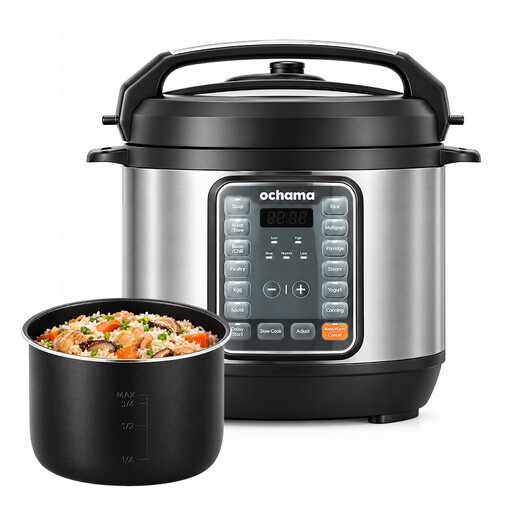 No image available
A relevant option for dried chickpeas if you want to pressure cook and sauté in the same appliance.
The product title lists 6L, 1000W, 12-in-1 and a ceramic non-stick coating. The description also lists slow cooking and keeping food warm.
The keep-warm function doesn’t prove that the stew reaches at least 60 °C throughout. Check the temperature if you’ll be waiting for a while.
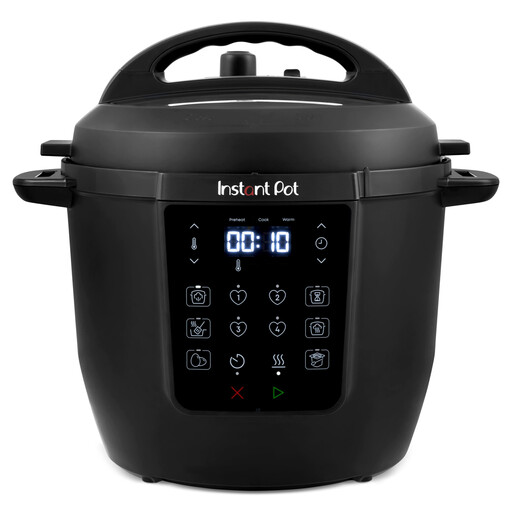 No image available
An option if you want to combine pressure cooking, sautéing and keeping food warm when making a stew.
The product description lists a 5.7 L capacity, a stainless steel inner pot and a steam-release button. It also mentions guided cooking progress and dishwasher-safe parts.
The instructions for the specific model determine the fill limit and pressure-release method. A keep-warm function alone doesn’t prove that the whole stew is at a minimum temperature.
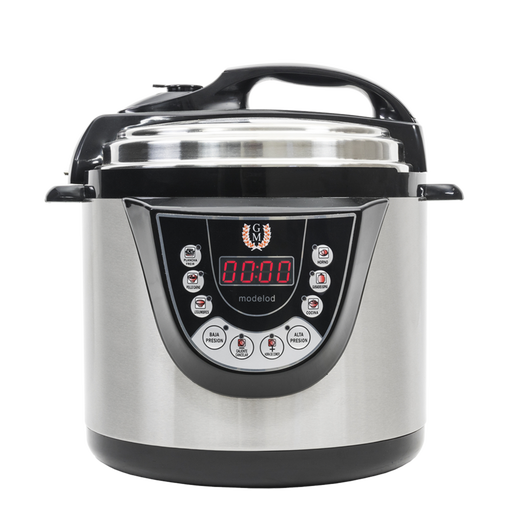 No image available
The stated usable capacity can help you shortlist options for larger recipes. Compare it with your actual recipe and the fill limit.
The product title lists 6 L, nine cooking menus and two pressure settings. The description gives a usable capacity of 5 L and a pressure of up to 60 kPa.
6 L is not the same as the usable capacity. For ingredients that expand, follow the instructions for the specific model.
 No image available
The description lists pressure cooking, a beans and chilli programme, and sautéing, making this model relevant for preparing a stew.
The product title lists 8 L and 1200W. The description features twelve preset menus, a 24-hour timer and automatic keep-warm.
For foods that expand, such as beans, the product description gives a fill limit of no more than half the pot. Check the instructions and don’t rely on the programme name alone to confirm that food will stay hot enough.
 No image available
Could be suitable for a stew made with chickpeas that are already cooked if you’re looking for a slow-cooking or soup function.
The description lists a 2.5 L main pot and four separate pots, each with a capacity of 0.4 L, as well as a keep-warm function. The additional pots don’t increase the capacity of a single main-pot batch.
The description doesn’t list a pressure-cooking programme. Don’t assume that slow cooking is enough to cook dried chickpeas thoroughly.
Yes. The German Federal Institute for Risk Assessment recommends soaking dried pulses for at least five hours, discarding the soaking water and then cooking them thoroughly in fresh water (recommendation dated 23 January 2024). The BfR says that gentle stewing or steaming is not suitable for most pulses.
No. The German Instant Pot Duo manual warns against forcing the pot open; the pressure must be fully released first. Always follow the instructions for the specific appliance when using it and releasing pressure.
The BfR recommends keeping heated food at a temperature of at least 60 °C throughout until it is eaten (recommendation dated 19 March 2024). A keep-warm function doesn’t automatically prove that the specific stew reaches this temperature.
According to Your Europe, CE marking is required only for products covered by relevant harmonised EU rules that explicitly require it. CE marking is not an independent performance test. The manufacturer has issued an EU Declaration of Conformity for the Rommelsbacher MD 1000.