Batch-cookers making larger quantities
If you want to prepare several portions in one cooking session, you’ll need to consider the recipe quantity, usable pot capacity and space for cooling all at once.


For batch-cooking pork stew, a multi-cooker is a good fit when its stated usable capacity suits the quantity in your recipe; the pot’s litre capacity alone isn’t enough to go on. If you’re short on cooking time, browning and pressure cooking in one appliance make a useful combination. A dedicated slow-cook programme lets you simmer the stew for longer, although manufacturers’ claims don’t guarantee a particular cooking time. Remember to allow time for the pressure to build and release fully, then portion and cool the stew promptly. The German Federal Institute for Risk Assessment recommends cooling hot food quickly to below 7 °C if you plan to store it for longer.
If you want to prepare several portions in one cooking session, you’ll need to consider the recipe quantity, usable pot capacity and space for cooling all at once.
If you want to brown the meat in the appliance before pressure cooking it, remember to allow for the pressure to build and release safely.
If you prefer a dedicated slow-cook programme, make sure you have a long enough cooking window for the slow cooking process.
A good fit if: you want to brown the meat in the same appliance and then pressure cook the stew. Rommelsbacher lists these functions for the MD 1000, as does Tefal for the CY7548.
Remember: allow time for the pressure to build and release fully, in addition to the cooking time, and follow the filling limit in the appliance instructions.
A good fit if: you have a longer cooking window and want to let the stew simmer slowly. Rommelsbacher and Tefal both list slow cooking for the models mentioned.
Remember: slow cooking won’t shorten the preparation time. You’ll also need space to cool batch-cooked portions promptly.
| Priority | What to check before buying | Who it matters most to |
|---|---|---|
| Usable capacity per cooking session | Compare your recipe quantity with the usable capacity and fill limit of the specific model. Rommelsbacher states that the MD 1000 has a usable capacity of 4 l in a 6-l pot; Tefal gives the CY7548 a usable capacity of 3,2 l, with a total capacity of 5,0 l. | When I batch-cook several meals, I want the ingredients to fit in one session and to be easy to portion afterwards. That’s why around 31 % of consumers prioritise the capacity they can actually use. |
| Cooking window and cooking method | Check whether the model offers browning, pressure cooking or slow cooking. When pressure cooking, allow time for the pressure to build and release fully. | If I’m short on time, I want to brown the meat and then pressure cook it without forgetting to allow time for the pressure to release. Around 25 % of consumers base their choice mainly on this cooking process. |
| Storage and cleaning | Check that you have room for storage containers, and look at the care instructions for the pot, lid and seal. The German Federal Institute for Risk Assessment recommends cooling hot food quickly to below 7 °C if you plan to store it for longer. | If the stew is for later meals, I factor in containers, fridge space and appliance care. Around 25 % of consumers focus on storage and cleaning afterwards. |
| Ease of use and long-term ownership | Compare the controls, included accessories and availability of compatible replacement parts. Tefal describes the CY7548 as having a dial, while Rommelsbacher says the MD 1000 comes with a spare sealing ring. | If I use the appliance regularly, straightforward controls and compatible replacement parts matter more to me than programmes I’ll rarely use. Around 19 % of consumers prioritise ease of use and long-term care. |
Pot size and usable capacity can differ: Rommelsbacher states that the MD 1000 has a usable capacity of 4 l in a 6-l pot; Tefal gives the CY7548 a usable capacity of 3,2 l, with a total capacity of 5,0 l.
Compare the quantity of ingredients in your recipe with the appliance’s usable capacity and maximum fill level.
If your recipe won’t fit in one session, you may need to cook a second batch or make fewer portions for the freezer than planned.
A large pot of cooked stew needs to be cooled promptly before it’s stored for later. The German Federal Institute for Risk Assessment also highlights the risks of keeping heated food warm at a temperature that’s too low.
Plan your portion containers and fridge space before you start cooking. Don’t take instructions for keeping food warm as a recommendation to leave it warm overnight.
The stated cooking time won’t necessarily include the time needed for the pressure to build and release fully. The Instant Pot Duo instructions warn against forcing the pressure cooker open.
Allow time for the whole process and follow the pressure-release instructions for your appliance.
The MD 1000 is worth considering if you want to use pressure cooking and slow cooking in one appliance. Rommelsbacher gives it a usable capacity of 4 l for its 6-l pot.
According to the manufacturer, the Turbo Cuisine CY7548 combines browning, pressure cooking, braising and slow cooking. It’s worth considering if these cooking methods matter more to you than making the largest possible batch.
The manufacturer’s instructions for the 5,7-l range describe pressure cooking, browning and slow cooking. Check the functions and accessories for the exact model variant.
This selection includes multi-cookers for pressure cooking and browning, as well as appliances described as slow cookers. Check the fill limit for the specific model rather than assuming the stated litre capacity is all usable for stew.
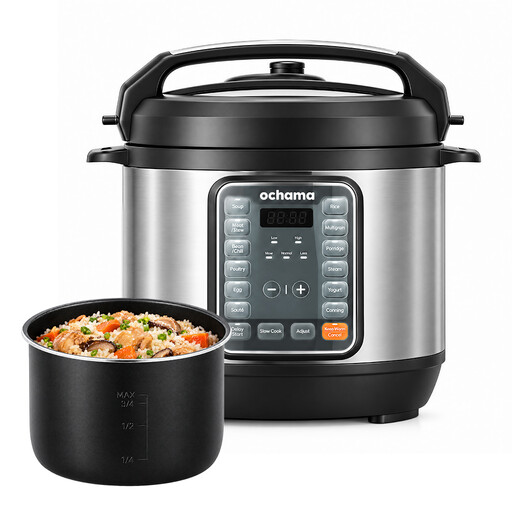 No image available
If you want to brown the meat and then pressure cook the stew in the same appliance, check the maximum fill line and allow the pressure to release fully.
8L capacity, 1300W, 12-in-1 and ceramic non-stick coating.
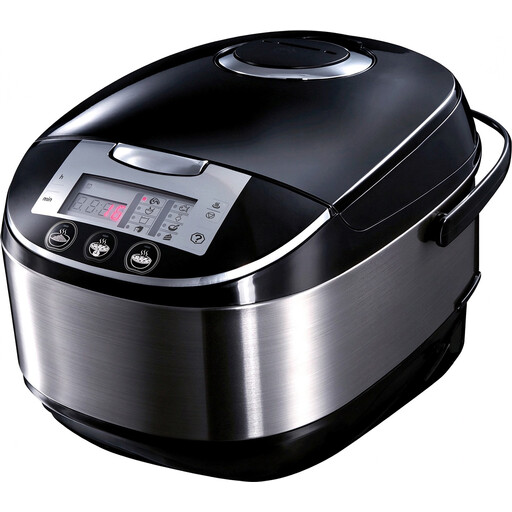 No image available
This appliance could be a slow-cooking option for portions of stew, provided its stated capacity and cooking programme suit your recipe.
5 L, 900 W, digital display and anti-condensation lid.
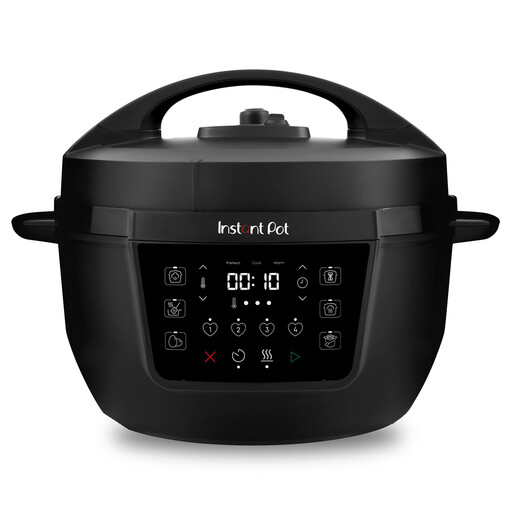 No image available
For larger batches, if you want to brown the meat and then pressure cook it in the same appliance; check the model’s fill line.
7.1L, black; model 140-0019-01-EU.
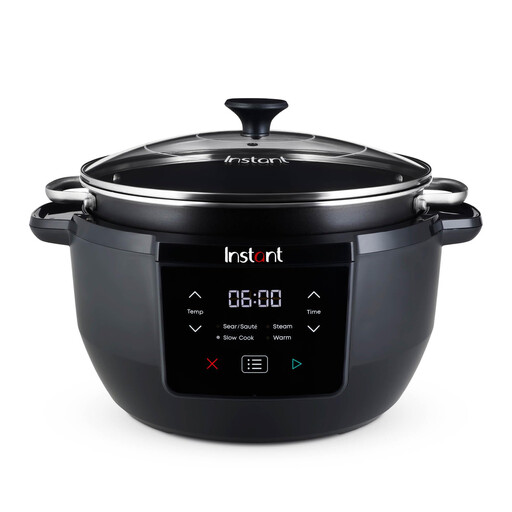 No image available
If you have a longer cooking window and want to simmer your stew slowly, this appliance, described as a slow cooker, could be a good option.
7 L, grey; model 140-6128-01-EU. According to the product information, the inner pot is not suitable for use in an oven or on a hob.
 No image available
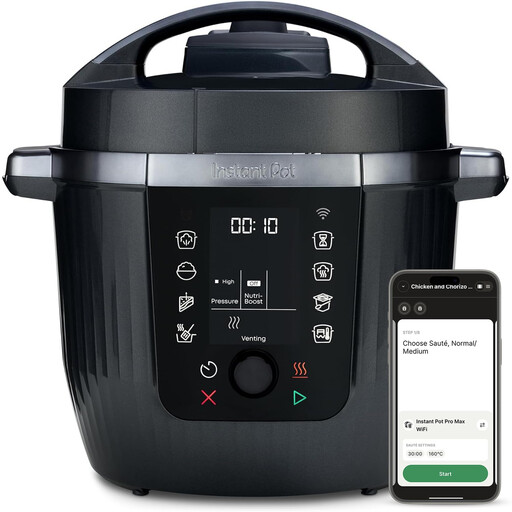
For batch-cooked meals, if you want to combine browning with pressure cooking or slow cooking; when pressure cooking, observe the maximum fill line and allow the pressure to release fully.
5.7L, 1200W, black; the product name lists pressure cooking, slow cooking, steaming and browning.
Not necessarily. Tefal gives the CY7548 a usable capacity of 3,2 l, with a total capacity of 5,0 l; Rommelsbacher states that the MD 1000 has a usable capacity of 4 l in a 6-l pot. Compare the total quantity in your recipe with the appliance’s maximum fill level, rather than relying on its stated capacity alone.
No. The Instant Pot Duo instructions warn against forcing the pressure cooker open. Wait until the pressure inside has released fully, and follow the instructions supplied with other models.
The German Federal Institute for Risk Assessment recommends cooling hot food quickly to below 7 °C if you plan to store it for longer. Divide a large batch into suitable portions, and make sure you have containers and fridge space ready before you start cooking. During preparation, food should reach at least 70 °C throughout for two minutes.
Before buying a replacement part, check your appliance’s part number against the seal compatibility information. Instant Pot lists compatible appliance part numbers for a 5,7-l replacement sealing ring; Rommelsbacher says the MD 1000 comes with a spare sealing ring.
Product safety regulations apply to goods sold in the EU, including when you buy online, as explained by Your Europe, the EU’s information portal. The European Commission points out that CE marking does not mean a product has been approved as safe by the EU or another authority. You can’t tell from the product name alone whether all the relevant requirements apply to a particular appliance or whether it meets them.