Tinned beans are already cooked, so they don’t need a pressure-cooking programme; according to the Federal Centre for Nutrition, pulses from a tin or jar can be eaten straight away. For stewing, what matters more is whether you can sauté ingredients before cooking or simmering them, and whether the usable capacity, footprint and cleaning requirements suit your shared kitchen. Pressure cooking can be useful if you’ll also use this function for other dishes.
Which type of appliance is right for you?
One-pot cooks
If you want to sauté ingredients in the appliance and finish cooking the sauce with the beans, look for a dedicated sauté function and a suitable cooking or stewing setting. For example, the Instant Pot Classic Mini 3.8 L manual lists sautéing, slow cooking and pressure cooking.
Cooks with limited shared kitchen space
Remember to allow space not only for the appliance itself, but also for the lid when it’s open and for safe positioning. The Instant Pot Classic Mini manual calls for a suitable, level surface with clear ventilation.
Batch cooks
If you’re cooking several portions, compare the usable pot capacity with the beans, sauce and other ingredients. Tefal lists 3.2 l of usable capacity for the Turbo Cuisine CY7548, with a total capacity of 5.0 l; Rommelsbacher gives a usable capacity of 4 l for the MD 1000.
What should you look for when buying?
Tinned beans are already cooked and can be eaten straight away, as the Federal Centre for Nutrition explains. So choose the appliance functions to suit how you want to cook the sauce and other ingredients.
| What you need |
What to check when buying |
Who will find this especially important? |
| Sautéing and finishing the dish |
Check for a dedicated sauté function and a suitable cooking, stewing or slow-cooking setting. |
If I want to soften onions or vegetables in the same pot, a suitable cooking process matters more than a pressure-cooking programme for beans. Around 33% of consumers prioritise one-pot cooking. |
| Space and positioning |
Check the appliance dimensions, how the lid opens and the positioning instructions for where you plan to use it. |
In a shared kitchen, the appliance needs to sit securely and be usable with the lid open. Around 27% of consumers prioritise footprint and positioning. |
| Cleaning |
Check whether the pot is removable, as well as the care instructions for the lid and any removable parts. |
When several people use the kitchen, I want to be able to clean and put away the pot easily after cooking. Around 20% of consumers prioritise easy cleaning. |
| Usable capacity |
Compare the total amount you plan to cook with the usable capacity and fill markings of the specific model. |
For several portions, the beans, sauce and other ingredients all need to fit in the pot. Around 20% of consumers put the amount they can cook in one go first. |
Avoid common buying mistakes
-
Treating tinned beans like dried beans
Pulses from a tin are already cooked, so they don’t need a pressure-cooking programme.
Choose an appliance based on how you want to prepare the sauce and other ingredients. Pressure cooking is more of a deciding factor if you’ll also use the function for other dishes.
-
Assuming the stated capacity is the usable filling capacity
For the Tefal Turbo Cuisine CY7548, the manufacturer lists a total capacity of 5.0 l and a usable capacity of 3.2 l. Rommelsbacher gives the MD 1000 a 6-l pot with a usable capacity of 4 l.
Allow for the beans, sauce and other ingredients together, and observe the fill limits for your chosen model.
-
Assuming lots of programmes mean less cleaning
The F.A.Z. Kaufkompass praises the build quality and controls of the Rommelsbacher MeinHans, but says it can be awkward to clean.
Before buying, check how to clean the pot, lid and seal on the exact model you’re considering.
Brands to consider
Instant Pot
The Classic Mini 3.8 L combines several cooking methods in a relatively compact pressure multi-cooker.
- The German-language manual lists sautéing, slow cooking and pressure cooking.
- The stated capacity isn’t necessarily the usable filling capacity. The appliance needs to be used on a suitable, level surface with clear ventilation.
Tefal
According to Tefal, the Turbo Cuisine CY7548 combines browning and stewing with a pressure-cooking function.
- Tefal lists a total capacity of 5.0 l and a usable capacity of 3.2 l for this model.
- Compare usable capacity rather than just the larger total capacity figure. Advertised speed and energy comparisons don’t demonstrate an advantage when stewing tinned beans that are already cooked.
Rommelsbacher
The MD 1000 MeinHans offers several cooking methods and a usable capacity of 4 l; the MRK 650 is part of a smaller multi-rice-cooker range.
- Rommelsbacher lists a removable pot with a usable capacity of 4 l for the MD 1000.
- The F.A.Z. Kaufkompass says the MD 1000 can be awkward to clean. The MRK 650 doesn’t offer the same functions as the MD 1000.
Russell Hobbs
The Compact Home 25570-56 is a small slow cooker for slow-cooked meals.
- Russell Hobbs lists a 2 l capacity, enough for up to two portions, and a removable ceramic pot.
- If you want to brown ingredients first, you’ll need to do this as a separate step.
Joybuy products for cooking and stewing
This Joybuy selection includes electric cooking pots and slow cookers with settings for cooking, simmering or slow cooking. Check the capacity for your planned recipe and whether the specific model has the sauté function you want.
 No image available
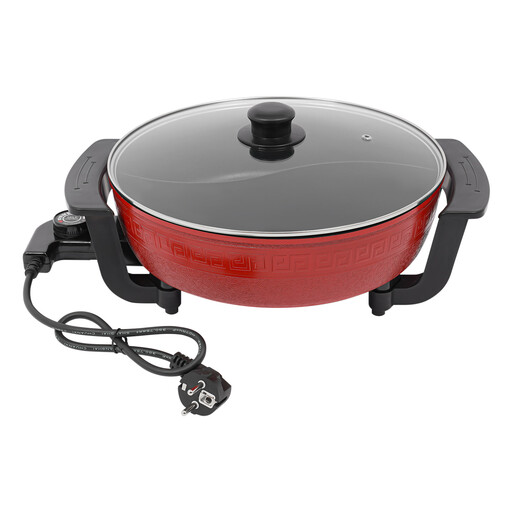
6L electric cooking pot, 220V, 1360W
An option if you want to heat beans and sauce together in an electric cooking pot.
6L capacity, five temperature settings and a non-stick pot. The product name describes it as suitable for 3–4 people.
View at Joybuy
 No image available
IAGREEA 2.6 l slow cooker
Could suit smaller quantities that you want to slow-cook or simmer.
2.6 l capacity, two manual heat settings and a non-stick pot. Not designed for high-temperature frying.
View at Joybuy
 No image available
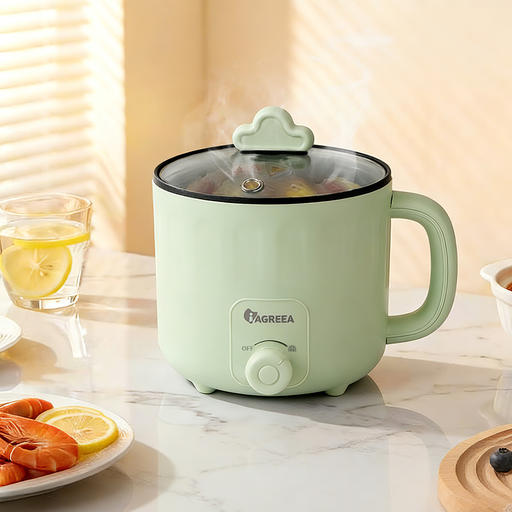
IAGREEA 1.6 l portable electric cooker
This compact model could be an option for small quantities in a kitchen with limited space.
1.6 l capacity, two heat settings and boil-dry protection. The product details say it’s suitable for stewing and braising, and designed for individuals or couples.
View at Joybuy
 No image available
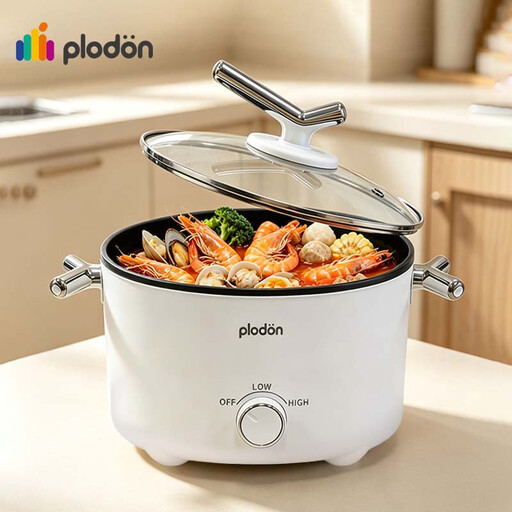
plodon 2.0 l electric cooking pot
An option for small quantities if you want to simmer soup or stew in the pot.
2.0 l capacity, 1000 W, non-stick pot and two heat settings. The stated fill limit is no more than two-thirds of the pot’s capacity.
View at Joybuy
 No image available
Bear DDZ-J25G2 4.1L slow cooker
Could be a good fit if you want to slow-cook and are looking for an appliance with several cooking functions.
4.1L according to the product name; described as a slow cooker, steamer and soup maker with Micro-Pressure Technology. Hot steam may escape when you open it; the manual recommends waiting a few minutes after cooking.
View at Joybuy
Frequently asked questions
Do I need to pressure-cook tinned white beans in a multi-cooker?
No, the beans themselves don’t need to be pressure-cooked. The Federal Centre for Nutrition explains that pulses from a tin or jar are already cooked and can be eaten straight away. Choose a cooking method to suit the sauce and other ingredients.
Where can I use a pressure multi-cooker in a shared kitchen?
Follow the instructions for the specific model. Instant Pot requires the Classic Mini to be placed on a suitable, level surface with clear ventilation. Rommelsbacher warns that hot steam may escape when opening the MD 1000 and releasing pressure.
Can I simply keep bean stew warm until mealtime?
Don’t rely on the keep-warm function alone. The Federal Institute for Risk Assessment recommends keeping heated food at a temperature of at least 60 °C throughout until it’s eaten. This doesn’t guarantee that a particular dish will reach that temperature in a specific appliance.
What are the rules on CE marking and complaints in Germany?
Your Europe explains that there is no central EU body that issues approval or a certificate for CE marking. If a product is faulty, statutory rights against the seller are separate from a voluntary guarantee, as the Verbraucherzentrale points out. Online purchases generally come with a right to cancel, usually within 14 days of receiving the goods, as explained by the Verbraucherzentrale.


