
Lieferung heute & morgen

Qualitätsgarantie

Willkommens-Angebote freischalten: KOSTENLOSE Lieferung | Bis zu 80 % RABATT | Kostenlose 30-Tage-JoyPlus-Testphase
App herunterladen
A multi-function blender can replace several individual appliances in your daily routine: depending on the design, you can make smoothies, soups, sauces, purées, baby food and chopped ingredients. However, the choice isn’t just about wattage. What really matters is the intended use, the accessories, the capacity, how easy it is to clean, and safe handling.
A blender with 1200 W might sound more powerful than a blender with 600 W. In practice, the result also depends on the blade design, the container, the speed control and the operating duration. For soups, sauces, soft vegetables or baby purée, a 600 W stick blender can be perfectly adequate. If you regularly process hard ingredients, frozen fruit or larger quantities, you should also check the usage limits specified by the manufacturer.
The term “multi-function blender” isn’t defined consistently. On one model, it might mean a stick blender, whisk attachment, chopper and mincer; on another, it could simply refer to different programmes. So before you buy, it’s worth taking a close look at what’s included:
A hard-to-reach blade area or a permanently attached blending shaft can make daily use difficult. For baby food, smooth, easy-to-access surfaces and straightforward cleaning are especially important. Whether a device is suitable as a dishwasher-safe blender depends on the specific parts: often the jug or blades are dishwasher-safe, while the motor unit, lid with electronics or battery parts need to be washed by hand.
Motor power is given in watts, but it doesn’t solely determine blending quality. Two speed settings may be enough for simple tasks. A variable speed control or an additional turbo function, on the other hand, makes it easier to adapt to different consistencies.
For puréeing soups, sauces and soft vegetables, a stick blender is practical because you can work directly in the pot. A countertop blender is better suited to larger quantities and evenly blended drinks. If you want to crush ice, check whether the manufacturer explicitly allows this function and what the maximum quantity is.
A 500 ml chopper is suitable for small portions, herbs, onions or simple purées. A 1.5-litre container offers more space for smoothies, sauces or several portions. The stated capacity isn’t always the same as the maximum fill level. With hot liquids, you must also follow the instruction manual, as steam can build up pressure.
Removable attachments make cleaning easier. Blades should never be touched by hand while the device is running or plugged in. Before cleaning, unplug the appliance from the socket; for battery-operated devices, follow the charging instructions. For families with children, a stable base, a securely closing lid and supervised use are important selection criteria.
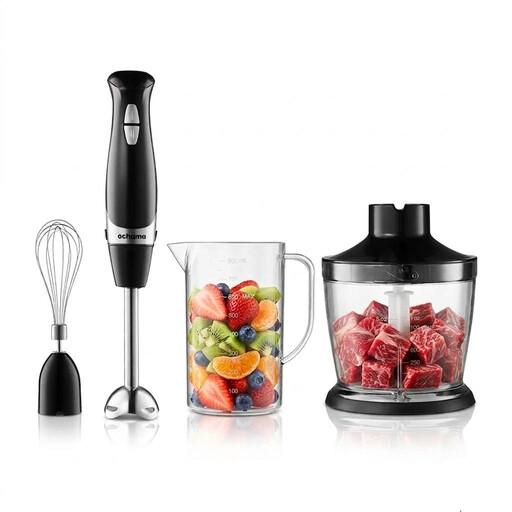
Why this product fits the profile: This stick blender combines four functions for everyday quantities and, thanks to its detachable design, takes up very little storage space.
The package contents specifically list a whisk, mincer, 500 ml chopper and 800 ml beaker, rather than just advertising a vague multi-function label.
600 W, two speed settings and removable components for soups, purées, whipped foods and small chopping tasks.
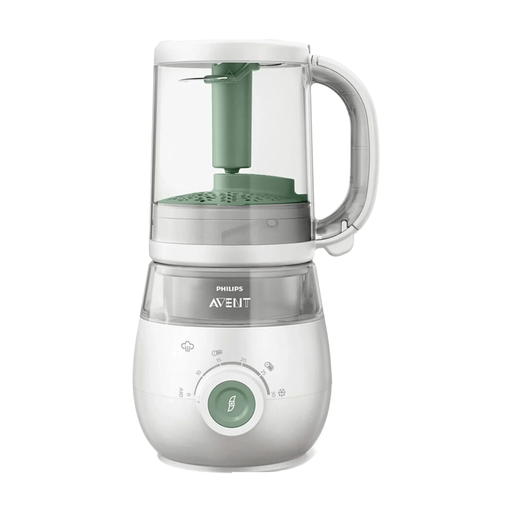
Why this product fits the profile: This baby food maker combines steaming, blending, defrosting and reheating in one appliance.
The function selection and the separately stated capacities of 1,000 ml for steaming and 720 ml for blending make realistic quantity planning much easier.
One container for steaming and blending; the jug and blades are dishwasher-safe according to the product specifications.
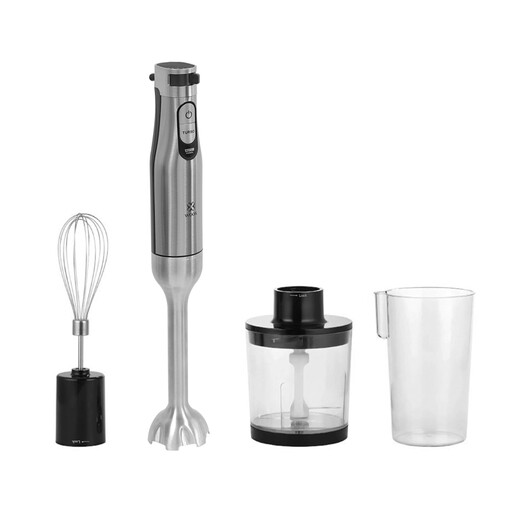
Why this product fits the profile: For frequent kitchen work, this set offers a higher stated motor power, variable speed control and multiple attachments.
The equipment is clearly specified: 500 ml chopper, 600 ml measuring jug, whisk and variable trigger with turbo function.
1200 W, 304 stainless steel blades and, according to the product description, dishwasher-safe removable parts.
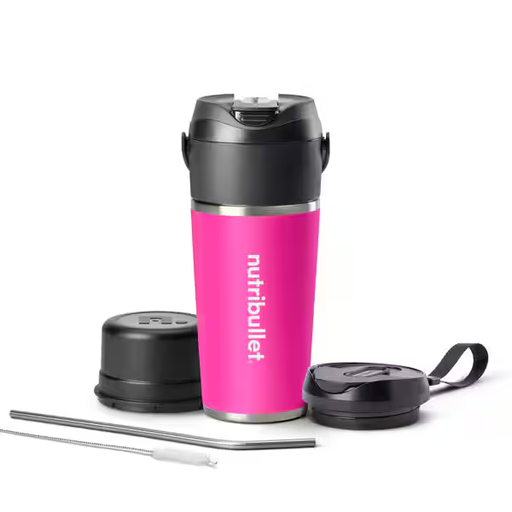
Why this product fits the profile: This portable smoothie blender is designed for the office, gym, travel and other situations outside the kitchen.
The usage limits are clearly stated: for crushing ice, the product specifies a maximum of three to four ice cubes per cycle; the blade unit must be cleaned by hand.
590 ml insulated bottle, USB-C rechargeable battery, carry handle and drinking opening; the bottle is stated to be dishwasher-safe on the top rack.
We’ve put together a complete, regularly updated list of products that fully meet these strict selection criteria and the safety regulations in force in the EU.
That depends on the appliance. A classic stick blender can purée cooked ingredients. A baby food maker with steam, blend, defrost and reheat functions takes care of additional steps. With every model, you should check the recommended fill levels, cleaning instructions and the transition from fine purée to chunkier consistencies in the instruction manual.
For soft ingredients, soups and sauces, 600 W can be sufficient. Frequent tasks with harder ingredients require a suitable blade and container design, and possibly more power. So the wattage should always be considered alongside the speed settings, accessories and manufacturer’s specifications.
It’s not possible to reliably predict a lifespan from the motor power alone. It is influenced by how often you use it, overloading, the cleaning method and correct storage. Short operating intervals, sticking to the maximum fill level and storing the electrical unit in a dry place can all help maintain its everyday usability.